
The Obama campaign is stressing that 98 percent of its donations were from little guys contributing $250 or less. But 40 percent of the money came from a handful of major donors.
Politico (“Of Obama’s $86 million, 40% from bundlers“):
About 40 percent of President Barack Obama’s record-breaking $86 million second-quarter fundraising haul came from big-money bundlers, according to a POLITICO analysis of donors listed on Obama’s campaign web site.
No fewer than 27 mega-bundlers managed to collect at least $500,000 for a joint account run by Obama’s 2012 campaign and the Democratic National Committee.
That exclusive circle included marquee fundraisers like Vogue editor-in-chief Anna Wintour, Hollywood titan Jeffrey Katzenberg, DNC treasurer/personal finance guru Andrew Tobias and former New Jersey Gov. Jon Corzine, who was CEO of Goldman Sachs before entering politics.
That group chipped in a minimum of $13.5 million, according to records. In addition, $21.4 million was bundled in amounts of between $50,000 and $499,000.
In all, 244 people were listed on the website as soliciting – or bundling – donations totaling at least $50,000 from their networks of friends and professional acquaintances.
Unlike his Republican opponents, Obama refuses to take money from lobbyists and PACs. But the vagaries of campaign finance reporting render it nearly impossible to make an apples-to-apples comparison of Obama’s big-money support for 2012, compared to his vaunted reliance on small-cash donors in 2008.
NYT Caucus blog (“Obama’s Haul: Big Money From Big Donors“):
Jim Messina, Mr. Obama’s campaign manager, said this week that the president’s re-election effort was largely a grass-roots affair financed by hundreds of thousands of donors whose contributions averaged just $69 each.
“Ninety-eight percent of all donations that came in were $250 or less,” Mr. Messina bragged in a video released to supporters.
Those numbers, and Mr. Obama’s success at tapping small donors using the Internet, mask another skill: the president’s ability to recruit wealthy supporters who have even wealthier friends.
As he begins his 2012 campaign, Mr. Obama is pushing for even bigger big-time contributions. Former President George W. Bush reported bundlers who raised $200,000 or more. Mr. Obama’s report adds a new top level: $500,000 and above.
The Sunlight Foundation, which tracks campaign contributions, called Mr. Obama’s bundler list “a veritable Rolodex of the rich and powerful across the country — among them you’ll notice a C.E.O., editor, former politician and even a former lobbyist.”
Officials noted that the amounts raised by Mr. Obama’s top bundlers included contributions to the Democratic Party, which are not subject to the same individual limits that apply to people giving directly to the president’s campaign. And they were quick to point out that the Republican candidates for president had not released their list of bundlers.
Comparing Obama to the Republican contenders at this stage is just silly. He’s a sitting president and presumptive nominee. Democrats know what they have for 2012. The Republicans, by contrast, are still fighting over their brand and the direction of their party for the next four years. Eventually, someone will emerge from the pack as the nominee and money will start to pour in.
As to the “grass roots” versus “big money” angle, I’ve found it silly for a long time and see no reason to change my mind now. Interest groups are just people acting in concert, after all.
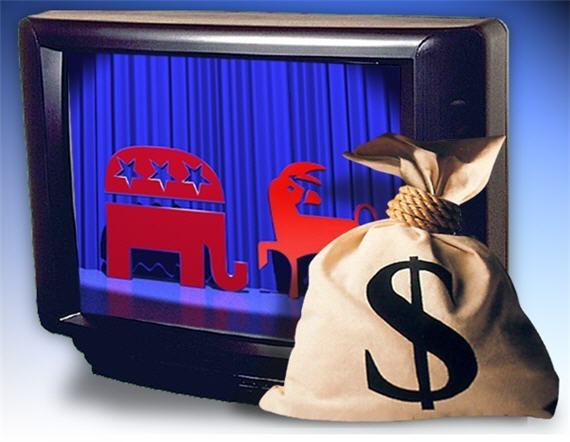
The growing power of high net worth individuals is a relatively new subject, though. Presumably, under Citizens United, they will now have unlimited power to run ads supporting their issues. The consequences of this are speculative, since this will be the first cycle since the decision. Aside from the Iowa Caucuses and New Hampshire primary, presidential politics is about dominating the television airwaves. That takes boatloads of money and further increases the influence of those who can afford to get their message out.
Regardless, this is increasingly the way the game is played. George W. Bush broke with tradition in 2000 by forgoing public funds; Obama followed suit last cycle. Previous records will surely be exploded in 2012.
At the end of the day individual citizens will decide the winner of the contest by voting. The well-heeled ultimately get the same vote as everyone else. But they will have more ability to influence the debate leading up to Election Day than ever before.