
At its core, authoritarianism is simply a government that is based on the authority of some specific person or group. This stands in basic contradistinction to democracy, which is a system wherein the public governs as mediated through free and fair elections in the context of substantive protections of the civil rights and liberties of citizens.
Authoritarianism can take many forms. Here is a basic, but not exhaustive, list.
- A theocracy is an authoritarian form of government because the authority to govern is in the hands of the clerics.
- A monarchy is an authoritarian form of government because the authority to govern is in the hands of the king.
- A military dictatorship is an authoritarian form of government because the authority to govern is in the hands of a specific general or a military junta.
- One-party rule is an authoritarian form of government because the authority to govern is in the hands of the leadership of the governing party.
By the way, all of those kinds of regimes might have elections, but they don’t actually change who has the authority to govern.
Ultimately, the basic question is, always, “Who governs and what is the source of their power?”
I would note that the severity of a regime’s authoritarian control over the population can vary greatly. Life under such a system can even be pretty mundane; it needn’t be a totalitarian nightmare to nonetheless be an authoritarian system. Further, the negative effects of authoritarianism are not evenly distributed throughout the population; some suffer its effects far more than others.
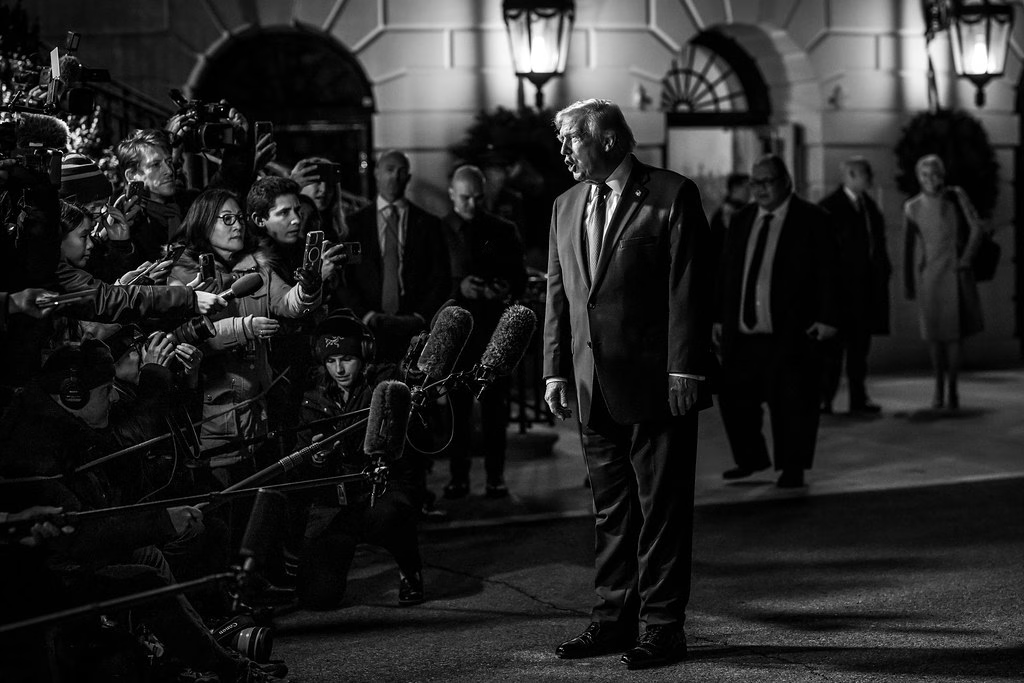
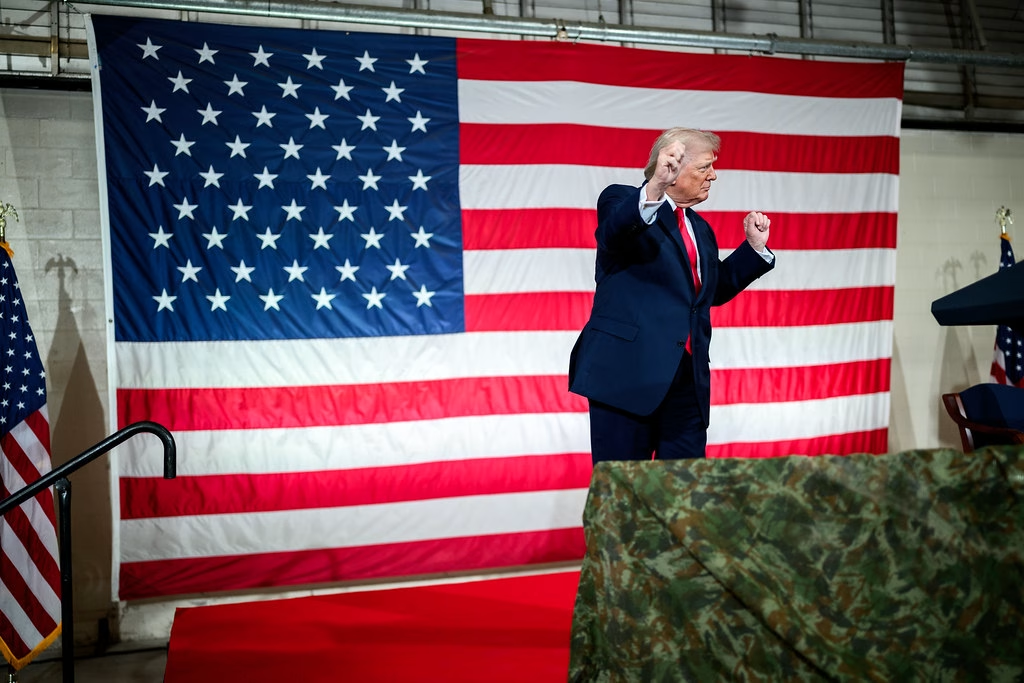
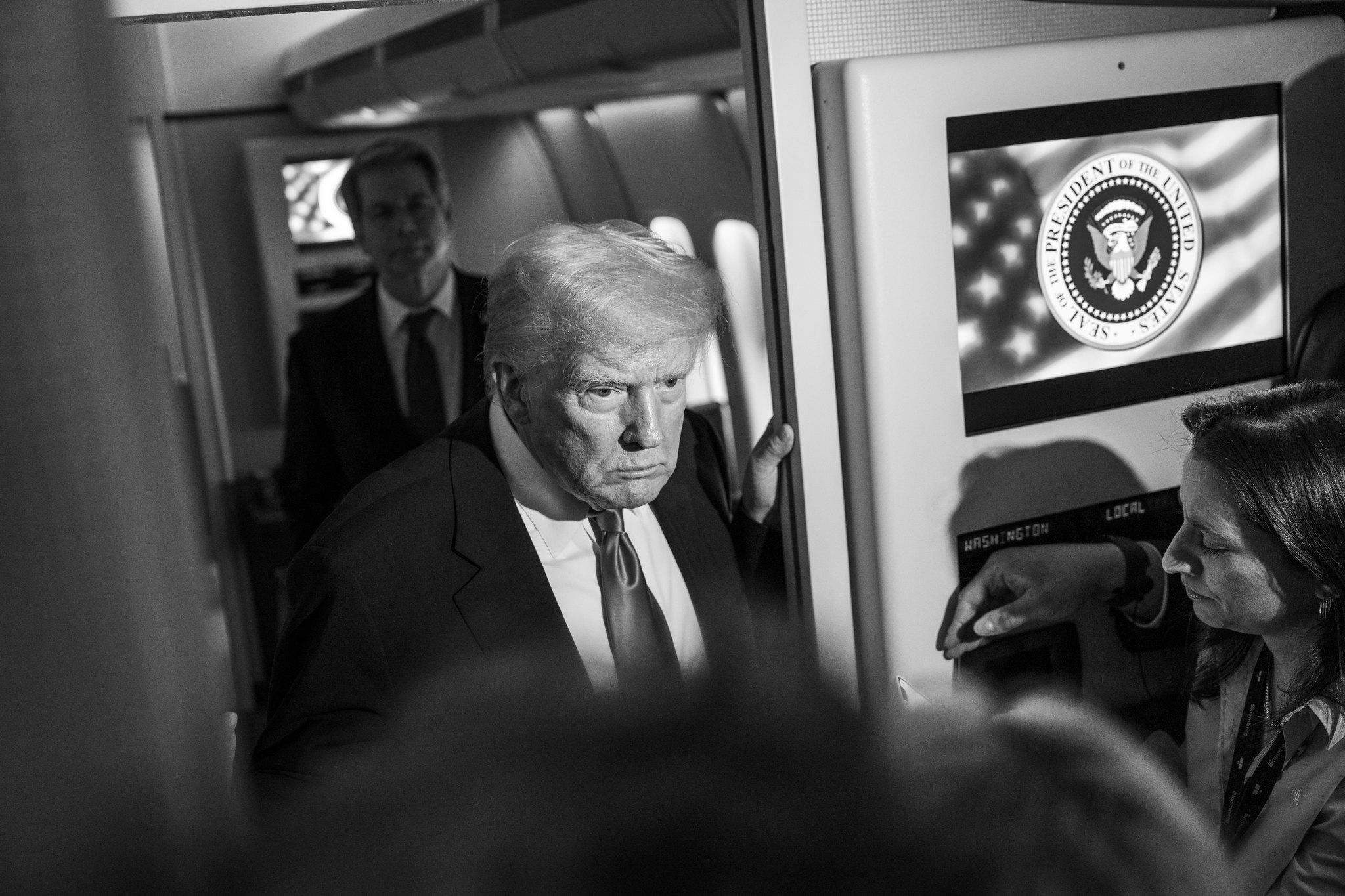
The reason why I have been willing to say that Trump is governing like an authoritarian is that he, along with whoever he is listening to, is making pronouncements and decrees as if they carry the weight of law. In some cases, like blowing up boats in the Caribbean because he has deemed the occupants to be terrorists, the orders are being followed. Some, like declaring flag-burning illegal, have been untested. Many remain in abeyance until SCOTUS rules, like his declaration about birthright citizenship. Others, like deploying troops to Portland, are temporarily on hold. Yet again, others have led to extorting funds from universities and pro bono work from major law firms.
I will note that there are some ways to try and argue that at least some of the above is legal, at least enough to give the administration cover with potentially skeptical supporters.* There is also the case that the other branches seem more than willing to let him do what he wants, such as dismantling agencies and withholding appropriated spending, both in contravention of laws passed by Congress.
The core point, however, for this post is that there is a distinction to be made between the mechanism that installs a government and the manner in which that government governs. This is why it is possible to speak of Trump governing like an authoritarian and trying to consolidate an authoritarian regime (i.e., new or significantly altered rules about power in the US). That he is governing like an authoritarian does not mean, quite yet, that the system has been fully transformed, save to note that it is not going back to “normal.”
The tests are the midterms, roughly a year from when I write this, and then 2028.
The test at those infection points will be how much we retain the competitive portion of the system, flawed as it is.
I would add, also, that governing as an authoritarian does not always mean things like vaporizing boats, deploying federal troops to cities, or sending detainees to foreign gulags. It could be sending candygrams to every American citizen by illegally spending money out of the treasury. I note this because I am getting the impression that some people only associate “authoritarian governance” with stereotypically dictatorial behaviors.
I would add something that I usually assume goes without saying (or, more likely, because deep dives into definitions are not what most people want to read)** which is that democratic governance has to have some respect for what previous governments have established via regular means. For example, USAID was created, over time, via the actions of a number of elected presidents and Congresses. It was legitimately created and empowered via a series of legal and constitutionally empowered decisions. Therefore, to dismantle it should, in a healthy democracy, require using similar means to do so. Being able to do so via fiat is the hallmark of authoritarian governance.
A president who can say, despite decades of democratically legitimate actions, “I don’t like this thing, so I am shutting it down,” is governing based on his own authority as he sees it, and is doing so outside of the normal democratic process. A healthy system should be able to stop extralegal actions of that nature, and yet here we are.
Having said all of that, Trump won, for all the flaws of American electoral democracy, a free and fair election to office in 2024. There is no reason to dispute that fact. The same is true of the current Congress, although the democratic quality of the process as it pertains to the House is an ongoing area of critique for me, given serious problems with competitiveness. And it is requisite for me to note the Senate’s problem with representativeness.
Setting aside real critiques of democratic quality, the fact is that the current government was elected in a democratic election.
While I agree with various assessments that have downgraded its scores on the quality of American democracy, we won’t know for sure how to classify where were are until next year and then again in 2028. But I still stress, again, that there is little doubt about the deficiencies of American democracy, even with the best of outcomes over the next several years.
I say this as a political scientist and analyst. I don’t have the necessary data needed to make a definitive assessment of where to place the US regime type as it pertains to my post on Saturday. Again, the actual tests are coming, and along with them the needed data.
Still, I continue to assess the situation as one in which we aren’t going to return to “normal.” So, the question is, where are we headed?
To be clear: I have no crystal ball.
Saturday, I stated that I thought the most likely outcome is a kind of two-party competitive authoritarianism wherein there are relatively free and fair elections, but that the winner governs in a manner more akin to what we are seeing now from Trump, specifically by-passing Congress and using EOs to accomplish the goals of the president.
I received two kinds of pushback on this. On type was about my I thought 2b the most likely outcome. I will leave that to another post.
The second type was that the Democrats, if they won, wouldn’t behave that way. Paul Campos at LGM, for example, stated the following:
The option of a competitive authoritarianism. in which the Democratic party becomes a mirror image of the Republican, and we trade off back and forth between essentially anti-democratic authoritarian regimes with radically different policy goals, strikes me as wildly improbable. This would require a Democratic party that would bear essentially no resemblance to that which now exists.
This echoes some things from the comment section of my post, i.e., that the Democrats would not be willing to wield power the way Trump has. I simply do not understand why it would be the case, after four years of damage done via Executive Orders and fiat from the White House, that if a Democrat takes the office in 2029 that they would look at those tools and say, “Nah!” I would note one of Biden’s responses to Trump1 was to issue a bunch of EOs himself, many trying to reverse the ones that Trump issued. Trump has already issued almost as many in his first nine months as he did in his first four years (source). There is going to be a lot to undo, and there is little in the history of Congress in the last couple of decades to suggest they are going to be the ones to clean it up.
Indeed, the notion that the legislature is going to fix anything, regardless of who controls it, seems more fantastical to me than a hypothetical Democratic president governing as I am positing.
I would stress that everything I am talking about assumes that some kind of real competition exists, which fits the Levitsky and Way conception of all of this. Again, I may be stretching how much competition would continue, but my point is predicated on the obvious, long-term dysfunction of the legislative branch, coupled with a very energetic executive that Trump seems to be demonstrating is possible.
All of that can lead to keeping a lot of the forms and appearance of the pre-Trump constitutional order, but with the power dynamics being substantially rearranged.
I would note, too, that Obama’s EO on DACA and Biden’s on student loans were both examples of executive action in the face of the inability to get Congress to act (I would argue this was especially true for DACA). For a number of reasons, I place these moves in a different category than things like Trump’s EO about birthright citizenship and flag-burning, and I am not seeking to relitigate them now, but simply would note that that is the kind of executive action that Juan Linz’s view of presidentialism would have predicted.*** He noted that executives, hamstrung by legislative inaction, might turn to other methods, even questionable ones, to get policy accomplished.
Again, without getting into the legality of DACA, which has been challenged and questioned by courts, it is a good general example of what could increasingly be our future: programs and structures created by one president and cancelled by another, while Congress just stands over the corner and worries about the mid-terms, doing nothing. Then such EO-created programs become either the domain of a new EO and/or of slow-moving courts that leave things in weird limbo. That is not the system the US Constitution purports to create.
The notion that the next Democratic president is not going to feel forced to continue to EO parade strikes me as unlikely (Indeed, some may welcome it with open arms). Moreover, as a general axiom of politics, once a power has been discovered and deployed, it is rare that those who come to office after the discovery and deployment of power will eschew those tools.
I would put it this way: extrapolate out four years of Trump2 that look a lot like the first nine months. A Democrat wins control of the White House and both branches of Congress, but does not have 60 votes in the Senate (and, like with Biden’s first two years, lacks the votes to remove the filibuster). Do we really think that such a Democratic president will look around the Oval and see all the tools Trump used to govern by fiat and not deploy to fix the damage? Or, you know, to do things they think are good and needed?
This seems unlikely and cuts against human nature and the collective history of politics.
Democrats may not order troops into the streets, but they may want to send candygrams. And candygrams distributed by authoritarian fiat may well be sweet, but they are nonetheless still the products of authoritarian rule.
Maybe the tl;dr is this: Congress has demonstrated a long-term inability to fix obvious problems (e.g., immigration and the budget process). Trump has demonstrated at least some ability to ignore Congress to accomplish his goals. In what universe does the next president not build on that power grab?
BTW, I would note that if one listens to John Stewart’s The Weekly Show podcast, for example, the most recent episode with Tim Miller and David Faris, you will hear Stewart more or less advocating for what I am describing. He did so back in some late summer episodes as well. Indeed, Farris wrote a piece for The Nation that illustrates what I am talking about here: The Alternate-Universe Version of Trump’s Executive Putsch. The piece is meant to be over-the-top, but it may help readers understand what I am trying to say here.
Note: I did not get my views on this topic from Stewart and Farris. I’ve been thinking about some version of this since the early days of DOGE when it was clear that no one was going to stop the Trump administration from closing offices, firing people, and ignoring Congress. Our system does not have the guardrails to stop these actions.
Again, I see nothing inherent in the Democratic Party that will forestall future Democratic politicians from using this power.
When faced with using the Ring of Power, most people are like Boromir, i.e., convinced that they will use it for good. Galadriels and Gandalfs who refuse to be corrupted are rare. Rarer still are those who would risk life and limb (or career) to destroy that power, as per Frodo and Sam.
(Having managed to be both a political scientist and an Ancient Geek, I will now stop typing.)
*Because I do not want to be misunderstood: I am not saying that those arguments are valid, but they do provide cover for supporters to ignore the lawlessness. For example, as a general matter, we, as a society, have come to accept that the president, as CINC, can order the military to use force as he sees fit. As such, a lot of people will fall for the notion that these fast boats are, actually, terrorists who deserve to be blown up. There is also the sad reality that if SCOTUS allows the president to engage in pocket recisions, that would make it constitutional (and SCOTUS’s role in all of this is its own serious problem).
**The reality is that complex social phenomena like “democracy” or “authoritarianism” often require long and complex definitions to fully explain, but blogging is often a poor place for such digressions.
***See Juan Linz’s now classic article, “The Perils of Presidentialism.” Journal of Democracy, Volume 1, Number 1, Winter 1990, pp. 51-69.