
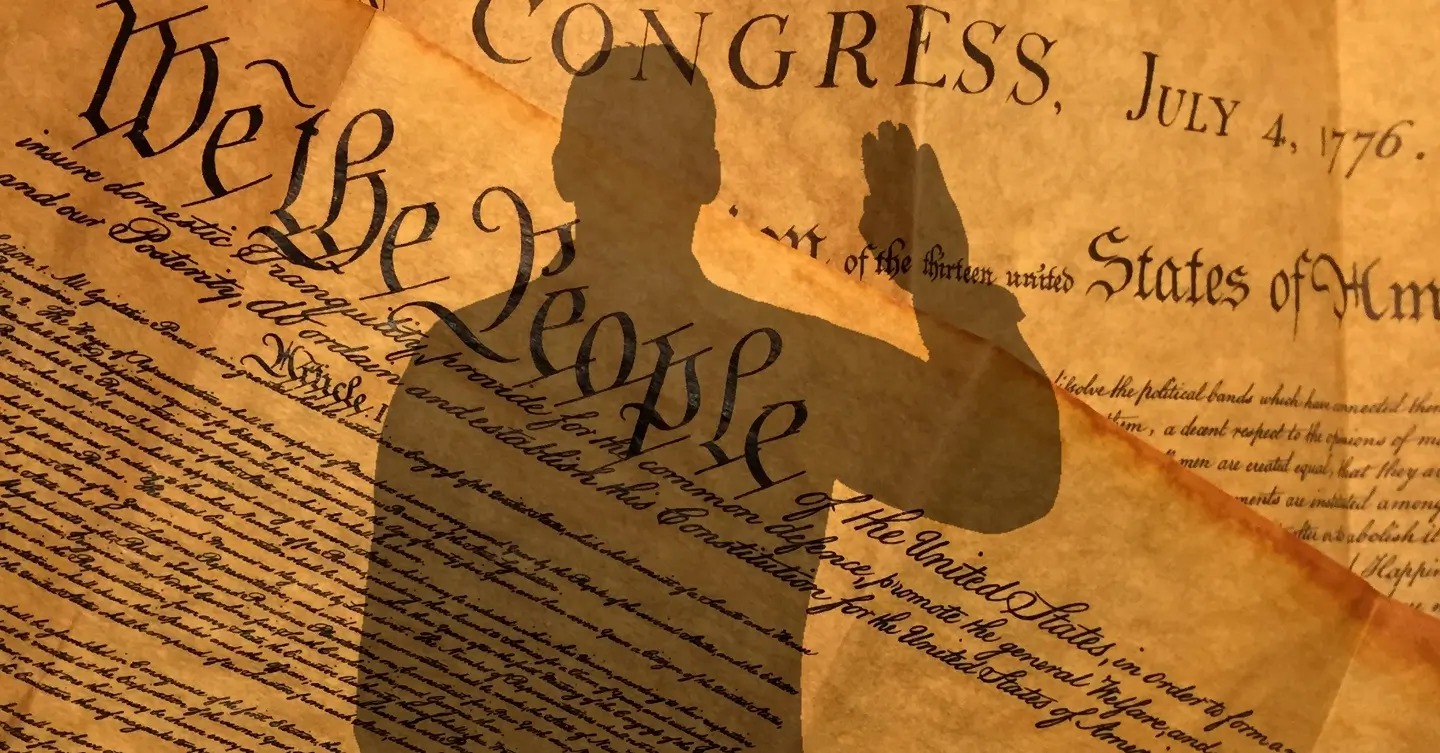
The Posse Comitatus Law of 1878 is about to get shoved into the dustbin of history.
The U.S. military expects to have 20,000 uniformed troops inside the United States by 2011 trained to help state and local officials respond to a nuclear terrorist attack or other domestic catastrophe, according to Pentagon officials.
The long-planned shift in the Defense Department’s role in homeland security was recently backed with funding and troop commitments after years of prodding by Congress and outside experts, defense analysts said.
There are critics of the change, in the military and among civil liberties groups and libertarians who express concern that the new homeland emphasis threatens to strain the military and possibly undermine the Posse Comitatus Act, a 130-year-old federal law restricting the military’s role in domestic law enforcement.
But the Bush administration and some in Congress have pushed for a heightened homeland military role since the middle of this decade, saying the greatest domestic threat is terrorists exploiting the proliferation of weapons of mass destruction.
Before the terrorist attacks of Sept. 11, 2001, dedicating 20,000 troops to domestic response — a nearly sevenfold increase in five years — “would have been extraordinary to the point of unbelievable,” Paul McHale, assistant defense secretary for homeland defense, said in remarks last month at the Center for Strategic and International Studies. But the realization that civilian authorities may be overwhelmed in a catastrophe prompted “a fundamental change in military culture,” he said.
Ahh a classic example of Higgsian growth of government.
In Crisis and Leviathan, Robert Higgs shows that the main reason lies in government’s responses to national “crises” (real or imagined), including economic upheavals (e.g., the Great Depression) and especially war (e.g., World Wars I and II, Cold War, etc.). The result is ever increasing government power which endures long after each crisis has passed, impinging on both civil and economic liberties and fostering extensive corporate welfare and pork. As government power grows, writes Higgs, it achieves a form of autonomy, making it ever more difficult to decrease its size and scope, and to resist its further efforts to increase its reach, so long as the citizenry remain uninformed of its true effects.
In resposne to the war on terror we have a new federal department that has a cabinent level appointee, considerably more spending, and now watring down if not the outright removal of a 130 year old law limiting the use of U.S. military on U.S. soil. How long before mission creep has the military aiding in drug enforcement, crowd control and other such endeavors without the need for declaring a state of emergency?









