

Tomorrow, Colombia will hold presidential elections. Colombia has an absolute majority requirement, so while technically a candidate could win outright tomorrow, the almost certain outcome is that two of the thirteen candidates competing will advance to a run-off.
Here’s the ballot:*
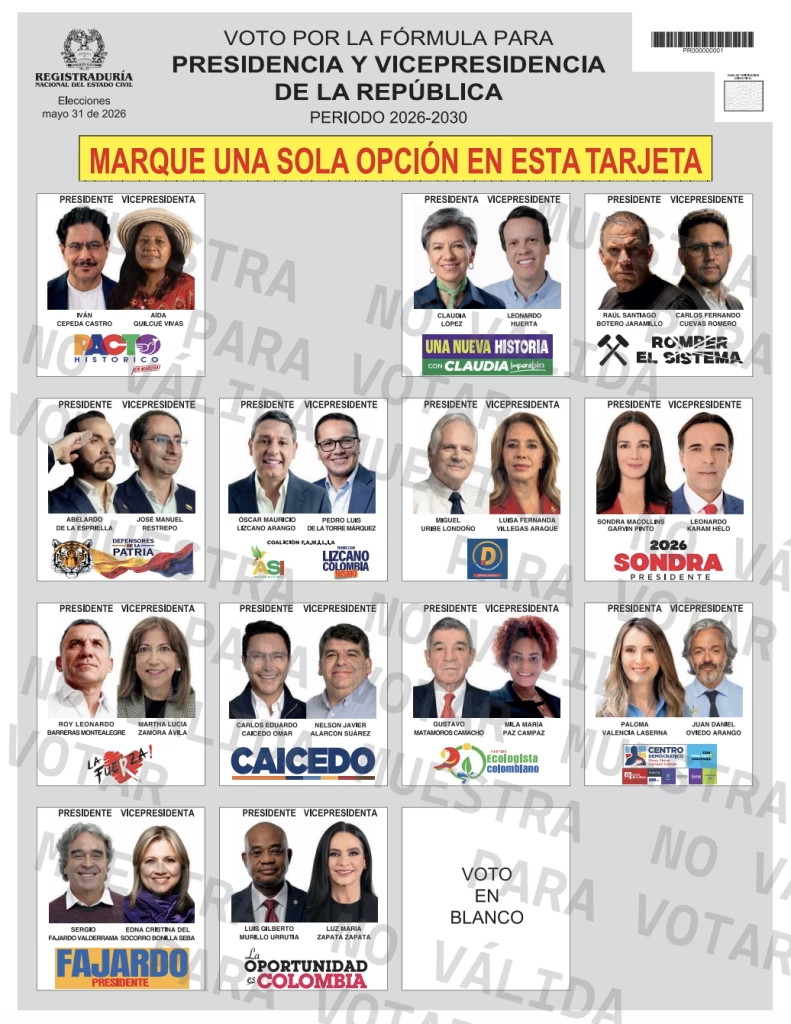
Of the thirteen** tickets, only three matter going into tomorrow:
The leftist candidate, Iván Cepeda:***

The right-wing “outsider,” Abelardo de la Espriella:

And also on the right, but maybe less right/more establishment than de la Espriella, Paloma Valencia:

Polling puts Cepeda and de la Espriella in the run-off.
Via La Silla Vacia:

Also, see Reuters:
An AtlasIntel poll released on Saturday, the last to be issued before the May 31 vote, put Cepeda – the ruling party’s candidate – in the lead with 38.7% of the vote, followed by businessman De La Espriella with 37.3%.
The second round currently polls as follows
However, the poll estimated that in a potential runoff vote between the two, De La Espriella would receive 50% of the vote and Cepeda just 41.3%.
Weirdly, this election reminds me a bit of 2022 (see my write-up of the first round results), when it was a leftist (Petro) versus a bombastic right-wing outsider. Perto won in 2022, but barely. Petro won 50.42% over his opponent, Rodolfo Hernández, 47.35% (the rest going to “none of the above”).
While it seems more likely that de la Espriella would pick up the needed votes to win from Paloma, it seems possible that 2026’s second round could be a”voto finish” as they say in Latin America.
This all matters from a US POV insofar as a Cepeda government, like that of Petro, would be a bit of a thorn in the side of the Trump administration. De la Espriella, however, is talking like he’s a Bukele (El Salvador’s president) wannabe who would likely be more than happy to join in the current militarization of drug interdiction being pushed by the US at the moment.
It seems worth noting, too, that this election is yet another global example of polarization within existing electorates, as well as the ongoing surge in right-wing populism. Both of these observations are worth considering as we in the US seek to diagnose why we are where we are.
More:
- Via the Bogotá Post: 2026 Colombian presidential elections: The first hurdle.
- Via NPR: In Colombia’s election, undecided voters weigh leftist vs. right-wing firebrand.
- Via Euronews: Colombia elections: 5 key factors ahead of a pivotal vote for the nation.
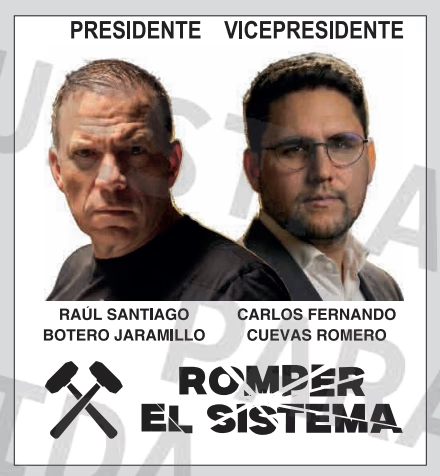
Side note: kudos to these dudes for their logo (“rompir el sistema” means “break the system”). Plus, Santiago looks like he is auditioning for a new version of Robert Conrad’s Everyready commercials (IYKTYK).
I will confess to knowing nothing about these guys.
*Since this was an area of study for me for a very long time, I feel the need to note the lack of long-standing party labels on this ballot (no Liberals or Conservatives or even more recent parties like Cambio Radical or La U). I would also note the personalistic nature of a lot of these labels.
**For those who think presidentialism is the reason we have two parties.
***Who could be played by Tony Shalhoub if they were making a movie, amiright?








