 I came across the following 2007 article by Mark A. R. Kleiman from The American Interest on the topic of the drug war which I highly recommend: Dopey, Boozy, Smoky—and Stupid.
Several facts he notes that are worth pointing out:
Thirty-five years into the “war on drugs”, the United States still has a huge drug abuse problem, with several million problem users of illicit drugs and about 15 million problem users of alcohol. Illicit drug-dealing industries take in about $50 billion per year.
[…]
On top of all that, we have a highly intrusive and semi-militarized drug enforcement effort that is often only marginally constitutional and sometimes more than marginally indecent.1 That enforcement effort keeps about 500,000 Americans behind bars at any one time for drug law violations, about 25 percent of the total U.S. prison and jail population. A larger proportion of U.S. residents is doing time for drug law violations than is behind bars for all offenses put together in any country to which we’d like to be compared.
This does not sound like a successful policy to me (and if you can defend it as successful, please give it a whirl in the comments section). While I sympathetic to a host of libertarian/philosophical objections to the current prohibitionist polices of the the war on drugs,* the bottom line in terms of critiquing the policy is one of efficacy: the policy is extremely expensive and yet it is not effective. This has been empirically true for some time, but the typical response from drug warriors is that we simply aren’t fighting hard enough (which mostly means not spending enough money on a continuing doubling-down on existing approaches).
Indeed, in a book that is roughly fifteen years old now,** the authors called this “The Drug War Syndrome” and asked “Why does the United States continue to pursue the same policies in the face of failure? And why have the debate and the policy prospects become so narrow and circular, denying consideration of valuable alternatives?” (Bertram, et al., 6). While there appear to be some movement in the public debate over marijuana, we can still pretty much ask the same questions today.
Kleiman, further, rightly notes “the first step toward achieving less awful results is accepting that there is no one ‘solution’ to the drug problem” which is a key mindset change that we need. The war on drugs is unwinnable, and likewise legalization or other alternative policies will not get rid of the drug problem. The issue with drugs is not about solving a problem once and for all, it is a about managing that problem. Kleiman continues:
Any set of policies will therefore leave us with some level of substance abuse—with attendant costs to the abusers themselves, their families, their neighbors, their co-workers and the public—and some level of damage from illicit markets and law enforcement efforts. Thus the “drug problem” cannot be abolished either by “winning the war on drugs” or by “ending prohibition.” In practice the choice among policies is a choice of which set of problems we want to have.
The whole thing is worth reading in its entirety.
A few bullets that are worth noting:
- He rightly points out that not all users are addicts. Our current drug policies (and public perception) tends to follow the following logic: all users are addicts and all it takes to get addicted in one usage. However, this is not the case and to base a multi-billion dollar set of policies on such assumptions is problematic.
- We over-focus on arrests and imprisonment. This is misguided in a variety of ways (as, for example: once convicted of drug crimes the only thing a released ex-con may be able to find a job doing is dealing drugs again).
- Further, in terms of incarceration: “The current system of enforcement, which bases targeting and sentencing primarily on drug volume, should be replaced with a system focused on conduct. If we target and severely sentence the nastiest dealers rather than the biggest ones, we can greatly reduce the amount of gunfire, the damage drug dealing does to the neighborhoods around it, and the attractive nuisance the drug trade offers to teenagers.” Focusing on what he calls “nastiness” rather than just volume makes sense. Not all drug dealers are equally problematic to their community and in a world of finite resources it makes sense to focus on the ones behaving in an overtly violent fashion rather than focusing on volume alone.
He makes a variety of other observations and recommendations, but another on that stood out to me is as follows:
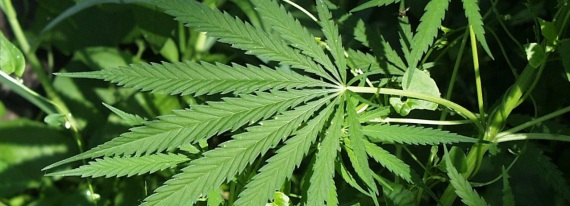
Let pot-smokers grow their own. Marijuana is an outlier among currently illicit drugs. Its risks are markedly smaller, its consumption is enormously more widespread, and it leads to more arrests than all the others combined—mostly for misdemeanor possession. It is also the one illicit drug that consumers could practically produce themselves. Current cannabis laws criminalize millions of otherwise law-abiding individuals and create a multibillion-dollar illicit market.
He has more to say about this in the piece, but it is an intriguing notion. It would totally destroy the illicit market that helps fuel the Mexican Cartels (not that it would put them out of business). It would also mean a massive savings for law enforcement. The reason for allow personal growth is that it would preclude massive marketing campaigns by companies trying to promote usage if the product were legalized and made into a mass-prodcued commercial product.
Again, all of this about dealing in reality, not some fantasy world wherein the use of mind-altering chemicals are forever cast into the void.
I will conclude by saying: read the whole thing.
(And if you want more reading on the subject, I do recommend the Bertram, et al. text noted below as well. It has a 1996 copyright and is therefore a bit out of date, but the basic description and critique of the US drug war remains quite valid).
*In all honesty, if you want to get high in the privacy of your own home and you do no harm to others in the process, I am not sure what the state’s legitimate interest is in your behavior.
**Bertram, Eva, et al., 1996. Drug War Politics: The Price of Denial. Berkeley, CA: University of California Press