
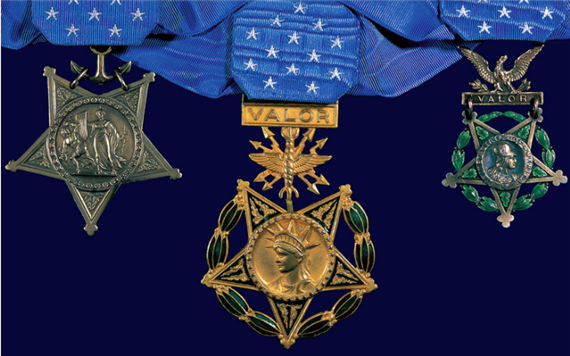

Earlier this week, the Supreme Court held its oral arguments in the case of United States v. Alvarez, the hapless liar who told numerous whoppers about his biography, including that he had been awarded the Medal of Honor. UCLA lawprof Eugene Volokh examines the questions asked by the justices and gleans the basis on which they might decide the case: “When should knowing lies be restrictable on the ground that they cause emotional distress?”
He provides a useful backgrounder on two areas of Constitutional jurisprudence with which I was almost completely unfamiliar, despite having several semesters worth of law classes (in a political science department, not a law school) under my belt: the “intentional infliction of emotional distress tort” and the “false light tort.” The example I found most fascinating was a lawsuit brought and won by the great Braves pitcher Warren Spahn.
[O]ne leading false light case — cited by the Court in Time, Inc. v. Hill — involved, among other things, a knowing lie about a military decoration. Julian Messner, Inc. published a supposed biography of baseball great Warren Spahn, written by one Milton Shapiro; the biography was aimed at children. The biography was largely fictionalized, but, in keeping with its genre and target audience, didn’t say things that made Spahn look bad (and thus wasn’t libelous). Rather, it made him look more heroic than he was, including by falsely claiming that he had earned a Bronze Star:
Two chapters of the book are devoted to Spahn’s experiences in World War II. The book mistakenly states that Warren Spahn had been decorated with the Bronze Star. In truth, Spahn had not been the recipient of this award, customarily bestowed for outstanding valor in war. Yet the whole tenor of the description of Spahn’s war experiences reflects this basic error. Plaintiff thus clearly established that the heroics attributed to him constituted a gross nonfactual and embarrassing distortion as did the description of the circumstances surrounding his being wounded. Sergeant Spahn was not in charge of “supervision of the repairs” (p. 10) of the Bridge at Remagen; Spahn did not go “from man to man, urging them on” (p. 9); Sergeant Spahn did not go “into the town of Remagen to check with his company commander on his orders for the day” (p. 11) and, consequently, the whole description thereof is imaginary; Spahn had not “raced out into the teeth of the enemy barrage” (p. 13); and in addition to other untruthful statements surrounding his being wounded, Spahn was not “rolled * * * onto a stretcher” (p. 14); but remained ambulatory at all times after treatment in the first-aid station.
The New York courts held that such speech was constitutionally unprotected, and therefore could give rise to a tort recovery, simply because of the emotional distress that the falsehoods caused Spahn. To this day, this is a classic and often-cited example of speech actionable under the false light tort. The Court’s decisions in Cantrell v. Forest City Publishing Co. and Time, Inc. v. Hill would allow such speech to give rise to liability — again, even without a showing of injury to reputation, financial fraud, or even the sort of severe emotional distress involved in the “A falsely tells B that her husband has been badly injured in an accident” intentional infliction of emotional distress scenario.
Here, Spahn was worried about the damage to his reputation caused by people getting the impression that he was falsely claiming unearned military honors! (Amusingly, Spahn’s Wikipedia entry falsely credits him with the Bronze Star.)
Still, I’m not sure how any of the cases Volokh cites sheds any light on the matter of the Stolen Valor Act. Who is it that suffered emotional harm from Alvarez’ lies?
I’ve written a lot about this subject over the years and won’t repeat myself at length here. See, in particular “Criminalizing Lying About Heroism” (March 2008) and “Stolen Valor Laws Unconstitutional” (August 2010). As I observe in the latter, “while it touches some raw nerves for obvious reasons, it’s not immediately clear how lying about having served in combat or been awarded a medal for valor should belegally different from lying about athletic prowess in high school, the number of sexual partners you’ve had, or the size of one’s sex organs.”
via Ryan Caldwell









