Back to Court Expansion
Two members of the presidential commission reach the conclusion that expansion is needed.
Two members of the presidential commission reach the conclusion that expansion is needed.

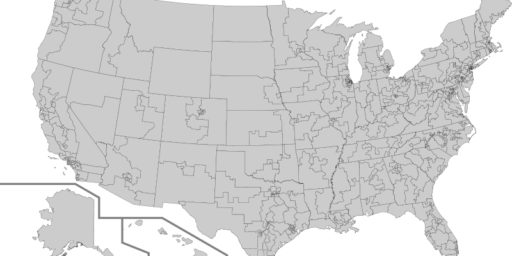
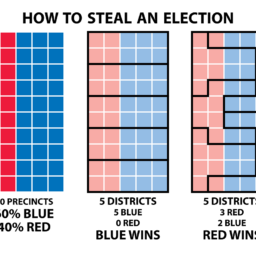
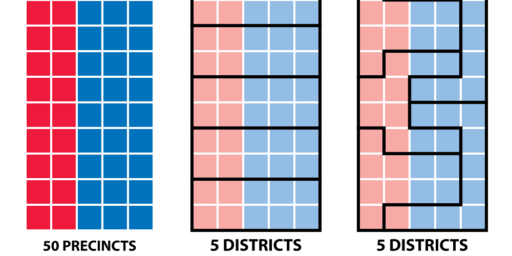
Politicians controlling lines control voters (instead of voters controlling politicians).
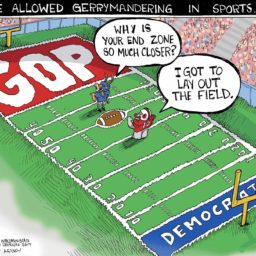

Representatives Choosing Their Voters Rather than Vice Versa, Chapter 412.


Voters are suppose to choose elected officials, not the other way around.


We’re an incredibly divided country but splitting it into two is impossible.
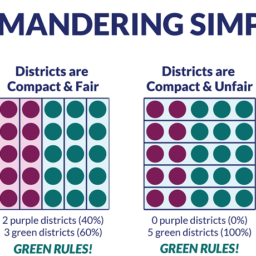

The Democratic legislature is likely to set aside the map proposed by the independent commission.

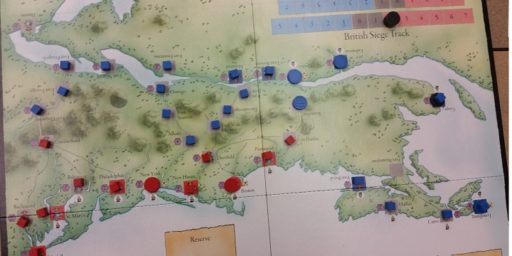
Even the smartest designers can’t anticipate all the flaws with the rules they write.
A recent report shows 78 of 435 seats in the US House are truly competitive.


A quirk in our system combined with shrewd gamesmanship will give them unprecedented power.


Multiple indicators point to a decline in the representativeness of the American system.
Any “fair” drawing of districts will yield a GOP advantage over time.


America’s institutions are undemocratic but only some of them are a product of the Constitution.
Historical precedents fall apart when we’re in a truly unprecedented time.


The party is unlikely to suffer consequences for its anti-democracy actions.
Institutional reform is necessary, but we can’t accomplish much in the face of tribalism.
The convergence of design flaws in the constitution and a flawed leader have brought us to brink of an electoral crisis.
It creates a veto gate that they are almost guaranteed to control when they need it.


The evidence is clear. Injustice feeds rage and rage sometimes boils over.
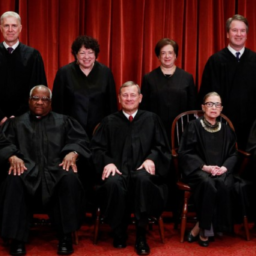

The Supreme Court returns to work today with a significant number of high-profile cases on its docket.
The Trump Administration has informed Federal District Court Judges in Maryland and New York that it intends to still try to justify putting a citizenship question on the 2020 Census.
In a clear defeat for the Trump Administration, the Supreme Court upheld a lower court ruling that the Federal Government could not ask about citizenship on the 2020 Census.
In a significant setback for challenges to partisan gerrymandering, the Supreme Court has effectively ruled that Federal Courts do not have jurisdiction to hear challenges to redistricting based on partisan motivations.
Democrats clashed, to some degree, in last night’s inaugural debate of the 2020 season but they clearly agreed far more than they disagreed.
The Supreme Court rejected an effort by the Virginia House of Delegates to overturn a Federal Court ruling that the state’s district lines constituted gerrymandering by race. But they didn’t rule on the merits of the appeal.
As the Supreme Court enters the final weeks of its term, Justice Ruth Bader Ginsburg hints at deep divisions and disappointment for people on the left.
Starting tomorrow, we should be getting some headline-grabbing opinions from the Supreme Court.
Despite similar paths to the Supreme Court, it turns out the two don’t share the same style and approach.
A panel of three Federal Judges has found Ohio’s Congressional District map to be unconstitutional, but a case currently pending before the Supreme Court could mute the impact of this decision.
A Federal Court in Michigan has found several of that state’s Congressional and state legislative districts to have been subject to extreme partisan gerrymandering.

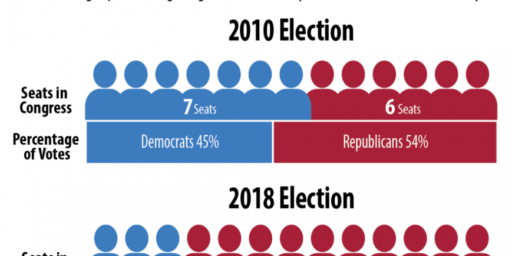
Oral argument hints that we may have a 5-4 ruling allowing state legislatures to continue stacking the deck.
The former Attorney General is seriously pondering a presidential bid. Seriously.
Former Astronaut Mark Kelly, the husband of Gabby Giffords, is running for Senate in Arizona against Martha McSally.