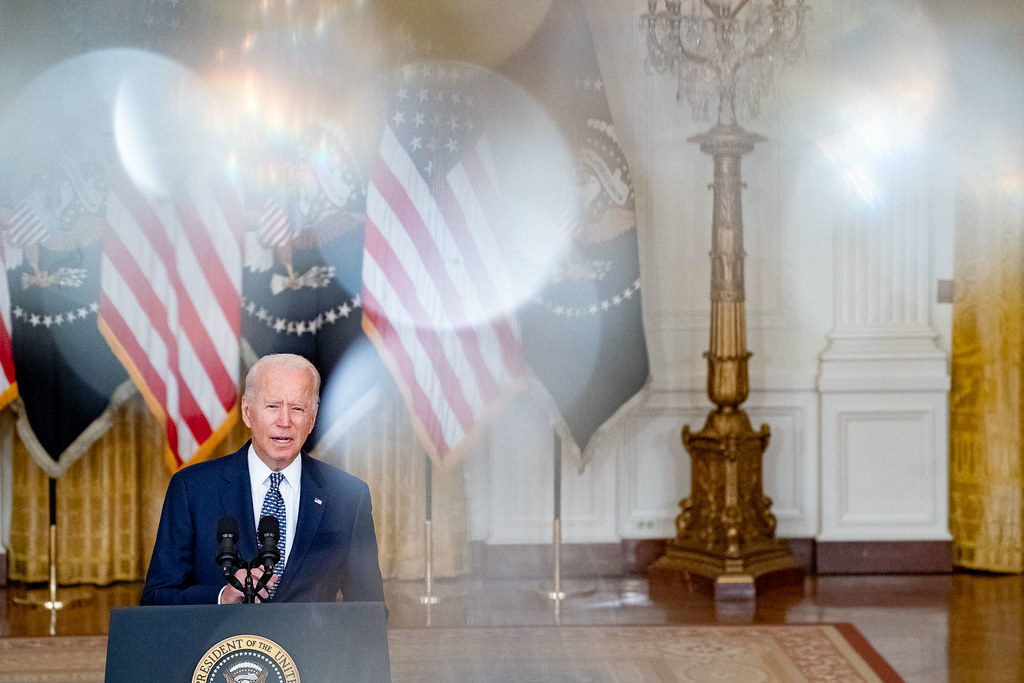

The headline of Peter Nicholas’ piece inThe Atlantic asks: Is Biden Doing Enough to Protect Democracy?
The answer is clearly no, especially if you think (as I do) that pro-democratic, pro-voting rights legislation is essential.
While yes, there is legislation that would help increase the quality of voting in the United States (but that are thin gruel in terms of real democratic reform), the structure of the Senate continues to make actual legislative success unlikely.
One thing is for sure, there really doesn’t seem to be any urgency on this issue from Democrats in general, and especially not from Biden. This a problematic given the ongoing attempts on the part of many Republicans to undermine American democracy, both via legislation but also rhetorically.
Fiona Hill worked on Trump’s National Security Council and later provided compelling testimony in his first impeachment trial. I asked her if she feared for democracy’s future should Trump win again. “We’re already there,” she told me. “I’m worried about it now. Millions of people are showing they don’t want any criticism of Trump. Democracy is becoming a dirty word, something that’s anti-Trump.”
“These are direct assaults on the basic underpinnings of the democratic system,” Wendy Weiser, who directs the Brennan Center for Justice’s democracy program, told me. This year, 19 states have passed 33 laws creating obstacles to the most fundamental American right, part of a “multipronged effort to sabotage elections,” she added.
The Biden White House has certainly paid some lip service to this issue, but there really is no urgency.
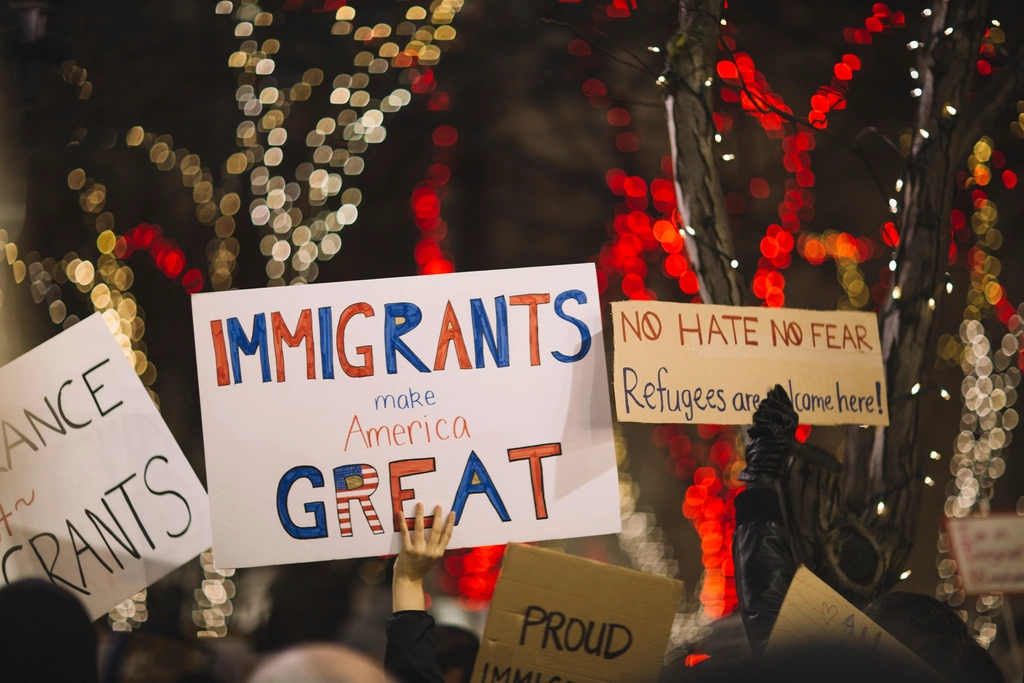
When I mentioned the alarm coming from activists, the White House official told me that the Biden administration is “pushing full force” to pass voting protections. “It’s fair for activists to continue to push,” the official said. “Every constituency has their issue. If you ask immigration folks, they’ll tell you their issue is a life-or-death issue too.” (Democracy’s preservation would seem more than a pet issue.) In one crucial respect, Biden has been holding back: He has yet to give a full-throated statement that Senate Democrats need to end the filibuster.
To that point, the main obstacle to at least some reform is the filibuster.
A new bill that Democrats have rallied behind, the Freedom to Vote Act, would beat back Republican attempts to manipulate elections for partisan purposes. It would set national voting standards that create a two-week early-voting period, make Election Day a public holiday, allow no-excuse voting by mail, and prevent the firing of election officials for political reasons. It also aims to prevent partisan gerrymandering, which some red states use to dilute the influence of minority voters. Biden has come out in favor of the bill, which is languishing in the Senate because of the filibuster rule.
An important thing to note about the Freedom to Vote Act is that it carries the support of the two moderate Democratic senators, Joe Manchin of West Virginia and Kyrsten Sinema of Arizona, who have balked at the cost of Biden’s $3.5 trillion infrastructure package.
At the moment, Manchin is trying to gather some GOP votes (good luck with that).
Democrats have worked out an arrangement that gives Manchin time to find 10 Republican senators willing to support the bill and meet the filibuster’s high threshold for passage. “It’s never going to happen,” Representative Eric Swalwell, a California Democrat, told me. “He won’t get half of that. He won’t get half of half of that. If we find ourselves in an authoritarian state where there is no more freedom of speech, press, or worship, I don’t think people are going to say, ‘Well, at least we still have the filibuster.’” (Manchin’s office did not respond to a request for comment.)
Democrats are understandably antsy. Senate Majority Leader Chuck Schumer is planning for members to vote on the bill as early as Wednesday. A delay would be costly: Republican-controlled legislatures are already coming out with redistricting maps that would lock in their majority status for the next decade. “I wish Senator Manchin the best in his effort to round up some Republican votes, but we cannot have infinite patience,” Democratic Senator Chris Van Hollen of Maryland told me. “The clock is ticking here. We’ve got to get these protections in place right away.” Practically, that looks unrealistic unless Manchin and Simena relent and agree either to nuke the filibuster or carve out a specific exception for voting rights. Biden could pressure the duo to do just that. But with his party holding a one-vote majority in the Senate, he would risk antagonizing two people he can’t afford to lose. When I asked a White House official if Biden supports lifting the filibuster to pass voting-rights protections, I got a tepid reply: “I don’t think we can rule out anything,” said the official, who was not authorized to speak on the record.
Swalwell’s assessment of the chance of getting GOP votes is spot-on (and his sarcasm, if a bit alarmist, is also on point).
Maybe Manchin tries to find GOP votes, realizes it ain’t happening, says he tried and then supports setting aside the filibuster in a limited way. Or, maybe he sticks to his “we must have bipartisanship” guns. (I won’t hold my breath for a positive outcome).
Regardless, one would think that Democrats would have a bit more urgency about this issue, not because of high principle, but because of practical politics. The voting restrictions passed by Republican legislatures will disproportionately affect likely Democratic voters and, likewise, the aggressive gerrymandering we are seeing will help Republicans. While I, personally, would love to see a dedication to democracy for democracy’s sake, I understand enough about politics to know that that reliance on self-interest is usually the better place to look.
It is incumbent upon me to note that the reforms being proposed are relatively minor relative to the democratic deficiencies in our system. Our main problems remain rooted in single-seat plurality elections as exacerbated by a too-small House, weak parties (in terms of control of label), among a host of other issues that I write about regularly.