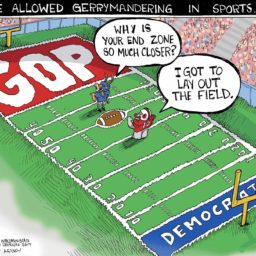
On the Number of Parties 4: The Oddity of Two, Part 3 (Thinking About Just Two)
A post about thinking in a comparative way.


The Weakness of US Parties Illustrated Yet Again
The primary calendar debate shows, yet again, that parties don’t fully control candidate selection.


Trump’s Rhetoric and the GOP’s Test
Spoiler alert: the GOP has already failed this test multiple times.
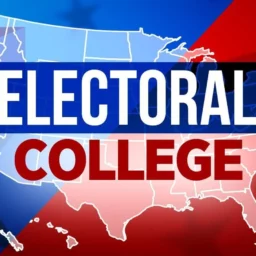
Red and Blue States Aren’t Permanent
The margins for 2024 are likely to be slim. But that hides a larger story.










Nonhierarchical Parties and the Problems of Candidate Selection
American parties are coordination problems with shared branding.


The News is Bad for Biden
The nature of American political reporting distorts our perception of reality.
64 Percent of Democrats Want Biden Replaced in 2024
With record-low poll numbers, the grass roots wants someone new on the ticket next time.





Podcast Recommendation (Plus: More on US Democracy)
Ezra Klein discusses the dynamics of American conservatism in historical perspective. Plus, he helps illustrate a key problem that we have in thinking about American politics (IMHO).
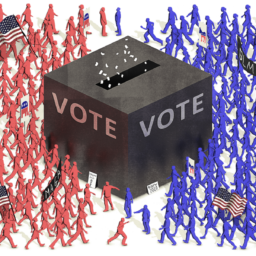
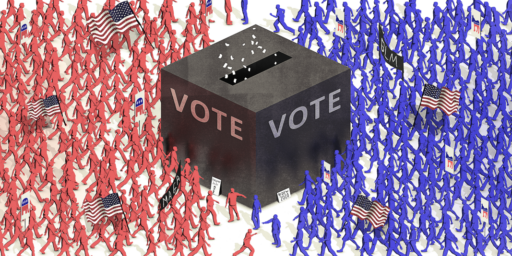
On American Parties
More on primaries with a foray into Madison and the general politics of power-seekers and incentives.
![[JD Vance]](https://outsidethebeltway.com/wp-content/uploads/2022/05/JD-Vance-256x256.jpg)
![[JD Vance]](https://outsidethebeltway.com/wp-content/uploads/2022/05/JD-Vance-512x256.jpg)






The Flawed Nature of Representation in the US
Our representation problems are far, far more about structure than they are about the messaging of the parties.

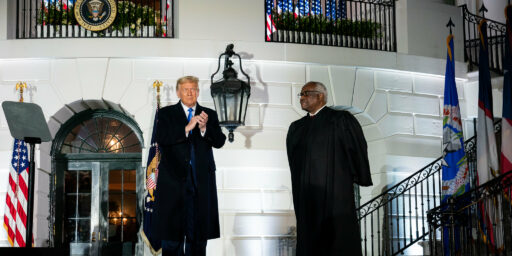


America’s Four Parties
Neither the Democrats nor the Republicans truly represent most Americans. Fixing that is exceedingly unlikely.

People Moving for Politics?
It seems that some Americans are relocating to be with people who share their social and cultural views.
Normalizing Political Violence
In their censure of Cheney and Kinzinger the GOP wants to rewrite history.
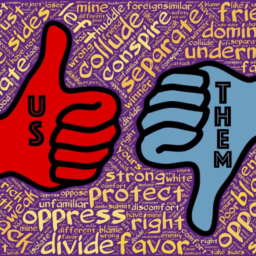

On Moderate Legislative Power and Other Political Dreams
A bloc of moderates is not coming to a Senate near you.
Why Are Biden’s Polls So Awful?
A pretty good President has numbers comparable to his historically bad predecessor.
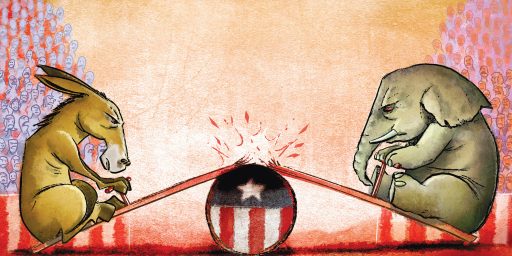


On the Number of Parties 1: Basic Counting, Part 1
Counting is not necessarily as straightforward as it may seem.