
The Economics President, Continued

Better than expected jobs report amid other less positive news.

First, some modest good news via CNN: The US economy added a higher-than-expected 178,000 jobs last month.

The US economy added 178,000 jobs in March, a signal that businesses were moving forward with hiring plans before the war with Iran escalated.

The unemployment rate eased to 4.3% from 4.4%, according to new data released Friday by the Bureau of Labor Statistics.

Economists expected a net gain of 60,000 jobs, a rebound after a surprising swing negative in February when 133,000 jobs were lost.

All well and good, but let’s put that in perspective (via CNBC):
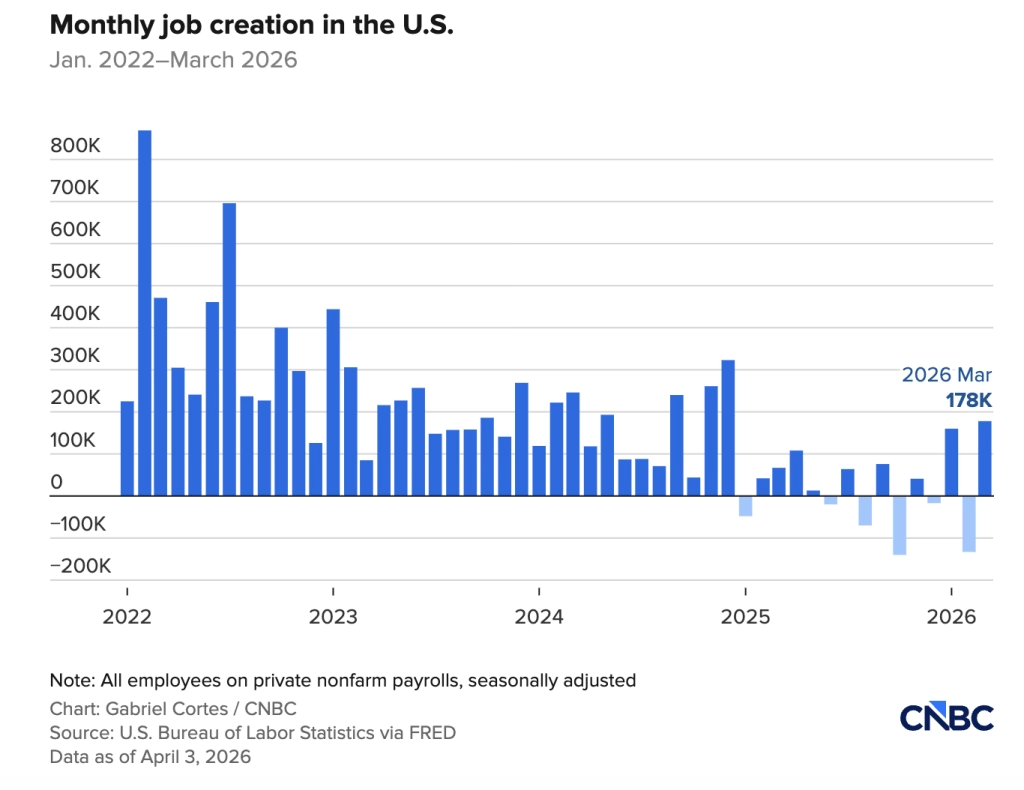
More from the CNBC link:

“The bottom line is March was somewhat encouraging, but it’s been a rocky year for the labor market with almost no hiring since last April,” said Heather Long, chief economist at Navy Federal Credit Union. “The March data will keep the Federal Reserve on hold, but no one is declaring victory yet. It’s likely to be a tough spring for job seekers.”

As has been the case, health care was responsible for much of the growth, with the sector adding 76,000 jobs. A strike at health-care provider Kaiser Permanente in February hit the sector. The BLS said ambulatory health care services rose by 54,000, with 35,000 coming from the strike workers returning.

Construction saw an increase of 26,000, while transportation and warehousing posted a gain of 21,000.

On the downside, the federal government saw a loss of 18,000, while financial activities lost 15,000.

[…]

Wages also rose less than expected, with average hourly earnings up just 0.2% for the month and 3.5% from a year ago. Economists had expected respective readings of 0.3% and 3.7%. The annual increase was the lowest since May 2021. Hours worked declined 34.2, down one-tenth from February.

And then there’s this:

Via CNBC: Brent oil spot price for actual cargo soars to $141, highest level since 2008 financial crisis.

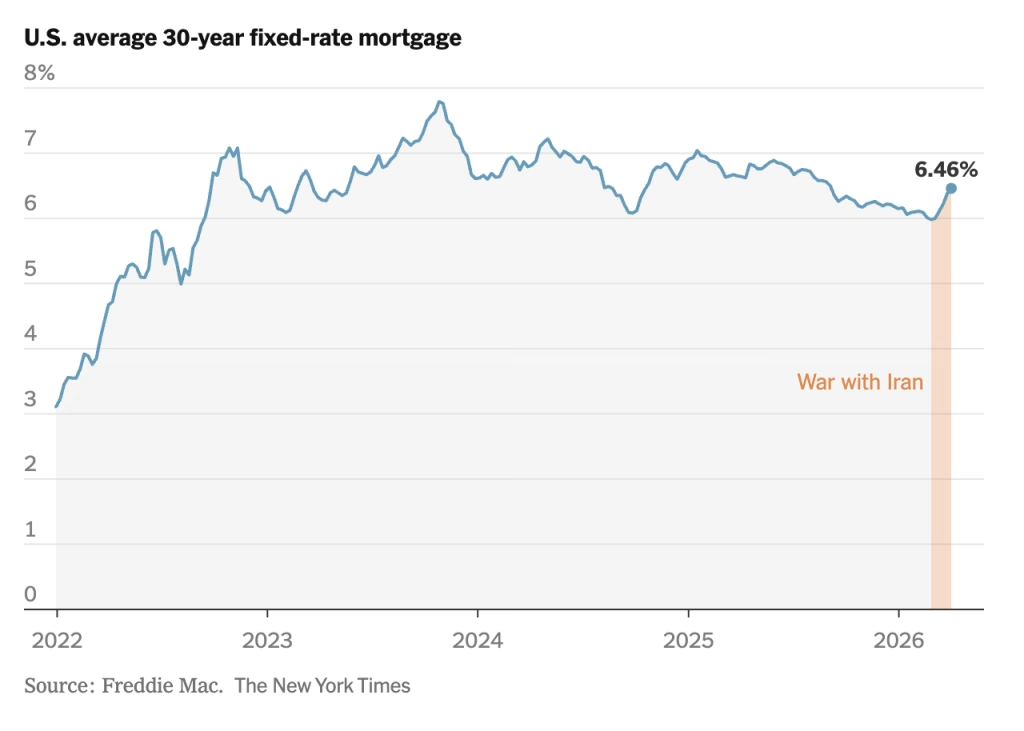
Via the NYT: Mortgage Rates Climb for 5th Week as Iran War Weighs on U.S. Housing Market.
FILED UNDER: Economics and Business, US Politics, , , , , , , , , , , ,
Steven L. Taylor
About Steven L. Taylor
Steven L. Taylor is a Professor Emeritus of Political Science and former College of Arts and Sciences Dean. His main areas of expertise include parties, elections, and the institutional design of democracies. His most recent book is the co-authored A Different Democracy: American Government in a 31-Country Perspective. He earned his Ph.D. from the University of Texas and his BA from the University of California, Irvine. He has been blogging since 2003 (originally at the now defunct Poliblog). Follow Steven on Twitter and/or BlueSky.

Comments

  1. Sleeping Dog says:
  2. Scott says:

    Given the continual swing in numbers from month to month both revised past numbers and current numbers, it seems to me that there are some actual accuracy issues that need to be addressed for anyone to act on them.

    6
  3. HelloWorld says:

    It’s hard to trust anything that comes out of this administration, but I also have to recognize that the massive number of illegal immigrants that have been deported is having an effect. Healthcare and construction both grew, and both are known for hiring under the table workers (yes, Home Health, Home Care are known for hiring cheap labor). Wondering when this more expensive labor will raise costs, though.

    2
  4. DK says:

    It’s about time workers got some good news, it’s been a dismal year for the labor market. Let’s hope these numbers are not revised down and that hiring continues.

    2
  5. Daryl says:

    178K when the break even number is ~153K. Not very impressive.
    Higher-than-expected is doing all the work.

    4
  6. @Daryl: Sure. But better news is better news. And better numbers are better than worse ones.

    But, as I noted, in context, it is not great news.

    1
  7. JohnSF says:

    If you track the key commodity prices, the dials are already flashing red.
    Asia (apart from China) is already beginning to suffer serious impacts, which will soon begin to translate into reduced demand and increased supply chain prices and disruptions.
    Pretty soon, the stop on Gulf exports will begin to feed into trading dollar demand.
    Though this will be offset, for some time, by money searching for a “safe haven”, which may well drive up dollar demand.
    But once the “hot money” stops moving?
    Real interest rates are liable to move only north; the Fed can compensate, but once the inflation effect and the reduced trading feeds in, they are likely to become catious about that.

    All told, the implication is: higher prices, higher interst rates, reduced demand…
    Hello stagflation, my old friend!
    Seems like 1973, all over again.

  8. Ken_L says:

    The massive revisions the BLS makes to the employment data many months or even years after their initial release makes monthly figures literally meaningless.

    1






