The Atlantic‘s Rose Horowitch reports, “Even College Students Have Stopped Hanging Out.”
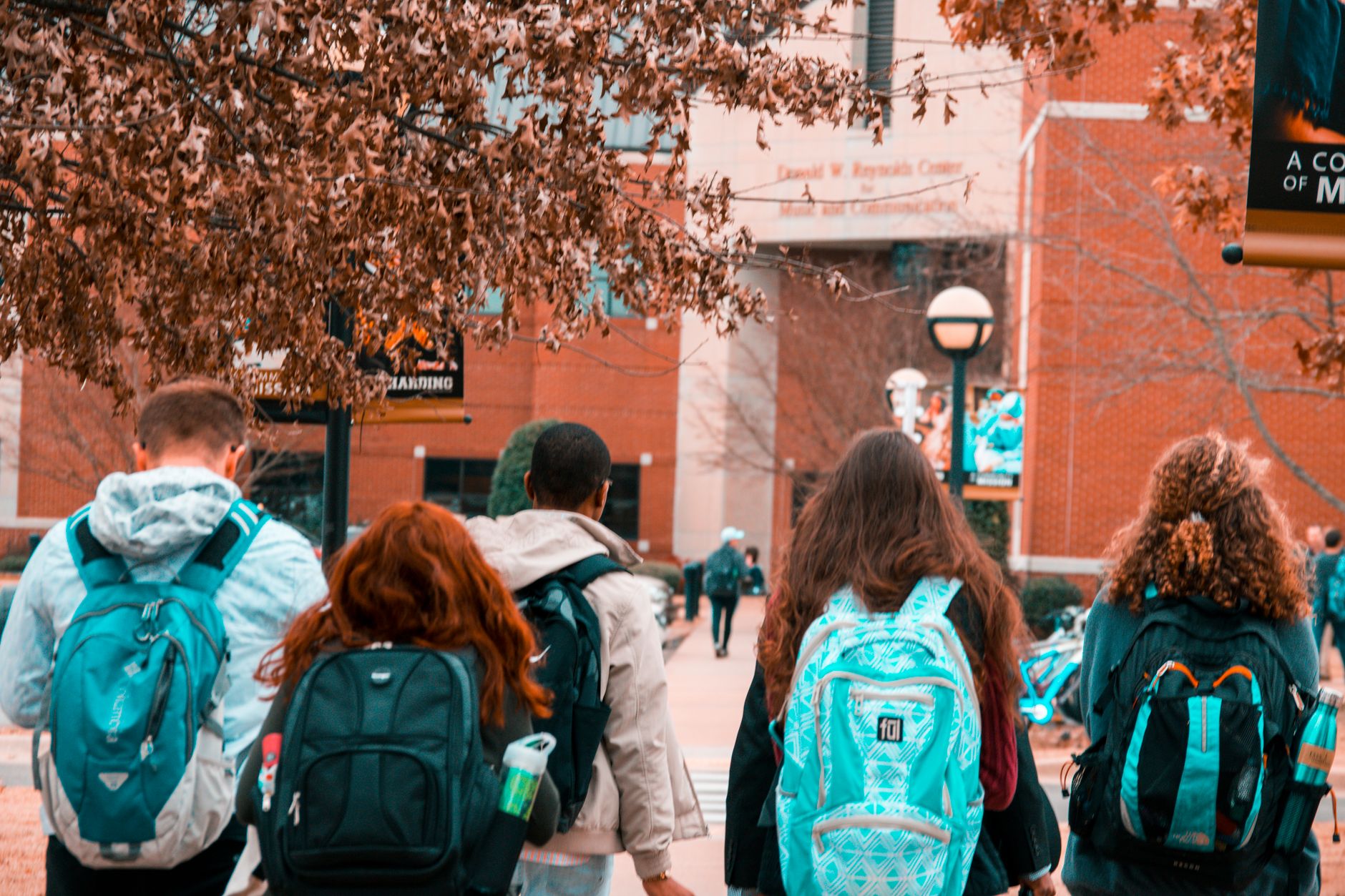
[T]he antisocial century has arrived on campus. Today’s students spend much less time socializing than past generations did. In 1994, 32 percent of college seniors spent more than six hours a week partying. By 2026, that was 21 percent, according to an analysis of survey data by UCLA’s Higher Education Research Institute. The percentage who spend more than six hours a week socializing face-to-face with friends fell from 74 to 65 percent over the same period. Meanwhile, the share of first-year students who reported feeling frequently isolated from campus life has more than doubled in the past two decades.
These drops seem relatively small, given the profound societal changes over the past 32 years. The generation now in college has never lived in a world where face-to-face is privileged over online interaction. Most of them have had smartphones since middle school, if not before, and garnering social media clout has always been a way of life.
Nationally, college students report higher rates of loneliness than adults do. On the National Survey of Student Engagement, run out of Indiana University’s Center for Postsecondary Research, more students report having positive interactions with professors than with peers. A rising senior at MIT told me that, despite being involved in Greek life and athletics, he eats alone most days. “I feel like I’m somebody who seeks social interactions,” he said, yet “I would say I am alone at least four or five days a week.” (He spoke anonymously because he didn’t want to be perceived as criticizing MIT when he still needs letters of recommendation from the faculty.) University leaders now find themselves in the odd position of encouraging students to spend more time goofing off with friends.
I’m not sure MIT is representative. Not only are STEM types notoriously more introverted than average, but the competition to get into the elite of the elite universities discourages a habit of smelling the proverbial roses.
Researchers who track social interactions have several theories as to what’s going on. The first is that smartphones and social media are to blame. Much of the increase in loneliness occurred during the 2010s, at the same time that the iPhone was becoming ubiquitous, Daniel Eisenberg, a professor of health policy and management at UCLA, told me. Hours spent on social media crowded out time that people might previously have devoted to social interactions. And it’s easy for students to feel that their social life pales in comparison with what they see in highlight reels on Instagram and TikTok.
No matter how often adults point out that Instagram isn’t real life and that almost everyone is presenting a highly curated version of themselves, comparison is a natural instinct. And, alas, the thief of joy.
Meanwhile, extracurricular activities, once a mainstay of campus social life, have mutated into a way to stand out to employers in an era of grade inflation. Especially at elite universities, clubs now more closely resemble jobs than socializing opportunities. Finance and consulting clubs require students to submit résumés, sit for interviews, and prepare mock cases or deliverables. Improv, a cappella, and even some volunteering clubs accept only a distinguished few. Cat Moore, who spent six years as the University of Southern California’s director of belonging, told me that students were busier than ever with extracurriculars, jobs, and internship applications. Even when they tried to build in time for socializing, it frequently tipped into networking. “USC had over 1,000 student clubs, yet their loneliness is out of control,” Moore said. “So the answer is not more clubs. The answer is not more programming.”
That we’ve somehow made social participation competitive is weird. But, to the extent they’re seen as resume-building, it stands to reason.
The coronavirus pandemic seems to have had a lasting effect on in-person interaction on campus. This is partly a matter of psychology. Many current college students were in middle school when classes and activities went remote. They missed out on a crucial period of learning to interact with other people, Ryan Patel, an assistant director of psychiatry at Ohio State University, told me. “When you lose practice doing those things, it can affect your ability to do them now,” Patel said. College administrators have started to pick up on students’ stunted social development. Justin Schwartz, the chancellor of University of Colorado Boulder, told me that he and his colleagues now have to support students through challenges that many would previously have faced in adolescence, such as trying alcohol for the first time and having their first romantic relationships—and accompanying heartbreaks. From 2019 to 2024, the share of college students who said they’d never had sex rose by 10 percentage points, according to the National College Health Assessment.
We’ve been lamenting for decades now that kids are more sheltered than they used to be. While we olds sometimes exaggerate the degree to which we raised ourselves, the fact of the matter is that we used to spend far more unsupervised time out with friends than is common now. My wife and I spend far more time driving kids to activities than our parents did. Nor did any of the four over-16s get their driver’s licenses as soon as they were eligible, as pretty much everyone I knew did when I was coming up.
The pandemic also led to changes in how universities operate. Universities now routinely offer remote courses, and professors are under pressure to record and post videos of their lectures.
The increased diagnoses of learning disabilities is likely contributing to that as well.
Before the pandemic, 15 percent of undergraduates were completely remote. As of 2024, according to federal data, that number was 24 percent. “Along the way, you’ve lost social interactions that you may have had with people,” OSU’s Patel said. “You walk down the hall and you pass by somebody, you hold the door open for someone, you go to the dining hall to eat, you walk over to class and you see people along the way—these kinds of social interactions, that just fell off.” The rising senior at MIT said that because lectures are posted online and grades are dependent mostly on exams, fewer than a quarter of his classmates are likely to attend a lecture on any given day. “I have a class where, on paper, I should have five of my friends in that class,” he told me. “But then I show up, and I just go the whole week without seeing my friends, really, which is tough.”
The degree to which brick-and-mortar colleges have become online colleges is truly remarkable. There’s simply no way the educational quality hasn’t declined significantly. But, yes, the social fallout is problematic, too.
Of course, college, where many students are away from their family and friends for the first time, has always made some people feel lonely. And some of the apparent rise in loneliness could reflect a change in how students label their feelings, as opposed to a change in actual circumstances. “I don’t think there’s any question that loneliness has increased among young people,” Richard Weissbourd, a senior lecturer at Harvard’s Graduate School of Education, told me. But he also thinks that the shift is partly a result of students viewing normal desires for more friends as unusual or even pathological. Previous generations might have felt similarly disconnected but chosen not to identify themselves as lonely. “This is the most psychologically literate and articulate generation in history,” he said. “People are much more proficient at and much more inclined to label their emotional states.”
This is an important consideration. Labeling things will create increased reporting of the labeled activity. See, for example, the drive-by shooting or road rage epidemics of years gone by. Certainly, we’ve seen a wild increase in autism and other mental health diagnoses as a result of increased awareness.