
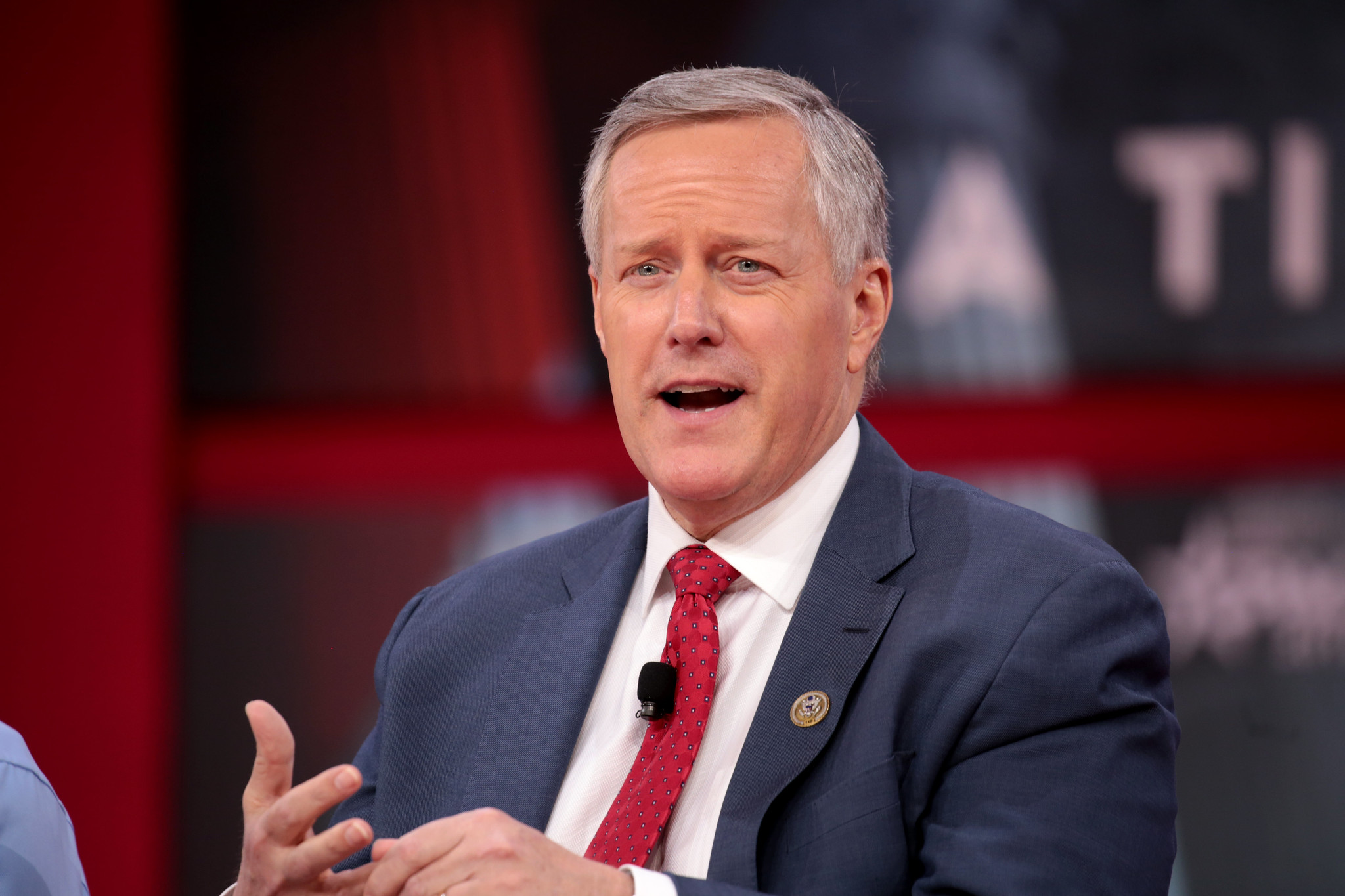

Over the last two weeks, there have been many developments in the various cases related to former President and current Presidential Candidate Donald Trump’s involvement in the attempt to overthrow the results of the 2020 election. In all the noise from the related reporting and punditry, an important development in a parallel case might have been missed by most of us: the 11th Circuit Court of Appeals upheld a lower court decision that former White House Chief of Staff Mark Meadows cannot remove Fani Willis’ racketeering prosecution of him to Federal Court. It’s a decision that could have a number of far-reaching consequences.
In this case, the 11th Circuit reviewed two questions: (1) Does the Federal statute allow former officials to have State prosecutions moved to Federal court? and (2) If the statute allows it, does this case qualify for removal?
The three-judge panel, made up of one George W. Bush appointee and two Biden appointees, ruled unanimously that (1) the current statute does not cover former officials and (2) that even if it did, Meadow’s actions feel outside the responsibilities of his office and would not qualify for removal. Both of these findings have potential long-ranging consequences.
Since the majority of our readership is most concerned with the Trump prosecutions, I’ll begin with the ruling that has the most implications for them: that no matter what, Meadows would not have qualified for removal because his actions in Georgia were outside the scope of his office.
Here’s why that matters: Donald Trump’s legal team is currently advancing the theory that he cannot be prosecuted for attempting to overthrow the election because of Presidential Immunity. The legal theory is that the President cannot be prosecuted for actions taken in discharging the duties of the office. According to his legal team, Donald Trump’s actions following the election were part of his broader Presidential responsibilities and, therefore, cannot be prosecuted.
Writing for the Majority, 11th Circuit Chief Justice (and noted conservative Jurist) William Pryor strongly affirmed that Meadows’s election-related work for Trump was clearly outside the scope of the office of White House Chief of Staff. From Politico’s reporting on the case:
“We cannot rubberstamp Meadows’ legal opinion that the president’s chief of staff has unfettered authority,” Pryor wrote.
The panel found that Meadows’ efforts to contact Georgia Secretary of State Brad Raffensperger about possibly altering the outcome of the 2020 election fell squarely outside his official duties. His decision to join a call with Trump and Raffensperger on Jan. 2, 2021 — a now-infamous call that is at the heart of the State prosecution — “reflected a clear attempt to further Trump’s ‘private litigation interests,’” rather than any government function.
https://www.politico.com/news/2023/12/18/appeals-court-meadows-bid-derail-georgia-racketeering-case-00132334
The differentiation between the needs of the office of the President versus “Trump’s ‘private litigation interests” is particularly noteworthy coming from a conservative judge. While the Chief of Staff’s responsibilities are more limited than the President’s, the fact that there is a Circuit Court of Appeal’s decision that sees the attempts to overthrow the election as a personal legal issue versus one of “election security” as many Trump apologists frame it could create headaches for the Trump legal team.
The biggest potential headache is if Meadow appeals to the Supreme Court. Assuming that happens, that appeal would come in around the same time as the inevitable appeal of the DC Circuit’s decision about whether or not Presidential Immunity applies to Donald Trump’s actions in the DC Federal prosecution. Most legal scholars already believe that the Trump team argument is a long shot, even before the Conservative Supreme Court. Having them grapple with that one and Meadow’s case simultaneously could make it very difficult to rule in favor of the former President. Further, if they opt not to review Meadow’s case and let the lower court decision stand, it can be used by Jack Smith’s team to argue against Presidential immunity applying to Trump in this context.
Ok, now onto the more wonky implications of the decision: that the Federal statute that allows for removal doesn’t apply to former Federal officials. The Lawfare Podcast did a good deep dive into this in a recent episode, so if you’d prefer to listen than read, I highly recommend listening to that episode. The tl;dr version is that 11th Circuit panel reached the decision that because the statute in question is written in the present tense and does not explicitly mention former officials, it only applies to current office holders.
This is an example of a textually accurate ruling but misses the forest for the trees… or rather, the bark. This statute is designed to protect Federal officials from political prosecution at the State level. From that perspective, it makes sense that the intent of the statutes should also extend to former Federal officials. Otherwise, as Ben Wittes points out, Texas could wait until the day President Biden is out of office and then charge him under their civil statute for helping aid and abet abortions for military personnel stationed in Texas (the core of the Tuberville Senate protest).
This general possibility is noted by the two liberal judges in a supporting decision that they issued. The two judges recommended that Congress revisit and revise the text of the statute. Without a doubt, this is the best decision. However, when you look at the current context, a Congress suffering through the worst gridlock in the last 50 years, remanding this back to the legislature doesn’t seem to make a lot of sense.
It’s entirely possible that, if appealed, the Supreme Court may choose to hear this case for this specific issue.








