
 This post started as a comment on James Joyner’s post about the SOTU and Speaker Pelosi’s trip to Afghanistan: Political Temper Tantrums and the Constitution. However, I realized that it was going to be long, so I figured a post was in order.
First, I don’t think that the Speaker’s actions in regards to the SOTU is properly characterized as a “temper tantrum” nor, really, do I think of Trump’s responses as one either (more of a childish tit-for-tat, to be honest). Second, I found the discussion of the presidential power to convene congress within the post to be an interesting one.
In regards to Pelosi’s letter about the SOTU. This simply does not come across to me as a temper tantrum. On the one hand, I can accept that it has a certain pettiness to it (after all, it is denying Trump what he loves the most: making a given moment all about him). On the other, it strikes me as both 1) smart negotiation, and 2) utterly defensible. On the first point see my parenthetical in the third sentence of this paragraph: taking away the SOTU hurts Trump and does not hurt the House. As such, in the context of deadlocked negotiations this is a smart move. It threatens something Trump wants, and at a very low cost for House Democrats. On the second point, it is defensible insofar as the speech is not required. Why should the House host the president in the context of impasse over keeping the government open?
Now, granted, for some years now I have come to the position that not only is the speech pointless given the way government and technology have evolved (the congress already knows the state of the Union all of the time these days), but also because it is basically a speech from the throne that is not appropriate for a democracy. It is especially not appropriate for the POTUS to be treated with the pomp and circumstance of semi-monarch come to deign to speak to the legislature. It helps make the executive look more important than the legislature in the public eyes, never mind that most of what the president asks for in the SOTU, the congress has to create and fund. So, I have become persuaded over the years as to the following that Matthew Shugart originally wrote over a decade ago (in response to something I had written on the defunct and dearly-departed PoliBlog):
“Speech from the throne” is the term used (with certain variations) in Westminister parliamentary systems. The head of state reads a statement about what “my government…” will do in the coming year. Then once it, and the dignity of the Queen (or her representative in Canada and other Commonwealth Realms) pretending that the government speaks for everyone, is over, things go back to normal. And that normal involves the head of government being hissed and booed and subjected to harsh questions in parliament.
In this respect, the State of the Union is really the worst of both worlds. The head of state stands before the people’s representatives (oh, and the senators, too) and delivers something allegedly about the nation as a whole. But then, as head of government-and therefore a partisan leader-he (i.e. the same person, unlike in Westminster systems) never sticks around to answer tough questions and subject himself to ridicule for the absurdities he has just mouthed. Instead, the opposition has to send someone to a TV/radio studio to give an equally absurd speech that hardly anyone listens to, and thus an opportunity for the sides to engage each other when people actually are paying attention is squandered.
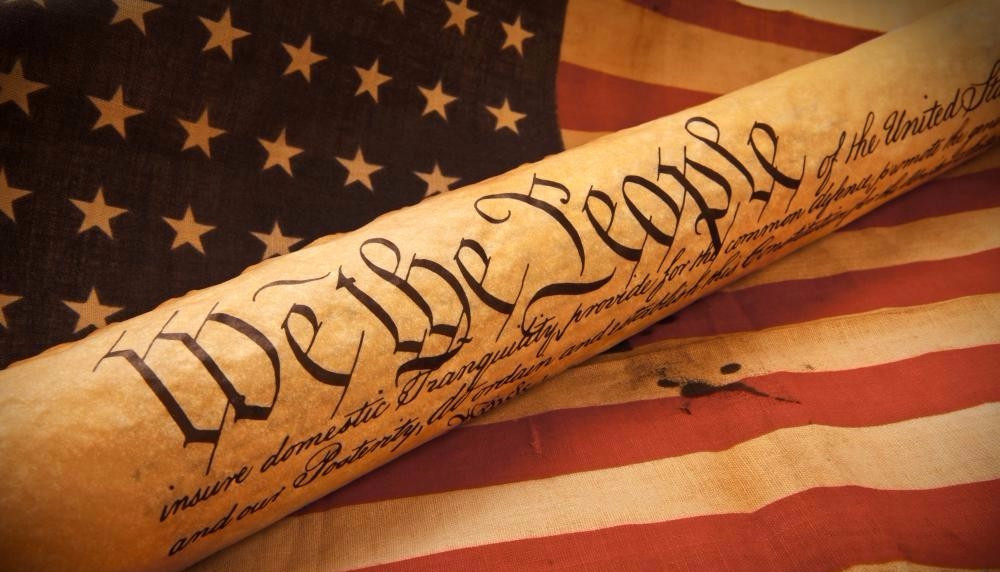
Another point I wanted to address was the discussion, started by Dave Shuler, about Article II Section 3 of the U. S. Constitution, especially the bolded section:
He shall from time to time give to the Congress Information on the State of the Union, and recommend to their Consideration such Measures as he shall judge necessary and expedient; he may, on extraordinary Occasions, convene both Houses, or either of them, and in Case of Disagreement between them, with Respect to the Time of Adjournment, he may adjourn them to such Time as he shall think proper; he shall receive Ambassadors and other public Ministers; he shall take Care that the Laws be faithfully executed, and shall Commission all the Officers of the United States.
Dave thinks this means:
not only does the president not require an invitation from the Congress to deliver it he or she can actually summon both houses of the Congress to deliver it.
I do not see an argument that this means the president can convene the congress for purposes of providing the SOTU. I think it means, like with Truman in 1948, the president can call congress into special session if one or both chambers has adjourned.
The fact that the power to convene a session is listed right after the SOTU requirement is irrelevant. It is just a list–after all, the next item is about receiving ambassadors and has nothing to do with the legislature whatsoever.
Really, to get back to a point made above: one could easily interpret the requirement that “He shall from time to time give to the Congress Information on the State of the Union, and recommend to their Consideration such Measures as he shall judge necessary and expedient” as being fulfilled by memos or even e-mails on a semi-regular basis. It could even be fulfilled by an address from the Oval Office. There is zero reason is has to be before a joint session of congress, and I see no constitutional imperative to support the notion.
Now, granted, as with all things, the president could try to force the congress to meet to listen to him talk, but that would likely result in a court challenge that I think the president would lose (although, granted, we wouldn’t know for sure until it happened).
At a minimum, I will note that Dave and I agree on this:
Now I happen to think that the practice of delivering the State of Union message publicly in person should be abandoned. I think it’s a custom unbecoming of a democracy and only began with Woodrow Wilson as a tool for rallying support.









