
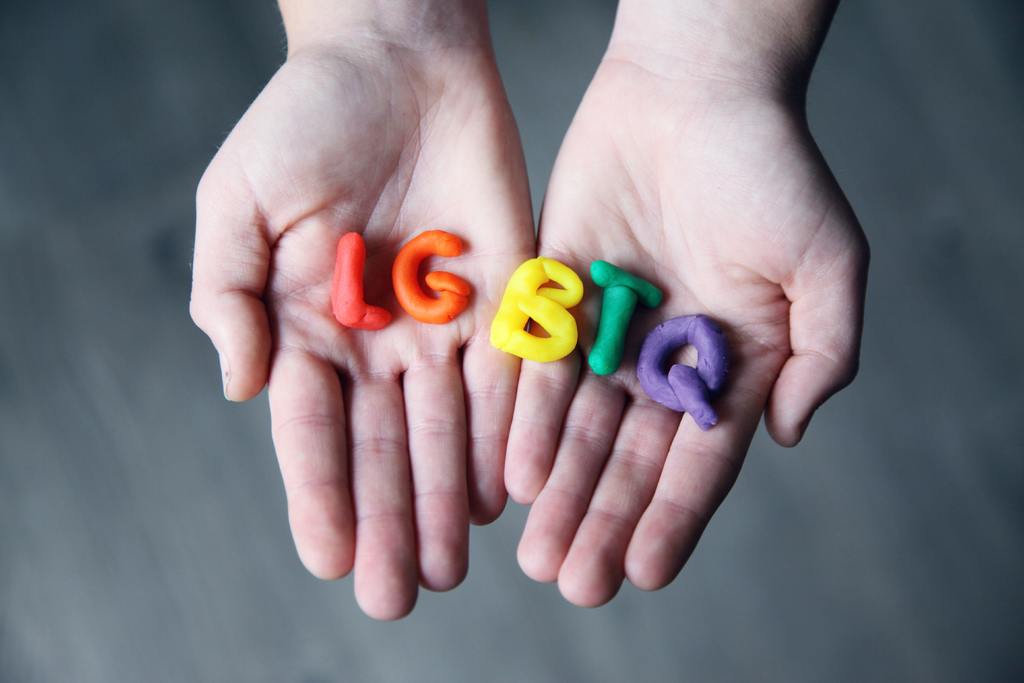
The Trump Administration has rescinded guidelines issued by the Department of Education and Department of Justice under the Obama Administration regarding the rights of transgender students to use the bathroom or locker room corresponding to their gender identity rather than their biological gender:
WASHINGTON — President Trump on Wednesday rescinded protections for transgender students that had allowed them to use bathrooms corresponding with their gender identity, overruling his own education secretary and placing his administration firmly in the middle of the culture wars that many Republicans have tried to leave behind.
In a joint letter, the top civil rights officials from the Justice Department and the Education Department rejected the Obama administration’s position that nondiscrimination laws require schools to allow transgender students to use the bathrooms of their choice.
That directive, they said, was improperly and arbitrarily devised, “without due regard for the primary role of the states and local school districts in establishing educational policy.”
The question of how to address the “bathroom debate,” as it has become known, opened a rift inside the Trump administration, pitting Education Secretary Betsy DeVos against Attorney General Jeff Sessions. Mr. Sessions, who had been expected to move quickly to roll back the civil rights expansions put in place under his Democratic predecessors, wanted to act decisively because of two pending court cases that could have upheld the protections and pushed the government into further litigation.
But Ms. DeVos initially resisted signing off and told Mr. Trump that she was uncomfortable because of the potential harm that rescinding the protections could cause transgender students, according to three Republicans with direct knowledge of the internal discussions.
Mr. Sessions, who has opposed expanding gay, lesbian and transgender rights, pushed Ms. DeVos to relent. After getting nowhere, he took his objections to the White House because he could not go forward without her consent. Mr. Trump sided with his attorney general, the Republicans said, and told Ms. DeVos in a meeting in the Oval Office on Tuesday that he wanted her to drop her opposition. And Ms. DeVos, faced with the alternative of resigning or defying the president, agreed to go along.
Ms. DeVos’s unease was evident in a strongly worded statement she released on Wednesday night, in which she said she considered it a “moral obligation” for every school in America to protect all students from discrimination, bullying and harassment.
She said she had directed the Education Department’s Office for Civil Rights to investigate all claims of such treatment “against those who are most vulnerable in our schools,” but also argued that bathroom access was not a federal matter.
Gay rights supporters made their displeasure clear. Outside the White House, several hundred people protested the decision, chanting, “No hate, no fear, trans students are welcome here.”
Individual schools will remain free to let transgender students use the bathrooms with which they are most comfortable. And the effect of the administration’s decision will not be immediate because a federal court had already issued a nationwide injunction barring enforcement of the Obama order.
The dispute highlighted the degree to which transgender rights issues, which Mr. Trump expressed sympathy for during the campaign, continue to split Republicans, even as many in the party argue that it is time to move away from social issues and focus more on bread-and-butter pocketbook concerns.
Within the administration, it also threatened to become another distraction for Mr. Trump after a tumultuous first month in office. And it showed how Mr. Trump, who has taken a more permissive stance on gay rights and same-sex marriage than many of his fellow Republicans, is bowing to pressure from the religious right and contradicting his own personal views.
Social conservatives, one of Mr. Trump’s most loyal constituencies, applauded him for honoring a pledge he had made to them during the campaign. They had argued that former President Barack Obama’s policy would allow potential sexual predators access to bathrooms and create an unsafe environment for children.
“The federal government has absolutely no right to strip parents and local schools of their rights to provide a safe learning environment for children,” said Tony Perkins, president of the Family Research Council.
But supporters of transgender rights said the Trump administration was acting recklessly and cruelly. “The consequences of this decision will no doubt be heartbreaking,” said Chad Griffin, president of the Human Rights Campaign. “This isn’t a states’ rights issue; it’s a civil rights issue.”
Bathroom access emerged as a major and divisive issue last March when North Carolina passed a bill barring transgender people from using bathrooms that do not match the sex on their birth certificate. It was part of a broader bill eliminating anti-discrimination protections for gay and transgender people.
(…)
While Wednesday’s order significantly rolls back transgender protections, it does include language stating that schools must protect transgender students from bullying, a provision Ms. DeVos asked for, one person with direct knowledge of the process said.
“All schools must ensure that students, including L.G.B.T. students, are able to learn and thrive in a safe environment,” the letter said, echoing Ms. DeVos’s comments at her confirmation hearing but not expressly using the word transgender. Ms. DeVos, who has been quietly supportive of gay rights for years, was said to have voiced her concern about the high rates of suicide among transgender students. In one 2016 study by the Cincinnati Children’s Hospital Medical Center, for instance, 30 percent reported a history of at least one suicide attempt.
Mr. Trump appears to have been swayed by conservatives in his administration who reminded him that he had promised during the campaign to leave the question of bathroom use to the states.
But he had given conflicting signals on the issue, and on gay rights more broadly. He said last April, for instance, that he supported the right of transgender people to “use the bathroom they feel is appropriate,” and added that Caitlyn Jenner, perhaps the most famous transgender person in the country, could use whichever bathroom at Trump Tower she wanted. He has also called the Supreme Court decision legalizing same-sex marriage settled law. “And I’m fine with that,” he told CBS News after the November election.
Despite his personal views, Mr. Trump’s decisions in office have been consistently conservative on social issues. And he has shown considerable deference to the religious right, naming many religious conservatives to top cabinet posts and pledging to fight for religious freedom protections and restrictions on abortion.
In isn’t entirely surprising that these guidelines, first issued last May, were rescinded under a Republican Administration, of course. While Trump himself only rarely speaks about socially conservative issues and barely talked about issues such as abortion during the campaign, it’s been clear from the start that social conservatives would move to roll back a provision such as this which has proven to be hugely opposed by people on the right largely thanks to some rather ill-defined fears about transgender adults and children using bathrooms of the gender they identify with. Additionally, as I noted at the time the guidelines were issued, the legal basis for the orders issued by the Obama Administration is tenuous at best. Essentially, the Obama Administration took the position that the prohibitions against discrimination based on gender contained in the Civil Rights Act of 1964, which were expanded to education in 1972, covered transgender people and their right to be treated in accordance with the gender they identify with. It was based on this argument that the Obama Education Department took the position that a Chicago-area school district violated Federal laws when it denied a transgender student access to the girls’ bathroom and showers on the ground that they were still biologically and physically male and that doing so would make other students feel uncomfortable and unsafe. In reality, the state of the law in this area isn’t nearly as clear-cut as the Obama Administration contended at the time the guidelines were issued. Indeed, several Courts have ruled in the past that current Federal laws such as Title IX may not apply to transgender students at all, which means that those laws would need to be changed by Congress. Others have argued that, at least as far as schools are concerned, this is an issue that, for now at least, should be left to the states until there is more of a national consensus, as happened with the issue of same-sex marriage. As for the timing of this order, it’s worth noting that several states had filed a lawsuit against the guidelines last year which initially led to an injunction against their enforcement and that case is now at a point where the Federal Government was forced to decide whether it was going to continue enforcing the Obama era guidelines or abandon them.
This decision could also have an impact on a case currently pending before the U.S. Supreme Court. Just under a year ago, the Fourth Circuit Court of Appeals ruled that a transgender teen who whose born female can proceed with a lawsuit against their local school board over the issue of bathroom access in a ruling that largely accepted the legal arguments that the Department of Education made in the Chicago case. That case was appealed to the U.S. Supreme Court, and the Court accepted the case for review. It is currently scheduled for review on March 28th, which means that it will likely be argued before Judge Neil Gorsuch could realistically be confirmed to the Court by the Senate and that the parties in the case will face an eight Justice court and the prospect of a tie vote that would leave the Fourth Circuit’s ruling in place. Amy Howe at SCOTUSBlog discusses what impact rescinding the guidelines could have on the case:
In the “Dear Colleague” letter (a standard format used by the Department of Education to remind educational institutions of their responsibilities or inform them of new guidelines) provided this evening to the court by the government, the department criticized the earlier guidance for its failure to “contain extensive legal analysis or explain how the position is consistent with the express language of Title IX,” a federal civil rights law that prohibits sex discrimination in education. Moreover, the department added, the federal government believes that there must be “due regard for the primary role of the States and local school districts in establishing educational policy.”
Although the guidance has been revoked, both the school board and G.G.’s attorneys want the court to decide the case. They emphasize that – regardless of what the Department of Education’s guidance may have said or how much weight courts should accord it – the court also agreed to review whether the school board’s policy requiring students to use the bathroom that corresponds with the gender that they were assigned at birth is consistent with Title IX and the 1975 regulation interpreting that law.
The justices have a variety of options from which to choose to deal with tonight’s developments. Among other things, they could send the case back to the 4th Circuit for it to weigh in more fully on the Title IX question in light of the government’s changed position, or they could forge ahead and rule on that question themselves. At the very least, we should know more about the justices’ inclinations when they hear oral argument in the case next month, if not before.
Another alternative could be that the Justices could decide at the last minute to defer oral argument in the case to early in the next term, by which time Judge Gorsuch will likely have been confirmed and fully caught up on the cases before the Court. Whatever happens, though, it’s likely that the outcome of the case will hinge on where Justice Anthony Kennedy falls on this issue. Looking at things strictly from the perspective of the rights of LGBT individuals, there’s reason to believe that Kennedy could end up siding with the Plaintiff in the case and the Court’s liberals, thus resulting in a 5-3 ruling that would likely adopt the Obama Administration’s position on the proper interpretation of the gender provisions of Title VII and Title IX as they apply to transgender rights. The evidence in favor of this speculation can be found in the fact that Kennedy has been at the center of each of the Supreme Court’s decisions that have advanced gay rights in the past. He wrote the majority opinion in Roemer v. Evans, a 6-3 decision from 1996 in which the Court struck down a Colorado law that purported to bar local jurisdictions from extending civil rights protections to gays and lesbians. He also spoke for the majority in Lawrence v. Texas in 2003, which overturned a 1986 ruling and held that laws making consensual sexual relations a crime were unconstitutional. He was the decisive vote and the author of the majority opinion in United States v. Windsor, the case that struck down the most restrictive part of the Defense of Marriage Act and lit the spark of litigation that brought us to yesterday’s decision. Finally, and perhaps most significantly, he was the fifth vote in Obergefell v, Hodges, the 2015 case that struck down the remaining laws against same-sex marriage and held that gays and lesbians had the same right to get a marriage license as straight people. The major difference between those cases and this one, of course, is that those cases all involved constitutional arguments under the 14th Amendment while the current case involves an issue of statutory interpretation and the question of whether it is proper to interpret laws adopted in 1964 and 1972 to cover transgender individuals when it’s clear that such issues were not even considered by the drafters of the statutes in question at the time they were passed into law. Because of that, it’s possible that Kennedy could side with the Court’s conservatives on the ground that the statute simply doesn’t cover what the Plaintiff is seeking to accomplish. In that case, as I noted, we’d end up with a 4-4 tie that lets the lower court ruling stand.
Regardless of how the Court rules, though, it’s clear that this issue will continue to come up in the future and that we’ll see debates on this issue at the state level for some time to come. In the end, I believe we’ll see people’s attitudes change just as they changed with respect to same-sex marriage, although the evolution may be a bit slower in this case. So while advocates may consider this change a bit of a setback in the fight for equality, the ultimate goal seems to me to be fully attainable in the end.









