NYT (“Trump Signs Order Exempting Russia From Sanctions Law“):
President Trump signed an executive order on Friday night exempting Russia from a new sanctions measure that Congress passed last month, offering another economic lifeline to Russian President Vladimir V. Putin as the United States turns to Russia for help in lowering gas prices.
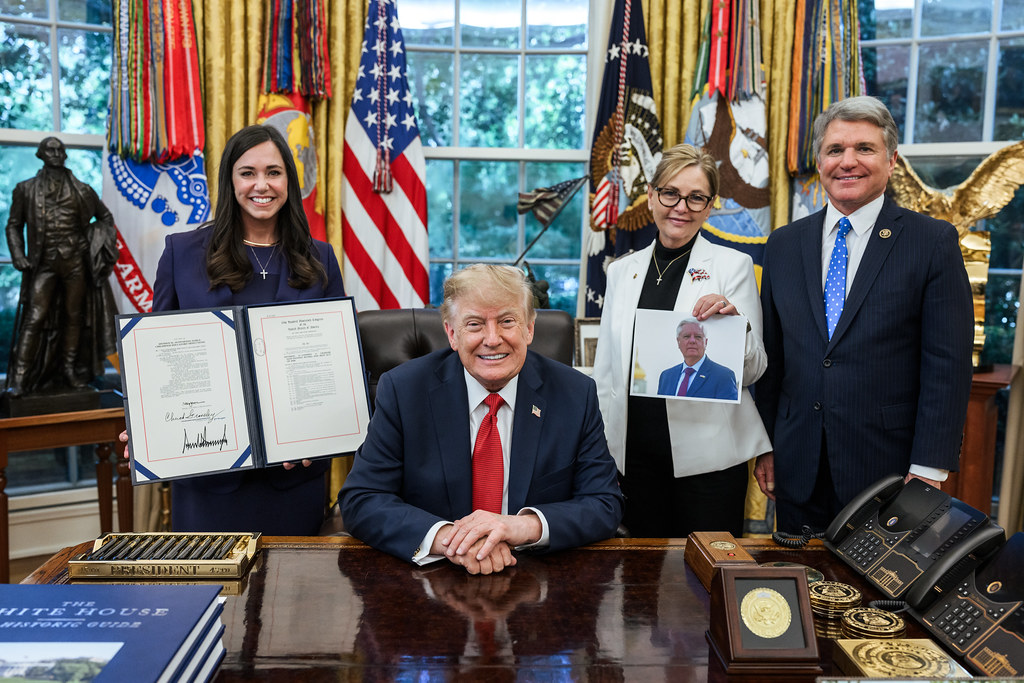
The sanctions were intended to target Russian officials, oligarchs and financial institutions, and were part of a law that was named after Senator Lindsey Graham, the South Carolina Republican who died in July after spending more than a year building support for the measure.
The law, which is intended to squeeze the financial lifelines sustaining Russia’s war against Ukraine, also provided Mr. Trump with additional tariff authority that he could use to punish countries that continue to trade with Russia.
The White House has broad authority to issue sanctions exemptions or waivers, and the new law requires Mr. Trump to notify Congress only if he opts against imposing the economic restrictions on Russia. Two days before the law is set to take effect, Mr. Trump exercised that power.
“I am hereby waiving the application of such sanctions, restrictions and duties provided for in the Graham Act,” Mr. Trump said in the order. “I have submitted to the Congress a certification that the issuance of such a waiver at this time is in the national interests of the United States.”
The order does not explain why waiving the sanctions is in the interests of the United States or what rationale Mr. Trump is providing to Congress for the waivers.
It’s noteworthy that the law in question was not passed over Trump’s veto. He happily signed it less than a month ago (see photo above).
So, what’s changed?
Presumably, it’s the recent deal he made with Putin to lower fuel prices ahead of the election.
The decision comes as Mr. Trump has in recent weeks embraced Russia and expressed frustration that Ukraine’s attacks on Russian refineries were helping to push up gasoline and diesel prices around the world. The biggest factor limiting supplies, though, remains the war in Iran.
“The main issue is still the Strait of Hormuz — that there is not enough diesel coming out of the Strait of Hormuz,” said Sarah Raffoul, an oil product analyst at Argus Media.
The price increases have triggered inflation weeks ahead of midterm elections that could cost Republicans control of Congress. Ukraine said it was willing to halt its refinery strikes if Russia halted its own attacks on Ukraine’s energy infrastructure. Mr. Putin refused.
Mr. Trump announced last week that he had reached a deal with Mr. Putin, and that the United States would begin importing Russian diesel fuel. The Treasury Department temporarily lifted sanctions on Russian diesel exports “to allow the supply of Russian diesel to the global market,” and gave Russian energy producers a general license to sell diesel fuel until April.
That this is not how pricing works is immaterial, I guess.
That decision angered President Volodymyr Zelensky of Ukraine, and drew backlash from European officials. This week, a bipartisan group of senators urged Mr. Trump to reverse the sanctions waiver on diesel fuel.
The move to waive the sanctions that were enacted in the new law drew a swift rebuke from critics in Congress, who had predicted that Mr. Trump would not impose them.
“Trump’s latest surrender to Putin again betrays our Ukrainian partners and defies clear congressional intent of legislation designed to punish Russia for its illegal war of aggression,” said Representative Don Beyer, Democrat of Virginia.
Senator Elizabeth Warren of Massachusetts, the top Democrat on the banking committee, called Mr. Trump’s move an “abject failure” of leadership.
“By waiving these sanctions, Trump is thumbing his nose at Congress’s direction that he ratchet up pressure on the Kremlin, and enabling Vladimir Putin to continue his war of aggression,” Ms. Warren said.
In Ukraine, several public figures said the move amounted to giving up a powerful tool for choking off Russia’s ability to pay for the missiles and drones pounding Ukrainian cities every day.
Mr. Trump “is feeding the Russian war machine,” Oleksandr Merezhko, the chairman of the Ukrainian Parliament’s foreign affairs committee, said in a phone interview. “This is absolutely outrageous.”
Vladyslav Vlasiuk, an adviser to Mr. Zelensky who spent months lobbying American officials and members of Congress to pass the sanctions law, commented bitterly on Facebook: “On the wrong side of history.”
History, schmistory. Who reads that stuff, anyway?
But, yes, if you want to side with your European allies in opposition to an acute threat to our interests in the Western hemisphere, this seems like a bad idea.
The sanctions law was the brainchild of Mr. Graham, a Russia hawk and close ally of Mr. Trump’s. The legislation, which was set to take effect on Oct. 18, won bipartisan support despite concern that the president would not heed the sanctions requirements, and that he would potentially misuse the tariff authority.
Graham, being dead and all, is no longer of any use to Trump.
“The underlying sanctions architecture remains in place, and no one wants to be caught holding the risk when the waiver is pulled,” said Daniel Tannebaum, a partner at Oliver Wyman, a consulting firm that advises banks on anti-money laundering and sanctions matters. “I’m not sure what positive impact to the American economy will be derived in reality.”
Well, what about those sweet $5000 checks from when the Republicans win the House and the Senate?