
As was first threatened back in October, the Trump Administration announced today that the United States was renouncing the thirty-two-year-old Reagan Era Intermediate Nuclear Forces (INF) Treaty due to alleged Russian violations of the treaty:
WASHINGTON — The United States is suspending one of the last major nuclear arms control treaties with Russia after heated conversations between the two powers recently failed to resolve a long-running accusation that Moscow is violating the Reagan-era treaty.
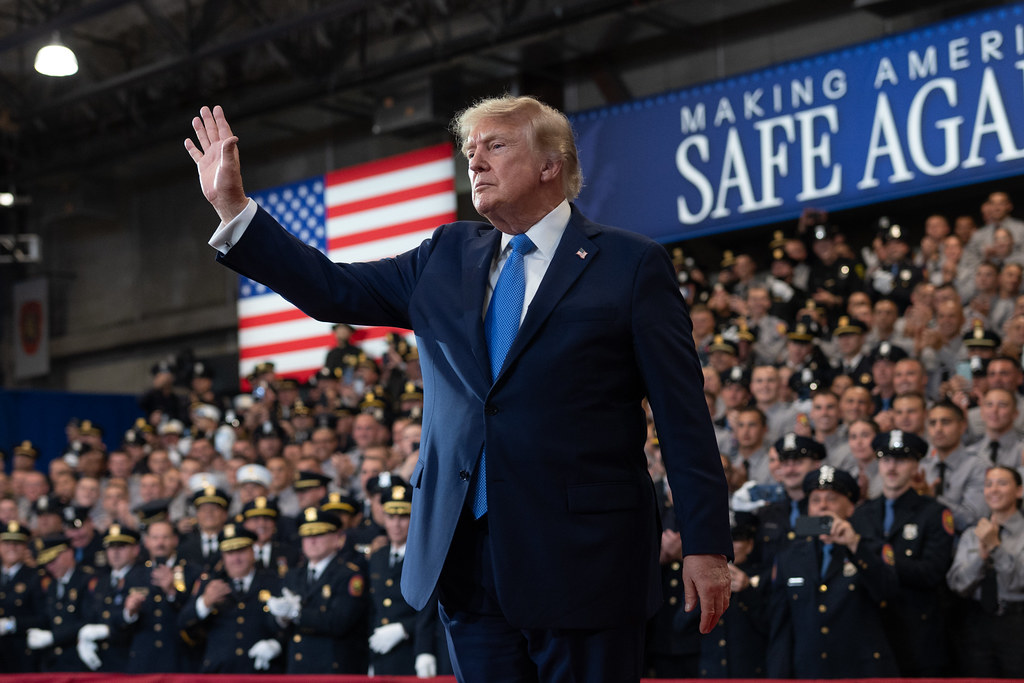
Secretary of State Mike Pompeo announced the decision on Friday as the Trump administration maintained that the Russian government has been unwilling to admit that a missile it has deployed near European borders violates the terms of the 1987 Intermediate-Range Nuclear Forces Treaty.
Mr. Pompeo and his deputies have insisted that Moscow destroy the missile. Instead, the government of President Vladimir V. Putin of Russia counteraccused the United States of violating the treaty’s terms because of the way in which it has deployed launchers for antiballistic missile systems in Europe.
“Countries must be held accountable when they break the rules,” Mr. Pompeo told journalists at the State Department.
With the treaty on its last legs, the question is whether Mr. Pompeo’s announcement will result in a flurry of last-minute negotiations with Moscow — which seems unlikely — or whether it will accelerate the Cold War-like behavior among the United States, Russia and China.
Complicating that question is the American intelligence agencies’ warning this week that Russia and China are “more aligned than at any point since the mid-1950s.”
The fate of the treaty has quickly become a test of the continuing struggle inside the Trump administration, and with its allies, over how to handle an increasingly aggressive Russia.
Mr. Trump campaigned on remaking Washington’s relationship with Moscow; the open investigation by the Justice Department’s special counsel is, at its core, about whether he and his campaign aides promised to relieve sanctions and other impediments to Russia in return for financial or electoral benefits from Mr. Putin’s government.
But Mr. Trump has surrounded himself in the White House with hawkish advisers, including John R. Bolton, the national security adviser, who has been a major critic of treaties that he believes impinge the United States’ ability to counter new or rising foreign threats.
The decision to leave the nuclear arms treaty took American allies by surprise when word of the decision first leaked out in October and was quickly confirmed by Mr. Trump.
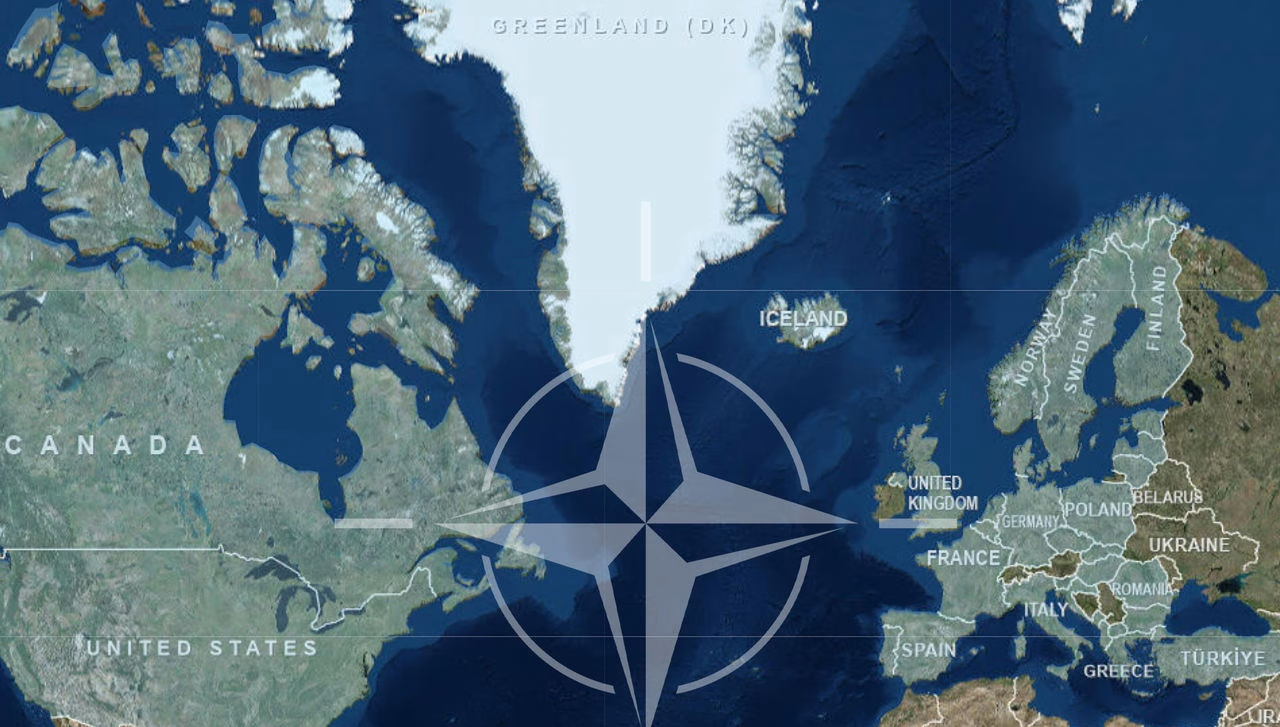
The North Atlantic Treaty Organization, the military alliance that was created to counter the Soviet threat 70 years ago, acknowledged that Russia had violated the I.N.F. treaty and called on Moscow in December “to return urgently to full and verifiable compliance.”
But the alliance stopped short of agreeing that the United States should withdraw, declaring then that the “allies are firmly committed to the preservation of effective international arms control, disarmament and nonproliferation.”
The announcement by Mr. Pompeo came just ahead of the expiration, on Saturday, of a 60-day deadline he gave Moscow to come into compliance with the treaty. He had no expectation that the Russians would heed his warning.
With this announcement, the clock begins on a six-month period that will likely lead to the complete American withdrawal from the treaty, although the announcement does mean that we would be free to deploy or test weapons that arguably fall within the provisions of the treaty. As things stand, though, there are no weapons on our arsenal that could be deployed in such a quick manner, and nothing in the pipeline that would lead to such a deployment. Even if there were, though, it’s not at all clear that we would be able to get the necessary permission from any of our European allies to deploy such missiles on their territory. As it was, the deployment of the Pershing II missile in Europe during the Cold War was a controversial one that caused real domestic political trouble for governments in West Germany and Great Britain at the time, and that was during a particularly tense time during what turned out to be the final stages of the Cold War. This time around, the eagerness of governments or voters in those nations to allow nuclear missiles to be deployed on their territory is likely an even bigger issue and a bigger political headache for national leaders of those nations, which are already dealing with difficult domestic political situations as it is. Therefore, it’s difficult to see what advantage the United States gains from withdrawing from the treaty.
Daniel Larison comments:
Giving up on the INF Treaty is one of the biggest blunders that Trump has made as president, and it could prove to be one of his costliest mistakes. While there is still a period of six months for the president to reverse course, there is very little chance that will happen. Bolton has wanted the INF Treaty gone for decades, and now he is in a position to ensure that it won’t survive. The president cites Russian violations of the treaty to justify this decision, but this is an excuse rather than a real reason to tear up a major arms control agreement. James Acton notes that the U.S. has abandoned other successful agreements when the other parties were complying with them, and that makes it hard to believe that complaints about violations in this case are the real reason for leaving
When a treaty has worked this well and has been as good for U.S. and allied security as this treaty has been, it is absurd to throw it all away when it can still be salvaged. The administration made the bare minimum of effort to resolve outstanding disputes with Russia, and they are practically jumping at the chance to kill the treaty. Leaving this treaty bodes very ill for the survival of New START, which expires in two years, and once both treaties are dead there will be nothing left to constrain the growth of the U.S. and Russian nuclear arsenals.
Furthermore, as Naval War College Professor Tom Nichols argued in October when this idea was first floated, withdrawing from the treaty is a gift to Russia:
The chief argument now for withdrawing from the INF Treaty is that the Russians are violating it. This is undeniable. The Russians are in fact testing weapons at prohibited ranges in direct violation of the treaty.
They are doing this, however, not because they are strong, but because they are weak. The Russians, ironically, are now in the position NATO was in during the Cold War, a conventionally inferior power whose only equalizer is nuclear weapons. Unlike NATO, however, the Russians are not in a defensive position, but rather remain a revisionist power bent on threatening their neighbors. They are conspicuously violating the treaty as an attempt to intimidate the Europeans by raising the specter of a regional nuclear war if Russia does not get its way in the event of a conflict.
This is why scrapping the INF Treaty plays right into the favored Russian scenario, in which the burden of nuclear escalation would rest, once again, upon NATO. Right now, Russian strategy in Europe is likely centered on seizing a small piece of NATO territory, sitting on it for an extended period to prove that Article V is a sham and then threatening tactical nuclear use if NATO tries to drive them out.
Proponents of re-nuclearizing the theater would argue that this is precisely why the United States must have a symmetrically configured theater deterrent, so that any Russian threat could be balanced with a corresponding American threat.
(…)
That would be a better argument if it were still 1985. The problem for these nuclear enthusiasts—one they omit by selective memory or poor strategic judgment—is that there is no longer a central front between NATO and Russia on which such exchanges would take place. NATO’s only choices (as Russia knows) would be to respond with nuclear use on our own allies or on Russian territory, which would raise the escalatory danger far beyond whatever was at stake in a small, localized conflict. The Americans would blink, Russia’s point would be made, and NATO would eventually dissolve.
The better answer is to close off any such option to the Russians by bolstering NATO’s conventional capabilities, and thus warn the Russians that even if they win, they lose. They might be able to muster a locally superior force and take territory, but they cannot defend it. They will inevitably be driven out, and then the burden of escalation will fall upon them, not us, which is exactly how it should be. If they invade, they will be defeated. If they escalate, they will be destroyed—and by choices they, not we, will make.
(…)
A more confident America would consult with its allies and drag the Russians back to the negotiating table for the dull, necessary work of showing that NATO cannot be panicked into responding to Russian antics by scraping entire treaties. (We would also avoid bumbling into a trap where the Russians could escape strategic limits by reclassifying their long-range weapons as intermediate-range.) The United States and NATO won the Cold War by constancy and perseverance, and they should not now allow themselves to be stampeded by insecurity and vanity into taking the self-defeating and strategically incoherent path the Trump administration is now considering.
For several years now, dating back to before President Trump took office, the United States has asserted that Russia is violating at least the spirit of the INF Treaty with respect to its deployment of missiles in western Russia. Instead of withdrawing from the treaty, though, previous Administrations made the decision to stay in the treaty and work within its grievance procedures in an effort to resolve the dispute. Additionally, to the extent there were allegations of violations, those allegations were not aired publicly in the hope that the matter could be resolved without doing so. One of the reasons for such a decision is the idea that withdrawing from one of the landmark Cold War-era treaties would send the wrong signal not only to Russia but also to other nuclear powers that might be tempted to increase their own development of shorter-range missiles, which are especially dangerous because their shorter flight time makes the prospect of a mistake or misinterpretation far more likely. Trump’s decision to reverse that policy opens up the prospect of a renewed arms race that would not benefit anyone
Last year, though, the Joint Chiefs of Staff put the issue on the public table when they alleged that the recent test of a ground-based cruise missile violates the treaty at least in spirit. More recently, intelligence reports that were also made public have claimed that Russia’s newest effort to develop a cruise missile that would travel at hypersonic speeds would violate the treaty. It’s worth noting, though, that these systems have only been tested. They have not been formally deployed, and it is by no means clear that the development of these systems has been sufficiently successful to permit deployment. Given that, the decision to withdraw from the treaty is premature at best and also mistaken since it precludes us from having any legal basis for calling the Russians back to the table
In addition to the alleged Russian violations of the treaty, the Trump Administration’s decision to withdraw from the treaty is apparently also aimed at China, which is not bound by the treaty and has a fairly good sized arsenal of short and intermediate range missiles with nuclear payloads capable of hitting Russia as well as American allies such as Japan, South Korea, and Australia. However, it’s unclear what that has to do with a treaty that has been primarily successful at keeping nuclear weapons out of the European theater for more than three decades now. This is especially true given the fact that the U.S. possesses several options in countering the Chinese threat, including sea-launched missiles that are not covered by the terms of the treaty at all.
While Russia’s actions are concerning, they are moves that the United States can easily compensate for while still staying within the boundaries of the treaty. The better decision would be to utilize the provisions of the treaty itself to form the basis for a strong negotiating position that would either lead to an expansion of the treaty to deal with the threat posed by ground-launched cruise missiles or result in a much-needed new nuclear arms reduction treaty, something that the current Trump foreign policy doesn’t seem to favor at all. The same is largely true regarding the threats allegedly posed by China, much of which can be addressed while still staying within the boundaries of the treaty. For all of these reasons, this decision to scrap a treaty that has worked for the past three decades seems to be, at the very least, foolish and, at the very worst, highly dangerous.