
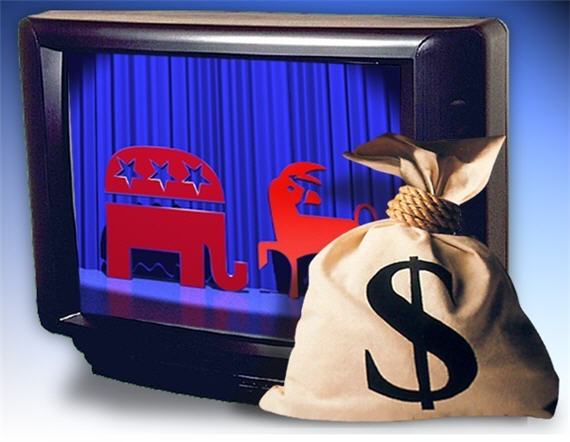

Charlie Cook says that, rather than looking at the results of the silly CPAC straw poll, we should instead be thinking about who can raise the $300 million or so that it’ll take to win the Republican primaries.
Thinking about these sobering fundraising demands tends to quiet talk about long-shot, late-entry, and outsider candidacies. The fundraising demands mean that a successful candidate would either need to enter the race with nationwide name recognition, at least in their party’s donor and activist community, or get a very early start with a team of people who already possess the contacts within that donor and activist community.
These financial demands mean that more attention should be placed on the donor community and what kind of candidates they are looking for. In 2008, Huckabee was a great example of a candidate who unexpectedly won the Iowa Caucus but had virtually no appeal beyond the ranks of social, cultural, and religious conservatives, and the home-schooling community.
As a result, he never was able to diversify his appeal or monetize his Iowa Caucus victory and become a strong force in the nomination fight. Money can’t buy you a nomination, but it can certainly deprive you of one.
It also means that there will be a premium on the candidates who can find world-class talent to tap that money—yet another reason why former Alaska Gov. Sarah Palin is highly unlikely to win the GOP nomination.
You have to be able to attract top-drawer people, delegate responsibility to them, and let them do their jobs—attributes not commonly associated with Palin.
Those factors, along with her extraordinary negatives among independents (read: swing voters necessary to win a general election), make her a faux front-runner in this race. Similar challenges with independent voters and the electability question will likely plague former House Speaker Newt Gingrich, R-Ga., while the financial requirements will be the biggest challenge to Huckabee if he runs.
This means that the fight for the Republican nomination is more wide open than commonly thought, but with the caveat that it will take an enormous amount of money to get through the door.
This is the chief reason why I think Mitt Romney, who’s by no means my personal favorite, is the odds-on favorite to win the nomination. He’s wealthy, polished, has tremendous name recognition, and has access to top-drawer advisors (including, I remind you, the polling and strategy firm that employs my wife). If it’s not Romney, I suspect it’ll be some governor who’s not yet well known rather than Palin, Gingrich, Huckabee, Donald Trump, Ron Paul, or other famous but extremely controversial people whose names are being bandied about.









