
WaPo business reporter Evan Halper (“Here’s what the stock market might have gotten wrong about the Iran war“) examines a strange paradox:
As stocks soared this week and oil prices dropped amid an apparent cooling of tensions between the United States and Iran, it may have left the impression that the energy shock that rattled the world would quickly fade, along with the risk of sending the global economy into recession.
The optimism may have been short-lived. On Saturday, Iran’s military announced it would reimpose restrictions on the Strait of Hormuz, throwing the critical waterway’s status into doubt.
The uncertainty highlights that beneath that surface, a starkly different reality is unfolding. It is defined by disrupted supply lines and damaged infrastructure, sparking increased concern among the people who produce, transport and depend on energy.
“The people closest to the industry are far more concerned about these disruptions and recognize the length of time it will take for things to return to normal — if they ever do,” said Gerry Morton, oil and gas co-chair at the law firm Baker Botts. “The further away you get from actually being involved in producing oil, the less you seem to be concerned about the physical reality and problems that are there.”
Even investors rushing to tap into market optimism warned in interviews that it masks deep, underlying problems that threaten a reckoning in the not too distant future.
“We know supply chains are breaking down in Asia and even Europe,” said Ritesh Jain, founder of the investment firm Pinetree Macro. “We know a correction is eventually coming. But everybody wants to live the present moment. People are just saying to themselves, ‘They will solve these issues. And if they don’t get solved, we will sell then.’”
“We have to dance while the music lasts and hope you are near the exit door when it stops,” he said. “I am in that exact situation, despite talking to people in the background who know something is going to break.”
That disconnect between what the market is signaling and what is actually happening is increasingly shaping the global economy. As investors and the trading algorithms they rely on react to headlines and hints of diplomatic progress, analysts warn they are overlooking red flags around what is coming in the weeks and months ahead. It has led some of the world’s leading economic voices to warn that complacency is misplaced, including the head of the International Energy Agency and officials at the International Monetary Fund.
Europe is at risk of running out of jet fuel within six weeks. Fertilizer prices have spiked so high that they could force food prices up into next year. There are shortages of key ingredients to make not just products like surgical masks and toys, but all plastics — meaning the cost of any product with plastic packaging could be going up. Factories in countries such as Vietnam and Bangladesh that U.S. corporations rely on to make products are so crushed by soaring energy prices that they are at risk of shutting down.
“Some countries may be richer than the others,” Fatih Birol, executive director of the International Energy Agency, told the Associated Press on Thursday. “Some countries may have more energy than the others, but no country, no country is immune to this crisis.”
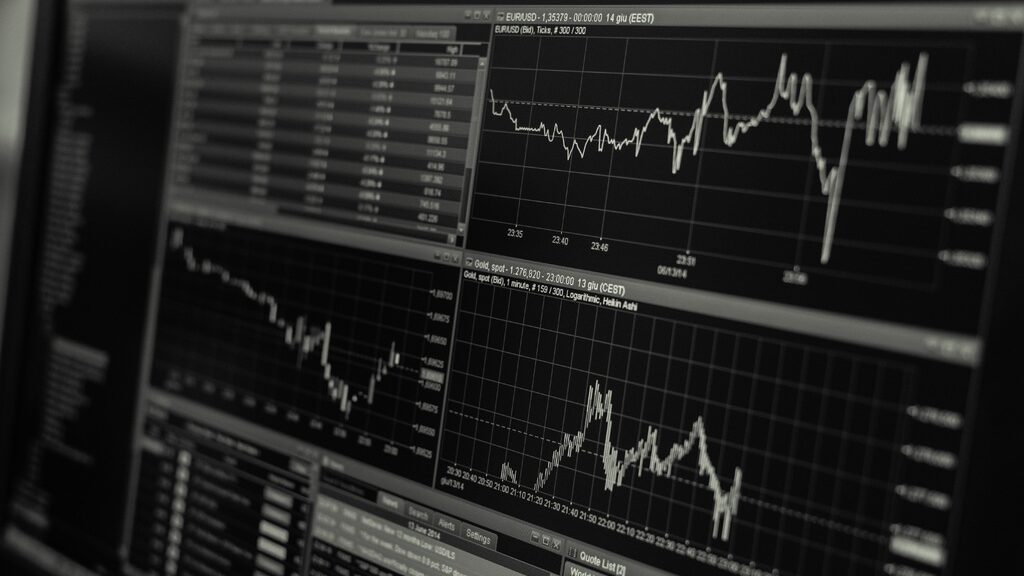
The booming stock market hardly seems to be pricing this in. Some analysts describe the disconnect as similar to the way markets reacted during the coronavirus pandemic. After initially plunging, they bounced back quickly — ignoring the lasting damage that had been done to the supply chains that drive world economies, and the steep inflationary risks those disruptions caused. Then came the hangover. As product inventories were exhausted, energy reserves tapped and government assistance for displaced workers depleted, the pain manifested itself in financially punishing aftershocks that ricocheted around the globe.
His Reuters counterparts Stephanie Kelly and Ahmad Ghaddar (“How 50 days of the Iran war led to the loss of $50 billion worth of oil“) pile on:
The world has lost over $50 billion worth of crude oil that has not been produced since the Iran war began nearly 50 days ago and the aftershock of the crisis will be felt for months and even years to come, according to analysts and Reuters calculations.
[…]
Since the crisis began at the end of February, more than 500 million barrels of crude and condensate have been knocked out of the global market, according to Kpler data – the largest energy supply disruption in modern history.
Put differently, 500 million barrels of oil lost to the market is equivalent to:
*Curtailing aviation demand globally for 10 weeks; no road travel by any vehicle globally for 11 days; or no oil for the global economy for five days, said Iain Mowat, principal analyst at Wood Mackenzie.
*Nearly a month of oil demand in the United States, or more than a month of oil for all of Europe, according to Reuters estimates.
*Roughly six years of fuel consumption for the U.S. military, based on annual usage of about 80 million barrels from fiscal year 2021.
*Enough fuel to run the world’s international shipping industry for around four months.
Their colleagues Amanda Cooper and Samuel Indyk (“Investors pile into US stocks as ‘TINA’ revival knocks ‘TIARA’ trades“) offer this explanation:
The U.S.-Iran ceasefire in early April appears to have revived so-called TINA (“There Is No Alternative”) trades, driven by peace hopes, soaring U.S. earnings growth and the relative insulation of the world’s biggest economy to an energy shock.
Over the last year, investors, particularly in the United States, had sought out cheaper markets abroad where returns were juiced up by a weaker dollar. Enthusiasm over the AI boom and expansive government spending has also boosted equities, from Seoul and Tokyo to Frankfurt and London.
[…]
Global investors have poured a net $28 billion into U.S. equities since the eve of the ceasefire announcement, with U.S. investors alone accounting for nearly $23 billion of that total, according to LSEG/Lipper data.
Until that point in the year, they had pulled a net $56 billion out of U.S. stocks, including a net outflow of almost $90 billion by U.S.-based investors.
The ceasefire has sharpened focus on which markets have the strongest outlook, and early signals from earnings season suggest the U.S. remains robust.
While most major equity markets have erased their war-driven losses, the S&P 500 (.SPX), opens new tab is 2% above pre-war levels.
“We’ve had our fourth exogenous shock in six years and given the nature of the shock, it’s not surprising that we go back to the economy that has performed the best over the very long-term, is investing the most in the short-term and is producing the best set of results,” said Michael Browne, global investment strategist at the Franklin Templeton Institute in London.
So, it’s not so much that the investor class is naively reacting to the moment-by-moment headlines as that the investor class, well, invests, and the U.S. stock market is widely considered the safest investment. Which makes perfect sense if your strategy is long-term, rather than focused on short-term profits and losses.