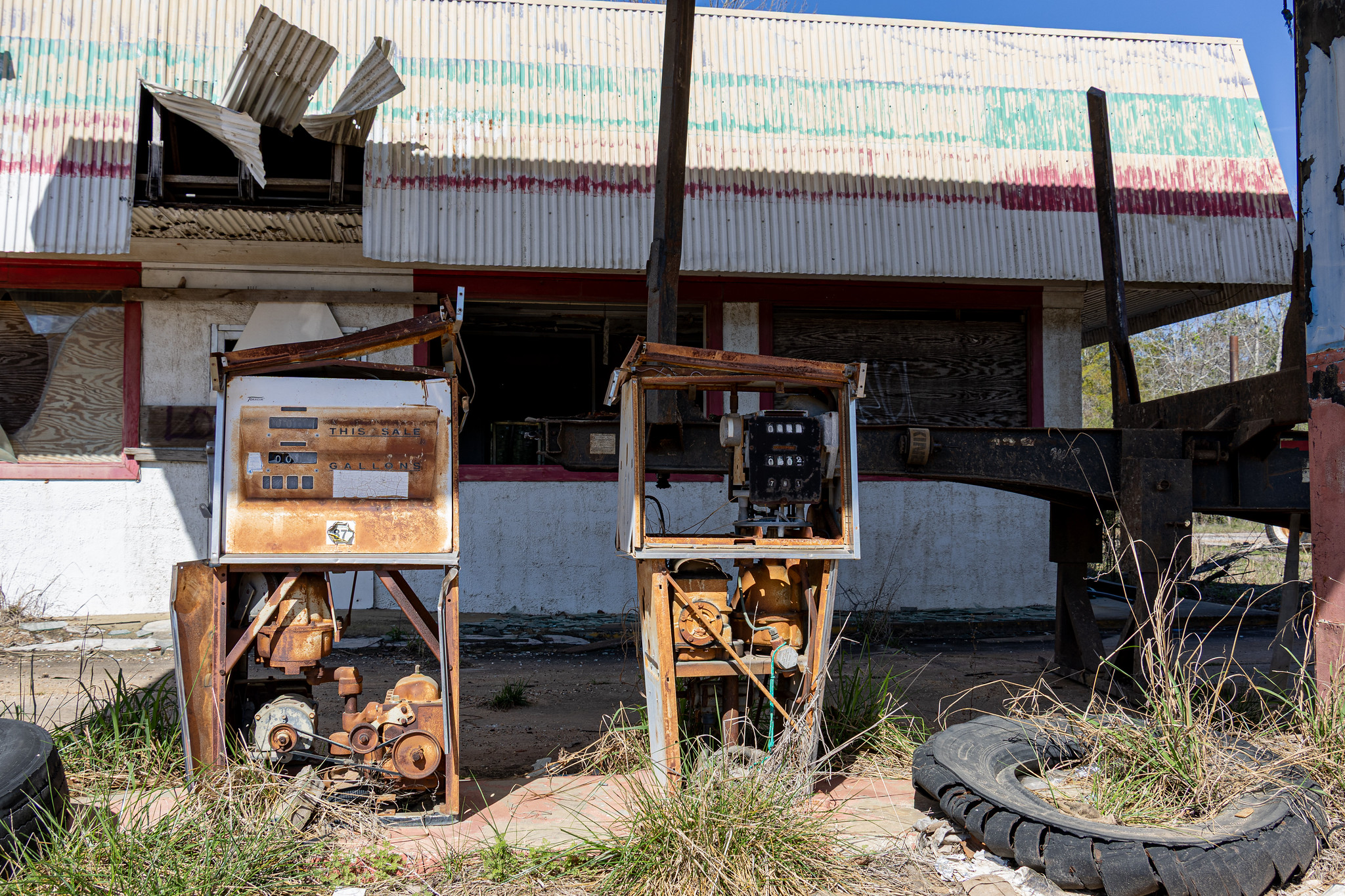
As shopping mall anchor stores go out of business, Amazon is looking to fill the vacuum by taking over their spaces.
Wall Street Journal (“Amazon and Mall Operator Look at Turning Sears, J.C. Penney Stores Into Fulfillment Centers“):
The largest mall owner in the U.S. has been in talks with Amazon.com Inc., the company many retailers denounce as the mall industry’s biggest disrupter, to take over space left by ailing department stores.
Simon Property Group Inc. has been exploring with Amazon the possibility of turning some of the property owner’s anchor department stores into Amazon distribution hubs, according to people familiar with the matter. Amazon typically uses these warehouses to store everything from books and sweaters to kitchenware and electronics until delivery to local customers.
The talks have focused on converting stores formerly or currently occupied by J.C. Penney Co. Inc. and Sears Holdings Corp., these people said. The department-store chains have both filed for chapter 11 bankruptcy protection and as part of their plans have been closing dozens of stores across the country. Simon malls have 63 Penney and 11 Sears stores, according to its most recent public filing in May.
Sears (established 1893) and Penney’s (1902) are venerable staples of American retail. We shopped at both regularly when I was a kid, but they’ve been slowly losing relevance most of my adult lifetime. They’re going to go the way of Montgomery Ward, which started even earlier, and went out of business in its original form in 2001.
The talks reflect the intersection of two trends that predate the pandemic but have been accelerated by it: the decline of malls and the boom in e-commerce.
Malls were struggling for years, as more customers stayed home to shop online. The spread of the coronavirus, which forced malls to temporarily close and limited their crowds even after reopening, has worsened the situation. Amazon, meanwhile, was able to navigate new logistical challenges during Covid-19 and recently reported its greatest quarter ever.
For Amazon, a deal with Simon would be consistent with its efforts to add more distribution hubs near residential areas to speed up the crucial last mile of delivery.
But for Simon, any deal to surrender prime space to Amazon would signal a break from a longtime business model for malls: reliance on a large department store to draw foot traffic to neighboring shops and restaurants.
That model has broken down in recent years, as many department stores are now fighting for their lives. Lord & Taylor also filed for bankruptcy early this month, while Neiman Marcus Group Ltd. filed in May. Nordstrom Inc. closed 16 stores in recent months.
It’s been a long time since the business model of shopping malls, let alone huge department stores, made much sense. Malls are massively expensive to build, become dingy and outdated rather quickly, and are cumbersome to navigate. The anchor stores are mostly undifferentiated and have long played the absurd game of charging way to much for items so that they could offer massive “markdowns” during near-constant “sales events.”
The very high-end stores, like Neiman Marcus and Nordstrom, at least offered luxury and differentiation for those who could afford it. But even they largely poorly-made junk imported from China.
Still, presuming the deal goes through, Amazon’s influx would be a pyrrhic victory.
Simon’s other tenants might not celebrate a deal with Amazon. Many blame the giant online retailer for severely disrupting their business. Its presence as a new neighbor would likely do little to pacify them, especially if Amazon’s new distribution capabilities in well-located Simon malls help make it even more competitive by helping speed up its delivery times.
Amazon fulfillment centers wouldn’t draw much additional foot traffic to the mall, though some employees could eat and shop at the mall. That is why landlords have preferred to replace department stores with other retailers, gyms, theaters or entertainment operators. Yet many of these tenants are struggling to survive during the pandemic and aren’t in expansion mode.
Simon would likely rent the space at a considerable discount to what it could charge another retailer. Warehouse rents are typically less than $10 a square foot, while restaurant rents can be multiples of that. Depending on when the leases were signed and their locations, department-store rents can be as low as $4 a square foot or as high as $19 a square foot.
The mall only makes sense if it’s a destination unto itself. If you’re shopping for a pair of jeans or or some running shoes, it’s just so much easier to buy it from Amazon or another online outlet. The mall is only attractive if you’re trying to while away a few hours, seeing a movie or having a meal around some shopping. But, of course, that’s either not allowed or not advisable right now.