
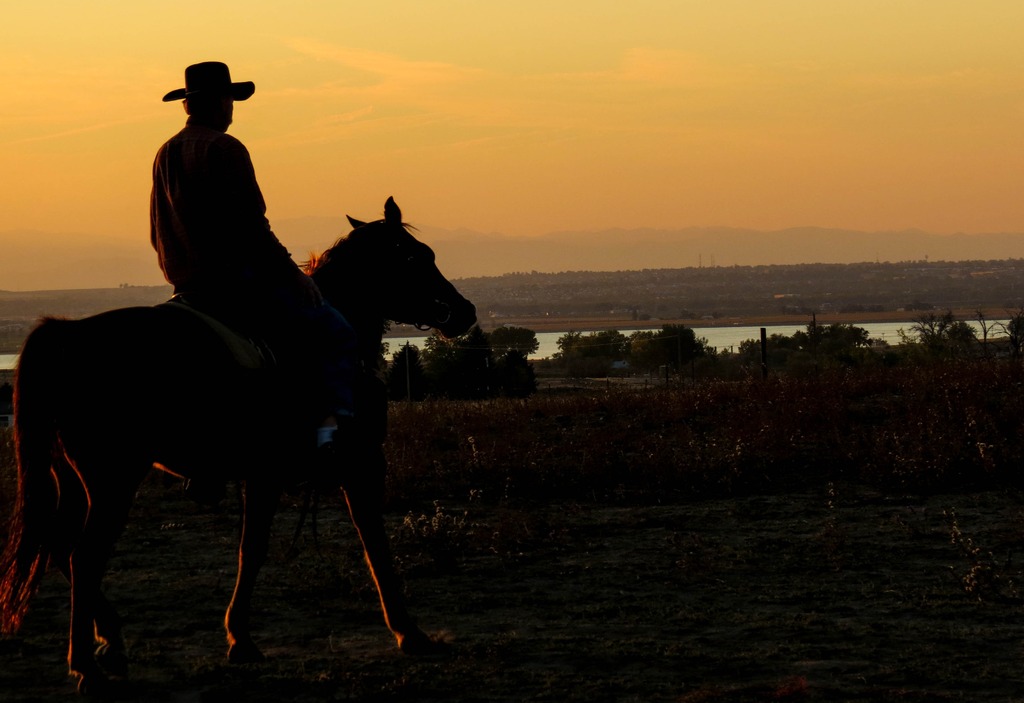
Compact editor Matthew Schmitz takes to the op-ed pages of the NYT to argue that “The Rural Vibe Shift Is Real.”
There is a paradox at the heart of American pop culture. The United States, in recent years, has never had a higher share of foreign-born residents, and it has never been more racially and ethnically diverse. Yet forms of entertainment that are associated with an older, whiter, more rural America — notably, country music and TV westerns — are thriving, even dominating.
Rather obviously, this is not the least bit paradoxical.
Ella Langley’s song “Choosin’ Texas” has spent 21 weeks atop the Billboard charts, outpacing songs such as Mariah Carey’s “We Belong Together” and Whitney Houston’s “I Will Always Love You.” In the first week of August, for the first time ever, the top five songs on the Hot 100 were country singles. Even Taylor Swift’s latest release, a generically poppy tune tied to the movie “Toy Story 5,” has been marketed as a country song — an apparent acknowledgment that there are advantages to identifying with the genre she left behind in 2014.
I agree that the song is more pop than country.
Still, that’s often the case with songs on country radio. This could very much have been a Mutt Lange-produced Shania Twain song in the 1990s. And, of course, the song is about the romance between the Western sheriff and deputy from the series, so positioning it as country is only natural.
According to Nielsen’s multi-platform ratings, four of the top 10 TV shows this season are westerns or neo-westerns such as “Landman” and “Dutton Ranch.” And Gen Z, though more diverse than any previous generation, has been conspicuously participating in this rural revival, embracing line dancing, Shania Twain and Coors beer.
I’ve never associated Coors beer, based in Colorado, with the Old West. Then again, it played a central role in Smokey and the Bandit.
These apparently opposed trends may in fact be related. When America was overwhelmingly white and more closely tied to its rural past, country and western motifs could be seen as conventional and confining. But today, with much of the population concentrated in cities and on the coasts, and as white non-Hispanic Americans inch closer to becoming a minority, the mores and manners of the country’s rural working-class increasingly offer a source of authenticity.
That’s clearly part of it. But it’s also part of a longstanding cycle. Like other forms of popular culture, country music and westerns, neo- and otherwise, have gone in and out of mainstream popularity for generations.
I’m old enough to remember the Urban Cowboy-inspired country music revival, complete with a mechanical bull-riding craze, in 1980. Garth Brooks and others helped make it big again in the 1990s—when even NASCAR enjoyed a years-long boom. Similarly, Westerns have gone through periods of dominance since the earliest days of movies and televison, fading out when audiences get bored with them and then surging back into popularity when someone comes up with a fresh take. Eventually, like disco, the market gets oversaturated and all but the core audience moves on to a new thing. Years later, like bell bottom jeans, what’s old becomes new again.
How things have changed. In 1971, television executives canceled several popular but unfashionable country-fried TV shows, including “Green Acres,” “Hee Haw” and “The Beverly Hillbillies,” in what came to be known as the rural purge. Though the purge had a commercial justification in the desire of television programmers to appeal to younger, more affluent and urban viewers, it also reflected a cultural judgment: Rural entertainment was déclassé, as were the people who liked it. (Fred Silverman, the CBS executive who spearheaded the programming change, denounced “mindless rural pap” in a speech to broadcasters.)
Notably, though, those shows were all comedies that portrayed Southerners as dumb but kind-hearted hicks. They were intentionally lowbrow. And this was still in the monoculture era, when there were only three national television networks, each competing for vast swaths of the audience. (“Hee Haw,” of course, survived many more decades in first-run syndication.)
Decades after the rural purge, we are seeing the opposite — a rural surge. Down-home genres have gained new salience even outside red-state redoubts, sometimes as they are flipped and remixed by artists of all stripes. Beyoncé participated in this shift by donning long blond hair and putting out a country album, “Cowboy Carter,” in 2024. And witness the success of “A Bar Song (Tipsy),” Shaboozey’s hip-hop inflected country single, or of “The Giver,” Chappell Roan’s queer take on Shania-style country pop.
I would think Lil Nas X’s “Old Town Road,” which dominated the charts back in 2019, is a much better example. And an indicator that this “vibe shift” has been going on for years.
Country music and other forms of rural culture were long associated with a kind of white conventionality (a reputation that developed even though these genres were shaped in significant ways by Black artists). By contrast, the modes and manners of a Black art form like hip-hop — or, in an earlier era, bebop — could offer consumers a nonconformist thrill. Social marginalization gave Black-coded cultural forms a coveted distance from mainstream society.
This seems a bit of a stretch. Certainly, the argument is easier to apply to jazz and early rock and roll, when Black artists were truly marginalized, than to art forms that took off in a big way in the 1980s.
But today social marginalization means something different. After trading for decades on its countercultural identity, hip-hop, for example, has become thoroughly conventional. It reached a peak market share of nearly 30 percent in 2020 — a year in which one in five Fortune 500 companies pledged to support racial justice in response to the Black Lives Matter movement.
Today, it’s country music that — for all its commercial success — represents the underdog. As diversity, equity and inclusion initiatives accord advantages to everyone except straight white men; as globalization and an urban, knowledge-based economy have impoverished and emptied out rural communities; and as trust in institutions including higher education and the federal government declines, the culture of rural working-class whites can symbolize an unconstrained way of life that stands apart from the stifling, all-encompassing H.R. bureaucracy that everyone else lives in.
Maybe? While this is plausible as sociology, it strikes me as not how normal people choose their entertainment.
Donald Trump, of course, tapped into this anti-establishment energy to power his unlikely political rise. But in subsequent years, you could also see this dynamic in the vogue for candidates such as Tim Walz (a native Nebraskan who drives an IH Scout, a classic farm vehicle), the politically doomed oyster farmer Graham Platner and Dan Osborn, the plains progressive who sports pearl-snap shirts. You can also see it in demographic shifts: The South and Mountain West might once have been seen as economic and cultural backwaters, but those regions now lead the nation in working-age population growth, and southern colleges are increasingly attracting students from outside the region.
This is beyond a stretch. Trump is a dyed-in-the-wool New Yorker who in no way points to a rural vibe shift. Walz had next to zero national profile before Kamala Harris tapped him to be her running mate, and he quickly proved more liability than asset. I had to Google Osborn, but wearing pearl snap shirts can’t be all that novel in Nebraska. And rural Maine isn’t exactly cowboy core.
Much discussion of the so-called vibe shift of 2024 centered around Mr. Trump. Today, his sagging poll numbers — dragged down by headlines about Jeffrey Epstein, Iran and the economy — may be read as a sign that the vibe has shifted back. Politically speaking, that appears to be true. But the rural surge suggests that in broad cultural terms, the country continues to trend right. In the cultural contest between blue and red America, lots of people are choosing Texas.
Quite literally. And, again, this is not a new phenomenon. Here’s the Census-by-Census explosion in the Lone Star State’s population and raking among the states:
- 1900: Ranked 6th in the nation (3.05 million people).
- 1910: Ranked 5th in the nation (3.90 million people).
- 1920: Ranked 5th in the nation (4.66 million people).
- 1930: Ranked 5th in the nation (5.82 million people).
- 1940: Ranked 6th in the nation (6.41 million people).
- 1950: Ranked 6th in the nation (7.71 million people).
- 1960: Ranked 6th in the nation (9.58 million people).
- 1970: Ranked 4th in the nation (11.20 million people).
- 1980: Ranked 3rd in the nation (14.23 million people).
- 1990: Ranked 3rd in the nation (16.99 million people).
- 2000: Ranked 2nd in the nation (20.85 million people).
- 2010: Ranked 2nd in the nation (25.1 million people).
- 2020: Ranked 2nd in the nation (29.15 million people).
It’s unlikely to pass California, which has a population of 39.53 million, but it has quadrupled in population and moved up four spots— passing New York, Pennsylvania, Illinois, and Ohio—in my lifetime.
The current wave of interest in Western-inspired entertainment and fashion almost certainly is largely due to one man: Taylor Sheridan. The popularity of the Kevin Costner vehicle, Yellowstone, which debuted in 2018 and inspired a plethora of spinoffs and imitators, made pearl snaps and cowboy boots cool again for the first time since the Urban Cowboy craze.
One suspects the bubble will soon burst.








