Photo by Nebular on Unsplash

Americans Revolting Against Property Taxes

The most ancient source of government revenue is among the least popular.

26

Comments

POLITICO (“Do You Really Own Your Home? A Tax Revolt Says No.“):

A rebellion sweeping the nation gathered adherents in the parking lot outside northeast Ohio’s largest flea market on the Saturday before Memorial Day. Before making their way to stalls selling whirligigs, handmade soap, and peanut-butter Buckeye brownies, dozens of people stopped at folding tables where volunteers hawked petitions to abolish property taxes. Few needed much convincing before adding their names.

“I’m old. I’ve paid my home off,” said Ray Warner, a 72-year-old Akron resident wearing a Cleveland Browns coat to fend off the damp chill. “Why would I pay property tax?”

It is, on its surface, not an unreasonable question. In the popular imagination, the elderly are living on a “fixed income.” They’ve worked their whole lives and paid off their homes, which often constitute their only meaningful asset. Why should they have to pay taxes—often at a rate that exceeds what their mortgage payment used to be—in order to keep living in them?

In the last two years alone, plans to substantially reduce or altogether repeal property taxes have emerged in more than two dozen states. Georgia, Indiana and Wyoming already sliced residents’ tax bills by billions of dollars. Republican governors Ron DeSantis and Greg Abbott have Florida or Texas competing to see who can lower property taxes the most. Gubernatorial candidates elsewhere are putting tax reform at the center of their campaigns in the hopes of staving off insurgencies that risk overrunning their tenures. Public figures as disparate as Elon Musk, the world’s richest man, and Francesca Hong, the socialist who narrowly lost the Wisconsin Democratic gubernatorial primary, have joined the cause.

Just as it was 50 years ago, the movement appears organic, driven more by meme than political machine, and coming at a moment dominated by consumer concerns around affordability. A surge in home values — up an average of 50% nationwide since the start of the Covid-19 pandemic — has boosted property assessments. Those increases have translated to tax bills that have shocked homeowners and left them worried about the growing burdens of maintaining an asset at the heart of the American dream.

Most of the focus, rightly, has been on younger Americans who fear they will never be able to afford to own a home at these prices. The property tax issue has gotten comparatively less attention, at least at the national level.

The uprising’s most pitched battles are being fought in Red States where the issue has emerged as yet another dividing line on the right. Traditional conservatives, who believe property taxes foster local decision-making and fund the police, fear they’re losing to the populist rebels dominating the debate.

The “stake in society” theory has long provenance in conservative circles. And, yes, it turns out that we have to pay for things even conservatives think government ought to fund, and, well, that means we have to tax something or someone.

It’s now common for many Republicans to question the morality of property taxes entirely, said Judge Glock, an economic historian who serves as a senior fellow at the conservative Manhattan Institute. Anti-tax activists contend that the levies turn homeowners into vassals who pay rent to the government for the use of their own house — one that could be seized after an unpaid bill.

“That branding has been one of the most successful political slogans in modern memory,” Glock said. “It is incredible how powerful that language has become on the right to strike down anybody who believes in any sort of property taxes.”

It’s a powerful argument. And one that’s not entirely wrong. Way back in 1819, albeit in a different context, Chief Justice John Marshall observed, “the power to tax involves the power to destroy.” At the margins at least, older Americans may be forced to vacate the homes they spent their working lives to own because they can’t afford the tax burden. For that matter, high property taxes raise the cost of entry for prospective new homeowners.

For as long as there has been property, there have been property taxes. Clay tablets from ancient Mesopotamia are said to have documented the stores of grain and livestock their owners owed as tribute.

“I joke in my class that it’s the ‘Ur tax’,” said David Schleicher, a professor at Yale Law School tracking the tax revolt. “Because they taxed it in Ur.”

I bet that one never gets old!

Then again, Ur likely didn’t have income taxes, sales taxes, FICA and Medicare taxes, bag taxes, and various and sundry other government-imposed fees and taxes on top of their property taxes.

Debates over property taxes have been around since the founding of the United States, too, with Alexander Hamilton (pro) and Thomas Jefferson (con) sparring over them in the late 18th century.

Since then, property taxes have become the financial engine powering American cities and schools. Rates vary widely across the nation’s patchwork of cities, counties, townships and other bespoke units of local government. Generally, homeowners who occupy their properties owe between half a percent to just under 2% of their home value in taxes each year depending on where they live, according to the Tax Foundation.

This translates to U.S. state and local governments taking in about $800 billion a year — an amount higher than the annual GDP of Sweden. The levy accounts for about 70% of local tax collections, the Tax Foundation found, with the remainder deriving largely from sales taxes.

Again: this is the rub. Our system distributes governmental responsibilities across multiple levels, each of which needs revenue to fund them. For localities, schools, police forces, and incarceration systems are the main line items.

If not property taxes, where would they get the money? Sales taxes are even more unpopular than property taxes, are wildly regressive, and are much less predictable.

Many academics believe this reliance on property taxes is a good thing. Land can’t be moved or hidden. The tax base is stable, less subject to the whims of the economy. And the tax links government services with the home values those services help create: All else equal, a home in a community with quality schools and little crime is worth more than the exact same structure elsewhere.

“Anything that a government does that’s good will increase property values,” Schleicher said. “And by doing that they’ll increase their budget.”

That’s hard to argue against. Old folks tend not to still have kids in school, but they often have grandkids in school. And, even if they don’t, they benefit from living in a community with good schools.

The problem is everyone who is not an economist seems to hate property taxes. They raise costs on an asset that not only provides the physical security of a roof over your family’s head, but that you count on to deliver financial security in retirement and an inheritance to your children. Plus, unlike other taxes, you can do little to stop them. Lose your job and you pay less income tax. Stop spending and you pay less sales tax. But if your neighbor’s house sells for $50,000 more than yours was worth, you might end up with a higher property tax bill.

Which, again, is a positive thing—for everyone but the property owner.

In the 1970s, inflation-driven spikes in home values led to tax bills doubling or more. In California, the epicenter of this spike, homeowners described themselves as vibrating with anger after receiving their annual statements and senior citizens feared the government was going to seize their properties and toss them onto the streets.

The result was Proposition 13, a 1978 citizens’ initiative to roll back California’s property tax rates, cap assessments and enshrine the cuts in the state Constitution. Despite the opposition of the Golden State’s political establishment, a grassroots campaign persuaded nearly two-thirds of voters to back the change. Immediately, California’s property tax receipts dropped 60%, and the constitutional mandate keeps them low to this day. Copycat measures passed in Massachusetts, Michigan and elsewhere.

And it wasn’t just the drop in revenue. It also wildly distorted the market, making younger homeowners pay a disproportionate share of the burden and strongly disincentivizing people from selling their house and buying another (unless they were going to leave the state).

Still, the popularity of cutting taxes is unassailable: no politician ever lost a vote for promising to cut taxes or increase spending—preferably at the same time.

Nationwide, the median annual property tax payment rose by 25% between 2019 and 2024, or more than $600, according to an analysis of U.S. Census data by the Lincoln Institute of Land Policy.

Increases in Ohio’s have been worse than average, even though the state already ranked in the top 10 with the highest property taxes. Typical bills in Ohio have surged to nearly $3,000 a year, the Lincoln Institute found.

“It started out with dollars and cents,” Massie said. “Worried about grandma getting pushed out of her home.”

But getting rid of the property tax, he said, has become about more than money. To him, it restores the anti-tax energy underlying the nation’s founding. He calls the initiative Ohio’s Declaration of Independence, announcing the campaign’s signature gathering progress this spring from behind a full-sized replica of the Resolute Desk from the Oval Office.

“This is the foundation of freedom and liberty,” Massie said. “We are not going to give up that inalienable right of private property.”

In all corners of the country, Massie-like figures are forcing lawmakers to act. Legislators in Montana cut taxes for owner-occupied homes. In Iowa, they capped how much local property tax revenue can grow. Oklahoma lawmakers have placed a measure on the November ballot to restrict future property tax increases.

The article features this bumper sticker, which reportedly adorns Massie’s automobile:

A bumper sticker on a car window that reads, 'I PAID FOR MY HOME, NOT A LIFETIME SUBSCRIPTION!' with a graphic of a house chained and a call to 'STOP TAXING OWNERSHIP!'

As marketing goes, it’s pretty clever.

The proposals have freaked out local governments and organizations that provide or rely on public services. Cities, counties, schools, labor unions, hospitals and chambers of commerce have formed coalitions to fight back. Budget advisers to Ohio Gov. Mike DeWine, a moderate Republican, warned this year that abolishing property taxes “would quite literally ‘defund’ the police” with the same fate befalling fire departments, schools and libraries.

“You’re actually talking the immediate forced liquidation of patrol units and the degradation of emergency response,” said Robert Butler, a past president of the Ohio Association of Chiefs of Police who serves as police chief in Independence, a 7,500-person town south of Cleveland. “You’re gonna wipe them out.”

I mean, putting up a sign saying DEFUND THE POLICE is objectively way worse than depriving the police of funding, right?

Local government leaders argue that property taxes are so embedded into the structure of American government that it is hard to imagine alternatives. To replace the $24 billion lost by doing away with property taxes in Ohio, the state’s average income tax rate would have to rise to just under 13 percent, the Tax Foundation found, a levy almost as high as what millionaires pay in California.

By contrast, the top rate in my home state of Virginia (which applies to all income over $17,000) is 5.75%. But we do have a real estate tax of 1.12% of assessed value and a personal property tax of 4.57% of assessed value on our automobiles here in Fairfax County. There are also various add-ons: a refuse fee, a stormwater district fee, sales taxes, bag taxes, and all manner of others I’m sure I forget.

Massie dismissed the warnings as alarmist. (“We’re not anarchists,” he said.) Government needs to shrink, he argued, and he assumes the Legislature will find alternatives. A fairer system, he argued, would make people pay for the government services they use, but not those they don’t.

“I’m not willing to give up my home for a book or a walk in the park,” Massie said.

Which, of course, misapprehends what government is. The whole point is to provide a certain set of baseline services that the community can enjoy regardless of their individual ability to pay.

When my youngest graduates in three years, I’ll have no more personal use for the local schools. For that matter, I paid property taxes here and elsewhere for more than two decades before I had kids in schools. I make very little use of the parks now that my kids are older and can happily afford to just buy any books I want on Amazon. I don’t mind paying into the kittie for those who want those services and can’t afford them.

So far, most states have cushioned their property tax cuts by phasing them in or using other dollars to backfill lost revenue. Texas used its budget surplus. North Dakota took money from its oil-and-gas extraction tax.

But in Indiana, where last year the Legislature cut taxes for primary residences and Gov. Mike Braun, a Republican, has since mused about abolishing property taxes for senior citizens, local governments already have less in their coffers.

Charlestown, a small community on the Kentucky border, is seeing rapid growth from the redevelopment of a former ammunition plant. An influx of jobs and people normally would boost property tax revenue and public services. Instead, the city is cutting its budget.

This summer, a public park with mini golf, a splash pad and roller-skating rink went from being open seven days a week to four. For the coming winter, residents on cul-de-sacs were told their streets won’t be cleared immediately because the city could not pay snowplow drivers overtime.

Whether the baseline services provided by the taxpayer should include water parks, mini golf, and roller skating is, surely, debatable. And those who live in a cul-de-sac (as I did for the thirteen years I lived in my previous home) probably shouldn’t be the highest priority for snow removal. But, presumably, the elected representatives of the community thought doing all of those things worthwhile; they have to be paid for.

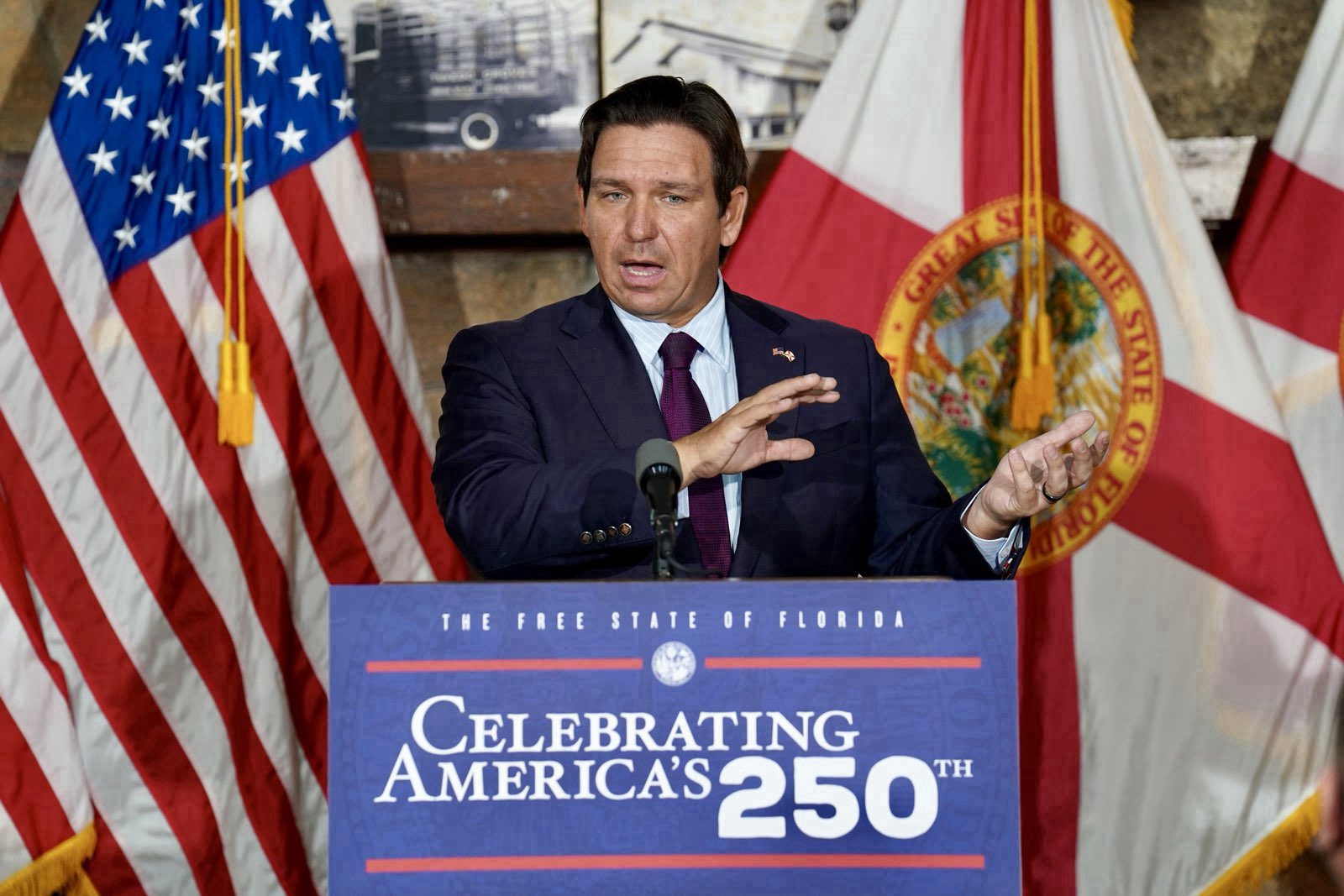
For more than a year, DeSantis has been at the vanguard of the national anti-property-tax movement. His arguments have blended rising costs and with the populist branding of the levies as unamerican. Local governments in Florida, he said, have gotten too fat on revenues from growing assessments and homeowners are right to feel affronted.

“Year after year, you’re just having to write a check just for the privilege of being able to maintain ownership of something that is supposedly yours,” DeSantis said in May as he unveiled a proposal to eliminate the tax for more than 90% of primary residences.

But fellow Republicans in the statehouse balked at jettisoning billions in tax revenue used for schools. They stripped out DeSantis’ proposed cuts to education funding before sending his property tax measure to the November ballot. Incoming House Speaker Sam Garrison said fellow Republican lawmakers agreed with DeSantis on the need for cuts but “we’ve also been frank with voters there’s no such thing as a free lunch.”

Yeah, but schools are dominated by woke commies. We should just homeschool all of our kids. It was good enough for Jesus.

The road to Election Day has been rocky. The state Republican Party took months to endorse the plan after U.S. Sen. Rick Scott and other GOP leaders expressed reservations about impacts to local budgets. Several Republican sheriffs have blasted the measure — one called it a “train wreck” — that could wreak havoc on their bottom lines. Even DeSantis has distanced himself, saying that while he expects to vote yes, he will not raise money or campaign for it because its reforms do not go far enough.

Even the sheriffs are against it, but they don’t go far enough?

These splits among Florida Republicans fall along emerging ruptures in the Trump-era party. In Texas, where property tax reform has been at the top of the statehouse agenda for years, Republican Lt. Gov. Dan Patrick has warned that Abbott’s latest proposal to eliminate school property taxes on primary residences would force the state to hike sales taxes to unsustainable levels. In Ohio, DeWine vetoed more aggressive bills before signing a slimmed-down package focused mostly on limiting future tax hikes.

“We have to provide for our schools; we have to provide for fire, EMS, police and children’s services and many other things,” DeWine said in December. (Both DeWine and DeSantis are prohibited by term limits from seeking reelection as governor this year.)

Unlike candidates for national office, governors, mayors, and even state legislators actually have to, well, govern. Voters demand that government provide certain services. And, again, somebody has to pay for those services.

Republican lawmakers frustrated by DeWine’s reticence are salivating at what a Ramaswamy administration could bring. Ramaswamy called for “the largest property tax rollback in Ohio history” by cutting levels to what they were prior to the pandemic.

Candidates for governor—especially those with zero governing experience who think they’re qualified to be President—are, oddly, less constrained by reality than actual governors.

Deep cuts would force Ohio to consolidate local agencies — Ohio has 611 school districts and 1,308 townships in its 88 counties — an effort previously resisted because “no one wants to lose their mascot,” said state Rep. David Thomas, a Republican who has quarterbacked the Legislature’s efforts.

Yet Thomas believes Massie’s abolition initiative is too extreme. And after Ramaswamy parroted populist talking points in his campaign kickoff speech last year — “If you own land, it should not feel like it’s a lease,” he said — the candidate backed off a pledge to eliminate the tax entirely.

Massie is frustrated with the response from Ramaswamy and other politicians, whom he believes are trying to co-opt the energy behind his initiative while disavowing its goal. “We’ve declared war on our legislators, our executive and our judicial branch,” Massie said.

Insert your favorite Pogo quotation here.

While the argument that property taxes make homeowners renters to the government wins support on social media — where Musk, former Congresswoman Marjorie Taylor Greene and others repeat it to the point of virality — abolition has struggled when pushed into the policymaking mainstream.

In 2024, North Dakota voters were presented with an initiative to repeal property taxes. They rejected it by a nearly 2-to-1 margin after local governments, labor unions and business leaders argued the proposed cuts were too severe without viable alternatives to replace the lost revenue.

“I actually thought after we defeated this thing so handily in North Dakota that it might die down nationally,” said Chad Oban, the head of the state’s largest teachers’ union who ran the opposition campaign against the measure. “People would be thinking that, ‘Hey if we can’t do this in North Dakota, I mean, jeez, where can we do it?’”

Where, indeed?

As to the original problem—old folks being at risk of losing their homes because they can’t afford the tax bills—there are less draconian solutions than eliminating property taxes, or even exempting retirees from them entirely. Many, if not most, states have homestead exemptions that limit tax liability on a primary residence for those of a certain age.

Beyond that, despite the mythology, the over-75 set is actually the wealthiest age cohort in the country. They’re also heavily subsidized. We should take care of the small subset living in poverty or otherwise destitute. But the overwhelming majority can afford to pay their share of the cost of living in a developed society.

,

26 responses to “Americans Revolting Against Property Taxes”

  1. People have always grumbled about property taxes, but the current fury has to do with the astronomic growth in values that has occurred and inflation. The assessed value of my house has over doubled in the past 20 years. Add to that in NH over the last decade or so, the R governors and legislature has been chipping away at the various small fees that business and individuals pay. Often, a portion of those fees, typically about 50% would pass to the towns as general revenue. That lost revenue is replaced by property tax revenue.

    I guess is property taxes were reduced, part of it could be replaced by a sales tax on the capital gains, when a home was sold, but I bet it would need to be 25 or 30% and that won’t be popular either.

    1
  2. A pretty comprehensive write up.

    Here in Texas, property taxes are pretty high. As a senior, I have pretty high exemptions so my tax bill is fairly low. There is no state property tax; however, that doesn’t stop state legislators from meddling. They send state money to “buy down” the local property taxes which coincidentally gives them the leverage to meddle in local school politics.

    The anti tax forces also managed to pass a Texas State Constitutional amendment forbidding an income tax.

    So that just leaves the sales tax. It is estimated that the sales tax would have to rise to about 22% to bring about the revenue required to replace the property tax.

    Good times.

  3. “I’ve paid off my house, why should i pay property taxes?” is such a non-sequitur. Property taxes pay for roads and police and fire protection. They also pay for schools.

    Yeah, if they said, “My kids are grown, why should I pay for schools?” that would be one thing. A very selfish thing, but hey, this is America. We compete to see who can be the most selfish. It would be clearer, but that doesn’t cover roads, parks, police and fire, etc, etc.

    Meanwhile, a big boost in tax base means a big boost in government revenue. Unfortunately, it probably also means a big boost in costs of the above services.

    2
  4. It may be people are beginning to realize if it’s fair to tax a property that’s owned free and clear, then it’s fair to tax other privately owned taxes, like say, tons of shares in a company, at their market value.

    How eager do you figure Adolf, Lex, Serge and the rest are to pay 1-1.5% of their inflated stocks in cash.

    1
  5. Re the old history parts… Property generated income, and if your record keeping technology was clay tablets property was about all you could keep track of. Modern many-parts sales taxes and especially income taxes require computers. I’m generally a fan of a progressive consumption tax for individual taxation. Our income tax system already collects almost all the information needed to do it.

  6. People are woefully ignorant of how things are funded. I remember when I lived in a small upstate NY town a group of new-ish residents were very vocal on trying to get a quarry shut down because of pollution fears (as far as I know, they were unfounded). That quarry paid a significant share of the local taxes and, unlike the houses the opponents lived in, paid in far more than they got out in services. The distance between houses in much of the township was at least a tenth of a mile (effectively by ordinance) and frequently much more. The town had to build and maintain the roads and roadsides, plow them in the winter, build bridges over streams so the inhabitants could reach their homes, provide police, fire department and emergency crews, as well as garbage collection. And in a 1 mile stretch they might have 10 homeowners paying the property taxes that funded all this, and no business (by ordinance). When you got to the village inside the township though, the houses sat virtually next to each other, with dozens and dozens per mile, and there were also dozens of businesses located there. Collectively, they were net positive in terms of tax revenue, yet the town-dwellers were all convinced their property taxes were paying for the village inhabitants instead of the other way around.

    1
  7. Taxes are about 1/3 of my mortgage–and they went up 10% last year.

    I live in a small “city” of 3,000 with volunteer fire department, and volunteer EMS*. We don’t have a lot of expenses–except for the schools that keep asking for more money for things like a new football field (that will have to be completely redone every 10 years). Oh… and the new water and sewer lines that got put in on my road? The cost of that gets added to my taxes (and those on this road), not the tax base in general.

    I’m all for paying a fair share, but when 20% of my monthly income is going to property taxes? On a 106-year-old, 1700 sq ft bungalow sitting on a 135×55 foot lot? That’s not a “fair share”. That’s a serious burden.

    *They get a small stipend for each call, but aren’t paid any benefits

  8. POLITICO says,

    the movement appears organic, driven more by meme than political machine

    It sure didn’t look organic here in FL. Gov. DeSantis proposed and pushed it, although he seems to be backing off a bit lately. Like TX, we have no income tax and it’s hard to see how we’d make up the resulting shortfall. As structured it would give the state more control over local spending. Even though he’s term limited, DeUseless seems to have a habit of fighting local control going back to COVID, when the state overrode local beach and business closings.

  9. Americans want everything that taxes pay for, without paying taxes.

    In NH, we don’t have a sales tax or an income tax, so yes, property taxes are high.

    Every time I hear a local wailing about how much the town is spending, I ask if they attend the budget committee hearings. (No, they don’t. I went to every single budget meeting a few years ago, and I was the ONLY member of the public there at most of the meetings.)

    People have no clue how much stuff costs. Police are a huge portion of the town budget…and their equipment is expensive, even with securing grants to help out. Ditto the fire department. Health care costs for the eligible town employees went up by 14%, and our town has a tax cap of 4%. The cost of asphalt for road repairs? Up. The cost for gas for all town vehicles (including police cars, fire engines, and the plows and road crews)…up (a lot, most use diesel).

    THE MONEY TO PAY FOR STUFF HAS TO COME FROM SOMEWHERE.

    I classify any “well, can’t they cut from somewhere” as dumb comments. No, they cannot–there’s always a price somewhere else. And if people would sit through the budget process, they’d learn that. But no, they’d rather whine about taxes while also complaining about services.

    3
    1. Until voters accept as true this premise…

      And, yes, it turns out that we have to pay for things even conservatives think government ought to fund, and, well, that means we have to tax something or someone.

      …we will always have politicians who take advantage of this premise…

      Still, the popularity of cutting taxes is unassailable: no politician ever lost a vote for promising to cut taxes or increase spending—preferably at the same time.

      1
  10. I have alot to say about this, so bear with me.

    I have a home in California. My mother has three. I’ve owned properties in Florida, Georgia, Nevada, and New York. My mother’s first home, in Highland Park, cost her $6,500 in 1966. It’s a tiny 700 sq ft two bedroom, one bath home. Her second home, also in Highland Park, a few blocks away, cost her $14, 750, in 1973. Her third home, in Fontana (a suburb one county over about 40 minutes east from her other homes) was purchased in 2015 for $245K.

    House #1 has YEARLY property taxes of $115. It’s worth about $650K and has been paid off for 30 years. It provides the rental income that she uses to live off of, in addition to a small social security check.

    House #2 – still her main residence – has YEARLY property taxes of $312. It’s worth $1.4M, due to it having a veiw of downtown LA, despite being close to a “teardown” based on it’s condition.

    House #3 – which she uses about 60% of the time – has YEARLY property taxes of $2900. She splits time between house #2 and house #3.

    My home, purchased in 2012, has property taxes of around $7K per year.

    My mother was a huge believer in real estate, which allowed me to buy my first home at the age of 19 – with a mortgage at 12.85%.

    What’s awesome about Prop 13 is that it makes property taxes easy to manage and budget. There are no surprises. You know how much it’s going to go up, and when.

    Low property taxes are why we can pay so much in other taxes. Our sales taxes are high. Our state income taxes are high-ish. Our local taxes are high. In so many red states, they don’t have a state income tax and low sales taxes. You can’t fund basic stuff without some sort of income for the government.

    I travel alot, and when I go to places like Arkansas, Missouri, Kansas, Tennessee, even Georgia and Florida, the first thing that strikes me is how shitty the infrastructure is in all of these places. The roads – other than the interstates paid for by the Feds – are shit. The sidewalks – where they exist – are shit. The sewer systems – where they exist – are shit. They actually have to be because the taxes being collected aren’t enough to get good roads, good sewer systems, clean drinking water systems, etc.

    My inlaws right outside of Dallas are paying $22,400 per year in Property taxes, on a house they purchased in 2004 (for $410K) and paid off two years ago. Almost 2K per month in just property taxes. They’re seriously considering packing up and moving back to their family farm in middle Illinois. But at least they don’t have a state income tax.

    Lastly, I’m dealing with a probate after the death of my wife’s biological mom and have had to go to Florida a few times in the last year, (Sorry, Kurtz, they’ve been very, very short trips, but I will let you know when I’ll be there for more than 36 hours). I’ve noticed first hand how much Florida has deteriorated since I sold my house there in 2014. Between property taxes, HOA bullshit, Homeowners and Renter’s insurance, inflation specific to Florida (Rents have increased 32% since 2020), it’s become a very, very expensive place to live.
    • Housing: Statewide median home prices sit around $375,000–$410,000, while average rent ranges from $1,500 to $2,900+ depending on the metro area. Homeowners insurance and HOA fees are among the fastest-growing expenses.
    • Utilities: Average around $371 to $422 per month (driven heavily by AC use).
    • Groceries & Food: Averages $395–$396 per month per person (about 2% to 7% above the U.S. average).
    • Transportation: Gas averages about $3.30–$3.70 per gallon, with annual transit and car costs running $8,300–$15,700.
    • Healthcare: Averages roughly $9,000–$9,500 annually.

    A friend in Broward was just hit with a $39K assesment to bring their condo in Pompano up to code. It’s a big complex, so it’s a huge number for deferred maintenance. They don’t have $40K sitting around. They’re going to have to finance it because the condo market is so fucked in Florida that unless you want to sell way under market, it’s gonna take a while to sell.

    Florida is facing a major surplus with nearly 70,000 condos for sale statewide, driven by over 26% of all U.S. existing condo listings located in the state. Strict post-Surfside safety laws, soaring insurance rates, and high HOA fees have pushed older inventory onto the market while slowing sales overall.

    But at least there is no state income taxes.

    If you tallied up all the taxes I (or my mother) pay in California, I guarantee you, we pay substantially less than anyone living in Texas or Florida with the same general parameters to start.

    Keep shitting on California. My 92 year old mother, who hasn’t had an W2-income since 1985, is able to keep her home(s) because of Prop 13.

    You want no state income tax. That comes with a bigger tax to make up for it.

    California – again – got it right. 50 years ago.

    2
    1. I am not a fan of Prop 13, though your description of the virtues is correct.

      I have two reasons for disliking it. The first is the inequity of it. When I moved back here and bought a home, I was paying maybe 3 to 4x what my neigbor, with a lot the same size and a house built as a twin of mine, paid.

      That doesn’t seem fair to me.

      The second is that commercial property is subject to Prop 13. This makes no sense. It makes land use sclerotic. It puts this massive brake on redevelopment, or changing locations. Because your property taxes will go up so much.

      Yes, it’s a good deal for your mom and you. I don’t wish you or her ill, either. It’s just so much more of a good deal for a certain privileged few. I don’t expect it to change in my lifetime, though. If ever.

      1
    2. My 92 year old mother, who hasn’t had an W2-income since 1985, is able to keep her home(s) because of Prop 13.

      With all due respect to your mother, perhaps one home sheltered from property tax increases is enough — assuming that Prop 13 is a good idea at all (I’ll just skip that question here)

      1
      1. You can ask the question. I’ll gladly debate it. It’s a simple formula for Prop. 13.

        Core Rules of Proposition 13

        • 1% Tax Rate Cap: General property taxes are restricted to 1% of the assessed value, though local voter-approved bonds or special assessments can add extra charges.
        • 2% Annual Assessment Cap: A home’s taxable assessed value (the “factored base year value”) cannot grow by more than 2% per year, regardless of how high the actual market value climbs.
        • Acquisition-Value System: Properties are only reassessed to their full current market value when they are sold or undergo major new construction.
        • The “Lock-In” Effect: Neighbors living in identical side-by-side houses can pay vastly different property taxes depending on the year they bought their home.


        Prop 13 California: How It Benefits Homeowners Today-January 20, 2026

        1. I don’t think Prop 13 is going anywhere, and it’s in California, so… may interest is limited.

          I expect that allowing your 92 year old mother to keep three properties was not high on anyone’s list of priorities though.

          I would oppose a similar thing in Washington because it creates housing stagnancy when we need greater turnover and the subsequent infill development (replacing single family homes with townhomes, multi-family units, etc). We have low density, high prices and a lot of homelessness.

          As Seattle starts into what may be a bust-period with the software-boom waning, housing needs may change and make it more important to protect older residents.

          But it definitely is a matter of who we want the tax code to protect.

    3. Half-right. Prop 13 was a Trojan horse — it was advertised as being for homeowners, but also covered business properties. Which means that, for instance, property taxes on the land under Disneyland or a a manufacturing plant haven’t gone up in decades…

      1
  11. When I moved to the People’s Democratic Republic of Washington, I was personally pleased with the lack of income tax (as a relatively high income person, why wouldn’t I be?), but as time has gone on, with every fucking thing in the state trying to nickel and dime me, I just want a simpler tax system where we understand the consequences of each lever**.

    I don’t want to vote on a special tax assessment or two for transit, schools or homeless services every ballot. Tolls on the 99 tunnel and the 595 bridge. License tabs based on the car’s value*. A special pass for parking at state parks. Bus fare. Just fucking figure it out and stop bothering me.

    Five knobs: sales, property, income, capital gains, and inheritance. I’d set the first to zero, and the last to something and just want the other three to be semi-predictable and at whatever level is needed. Run a big, expansive state and local government and just bill me.

    Property taxes drive old folks out of their homes, and Seattle needs home ownership to turn over and a lot of infill development, so I’d be inclined for a higher property tax to speed that along (even if it would hit me harder than the others). We should probably do something for the old people displaced — Soylent green, a tax rebate for the first N years in their new home…

    Anyone remember Steve Forbes with his flat income tax? That stupid proposal would be such an improvement here. Herman Cain with 9-9-9?

    ——
    *: the consequence of this is that a whole lot of cars have old tabs, which our useless police do nothing about.

    **: do you want to cut bus ridership? Raise the fares! Morons. Cut the fare to 0 and get as many drivers off the road and out of my way!

  12. But while property taxes are/can be low, CA has the highest sales tax in the nation, and that number doesn’t include local sales taxes. Some cities in California have sales tax rates over 11%. Where my home is, LA City and County, the sales tax is 9.75.

    California also has the highest state income tax, by far….

    California has the highest state personal income tax rate in the U.S. at 13.3% (or up to 14.6% including high-income surcharges – income over $1M), followed by Hawaii at 11%, New York at 10.9%, and New Jersey at 10.75%

    ….. so the low-ish property taxes make sense.

    Would you rather have low property taxes or low sales and income taxes? Because you can’t have both

  13. I’ve owned my house for ~26 years. I have never complained about property taxes in spite of having no kids in the school system and not really relying on local services. Part of being a community.
    I hate Connecticuts love of car taxes. A car, a trailer, and a collection of 6 motorcycles on a fixed income adds up to a stupid tax bill.
    Generally I feel the same about federal taxes. Paying for Fatso’s folly’s does annoy me.
    My bigger issue? REFORM INSURANCE!!! Dammit.

  14. Talk about timing.

    In the mailbox today was the school district newsletter. In it, they mention two referendums that will be on this ballot.

    The school district serves 5 communities with a combined population of about 6,000 people. The student population is ~1,400 across all schools.

    A quick google shows that the annual budget is ~$26M. That’s $18.5k/student. That’s spot on the average for the state.

    Referendum 1 asks for $6M/year extra.

    Referendum 2 asks for $13M “capital referendum”–which they describe as a 20-year loan–to… create and improve sports facilities. We’re a small town. We make zero money from sports. There might be 200 people at a football game. A quarter of that for any other sports.

    @JamesJoyner: Do you believe that it’s fair to put a roughly $2,000/working person* additional burden on property owners (and renters, because rents will go up) in order to:

    Remodel the career and technical education spaces at the high school
    Renovate the indoor pool
    Remodel the athletic and pool locker rooms
    Create athletic practice fields for soccer, football, & other activities at the Primary School
    Construct a varsity baseball field at the Primary School
    ?

    And, of course, I question the “loan paid off over 20 years” language that they use in the newsletter. So… They’re going to pay back the taxpayers? Do we get interest? Seeing as how they’re asking for a 25% subsidy for everyday expenses, are they going to ask us for more tax money in order to pay us back?

    At least we get to vote on this.

    You have a nice job with a really good salary, so “why are you so upset about another $2,000 in taxes?” seems like a reasonable question to you.

    I got my paycheck yesterday. I paid my mortgage today. I have $100 left over. 20 years ago, I made an extra payment a year towards the principle and was living well. Now, I’m renting out a spare room just to pay the bills.

    My property tax burden has probably doubled since I bought my house in 2005. And I have zero say in the “assessed value”–and therefore tax burden.

    Walk a mile in my moccasins and tell me that property taxes are nothing.

    1. @Mu Yixiao I paid $31,965 in state and local taxes last year, $16,522 of which was for my home and automobiles. And last year was the first year in several that I wasn’t capped at a $10,000 deduction on my federal taxes, so I was previously taxed on over $20k that went to other governments. It sucks. But Virginia and Fairfax County spend a lot of money on roads, schools (including a massive transportation budget), policing, and the like. Someone has to pay for it.

  15. I don’t know how to reason with someone who thinks they should be able to stop paying property taxes when their mortgage is paid off. Hopefully, for their sake, they haven’t stopped paying their homeowners insurance premiums.

    1. @Eusebio The thinking isn’t that hard to fathom: If I keep having to pay to live in my house after I’ve paid it off, I don’t actually own it.

      Let’s say you bought a house in Columbus, Ohio in 1995 for $100,000. The monthly payments on a 30-year note would have been $725. It would have been owned free in clear last year. But now it’s worth $350,000 and the property tax bill can be $5700 to $7000, depending on what neighborhood you live in. That’s $475 to $583. It’s damned near a mortgage payment.

      Again, I don’t know what the alternative is. But I get the frustration and sense of injustice.

  16. There’s a saying that the public has an insatiable appetite for government services, but doesn’t like to pay taxes to pay for them.

    Scandinavian countries reportedly have the highest level of satisfaction with their way of life. They pay taxes for good schools, public transportation, art and culture, and other amenities as well as defense, infrastructure, etc. So why are they happy and other countries miserable?

    My rural county has tried twice to pass a lodging tax to collect revenue from tourists. And twice it has been voted down. I can’t figure out if the voters simply don’t understand that locals won’t pay taxes or if they just hate taxes.

    Of course, the biggest tax that people have paid over the last two years is absorbing the cost of tariffs. I’m from a farming family, so I know the economic impact of tariffs and trade wars on the international markets for US farmers. But I don’t know if most American have figured out yet what tariffs are and why they are seldom and selectively used.

    And since we’re have an economic discussion, let’s review external benefits of government spending. Well-educated youth contribute toward the welfare of the older generations. Youth sports and extracurricular activities keep youth engaged and less likely to engage in anti-social behavior. A healthy ecosystem sustains life and promotes beauty and recreation. To be sure there are negative external costs of government decisions (think TARIFFS) and unregulated private business such as pollution or unsafe products (think oil spills or not paying their fair share to recycle products).

    Our schools in my rural community need to be replaced. They have served much longer that their expected lifespan. Spending for maintenance and less efficient HVAC costs is pouring money down a rat hole that directly impacts funds available for student education. We have a bond on the ballot to replace two schools and undergo significant repairs for the third. Yes, it includes renovating the track, which is such bad state that we can’t host track meets.
    This will be the second time replacing/repairing the schools has been on the ballot. Every voter needs to ask three questions:

    1 Can I afford the increase in my property taxes?
    2 Can our community afford not to have safe, up-to-date schools if we want to maintain a reasonably good educational system?
    3 What are the external costs and benefits to our community (e. g., attracting professionals and skilled tradespeople who want good schools; a community space for walking in our snowy, icy winters; and a place where people displaced by disaster such as wildfire and floods can be temporarily housed and supported).

    BTW, Oregon has property tax and income tax. We have a history of not having a sales tax, which makes life simpler. But the distribution of taxation would be more equitable if we also had a sales tax.

    1. We have what I consider pretty high taxes here:

      State Income Tax (Virginia)
      • 2.0%: On taxable income up to $3,000
      • 3.0%: On taxable income from $3,001 to $5,000
      • 5.0%: On taxable income from $5,001 to $17,000
      • 5.75%: On taxable income over $17,000

      Property Taxes (Fairfax County)
      • Base Real Estate Tax Rate: $1.1225 per $100 of assessed value (plus standard and special district levies depending on your exact service area)

      Sales Tax
      • 4.3%: Virginia state general sales tax
      • 1.0%: Local general sales tax
      • 0.7%: Northern Virginia regional transportation district levy

      Personal Property & Vehicle Taxes (Fairfax County)
      • $4.57 per $100 of assessed value for cars, trucks, and trailers

      We get decent services, but it’s a lot. Especially since home prices are so high here.

      1. Ouch! That personal property (wealth) tax would be impossible in my poor rural community. Our median household income is $47K, but many families make 4 wheel drive vehicles and travel trailers a priority for ranching, hunting, and outdoor recreation.

        Home values are so low that the county has a hard time funding basic services with property taxes, thus a big push to build new homes and attract new families and professional/skilled workforce. But, realistically, because of severe water usage constraints, it’s likely the population will continue to decrease from the 70s hey day when we had a Air Force base and full-tilt extraction of timber.