As a general matter, I am not in favor of government shutdowns, neither in terms of good governance nor of political strategy. There is a long rant about institutional structures I could go into, both about the general silliness of a massive government bureaucracy that can artificially run out of funding and also the problems with allowing a minority veto in the Senate for these measures. Regardless of how I view a given legislative majority, having a majority of seats in both chambers ought to allow a party to keep the lights on.
I am pretty sure I am on the record on this matter, although I believe I have weighed in more on the debt ceiling issue than shutdowns, per se. I will note that I understand why the minority party in the Senate would use whatever powers the rules allow, and understand the theory behind this negotiation tactic. My memory may be failing me, but I do not think that the party forcing the shutdown ever makes any major gains, legislatively, from this tactic, and that, further, they tend to lose political capital. These facts alone call into question the soundness of pursuing a shutdown strategy.
Having said that, I was sympathetic to the notion that the Democrats, the current minority party in the Senate, might utilize this inflection point of leverage as a means of drawing attention to Trump’s authoritarian behavior over the last nine months, especially as it pertained to ignoring legislative authority. It seemed to me a clear argument that centered on the question of why fund things if Trump is going to do whatever he wants might have had some resonance.
A partial list would include mass firings and dismantlements of Congressionally-authorized agencies via DOGE, removing a member of the FTC in a way that, in my view, likely contravenes the law while threatening to do the same against a member of the Federal Reserve, and not spending monies already appropriated.
Beyond that, much of which I acknowledge gets a bit wonky, is the avalanche of Executive Orders that he has been using like decrees to govern, and the multitude of examples of ignoring due process of law (you know, laws passed by Congress).
There is a long list of things to choose from to highlight. How about focusing obvious wastefulness that also contradicts congressional intent? For example, via the NYT: $10 Mill/ion in Contraceptives Have Been Destroyed on Orders From Trump Officials or the destruction of food aid.
How about highlighting the plight of American farmers suffering from tariffs in what the courts have already said is an abuse of the laws passed by Congress regarding presidential authority and tariffs?
Democrats should have made this about not being willing to fund a rogue government, or at least to highlight the ways in which Trump is circumventing Congress.
There is a whole set of grifts that could have been highlighted.
But, instead, they have chosen to play normal politics and talk about health care and bipartisanship.
Look, I agree that the health care issue is important, but it is too mundane and too much an example of normal politics to break through and make any difference whatsoever. It is essentially a fight over the contents of the spending package (aka, the “Big Beautiful Bill”) that already passed.
I mean, is this the kind of rhetoric that we need at this moment? I think not.
Minority Leader Chuck Schumer, however, quickly retorted that Thune “did not come to me one time to say, ‘Is this bill acceptable? What do you want in the bill?’ They call it bipartisan. It is not. That is not how you negotiate. That is not how you pass appropriations bills” (Source).
That’ll mobilize the population!
Sometimes I wonder if American politicians, as a general matter, and Democrats in particular, understand where the leverage points are, which are the primaries and the general elections. How many GOP Senators are going to lose their nomination fights, let alone their general elections, over these health care provisions? And for all the 2028 rhetoric, Trump can’t legally run,* so what does he care?
It is possible, however, that some House seats may be vulnerable to a shift in public opinion over the damage that Trump is doing writ large. So focus your attack there.
This was a moment to at least try and mobilize opposition to provide a rally point. Health care subsidies, as important as they may be, are not going not ignite much passion in the public.
The main thing, in my view, that the Democrats needed to use this leverage point was to break through the noise and get more public attention on how Trump is governing, especially as it pertains to ignoring the legislature.
Instead, we get very normal, very anodyne bleating about health care spending and, Heaven help me, bipartisanship. Trump and his allies are out there trying to paint the entire Democratic Party as radical leftists and extremists, and Schumer wants to complain about insufficient bipartisanship.
I don’t see any of this ending well.
Trump is already using this to his political advantage. While Schumer whines about the lack of consultation by Thune, the administration is ready to make this as partisan as possible. For example, via the Handbasket: Trump mandates all federal agencies send email blaming Dems for potential gov’t shutdown.
So, sure, let’s play like this is still just good ol’ normal budget politics.
And remember: shutdowns as a strategy fail in normal times, so it is, of course, madness to assume that they will work in abnormal times, especially if pursued as if things are boringly normal.
Trump understands the need to seize the moment in ways that the Democrats simply don’t.
“We can do things during the shutdown that are irreversible, that are bad for them and irreversible by them — like cutting vast numbers of people out, cutting things that they like, cutting programs that they like,” Trump warned Tuesday in the Oval Office (source).
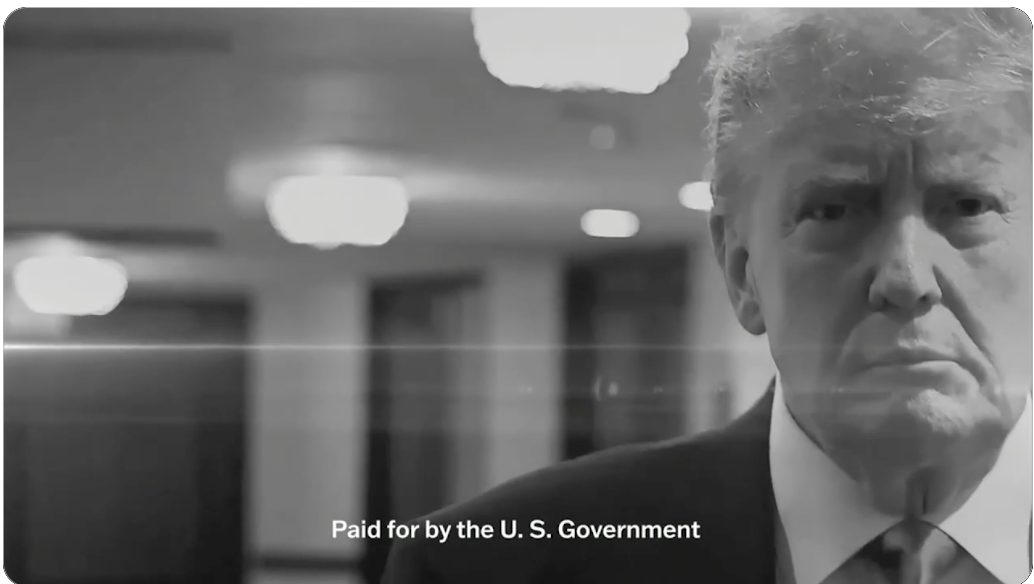
And, you know, he is really, really worried about bipartisanship. Here’s how he responded to his meeting with Schumer and Jefferies this week, via Politico: Trump posts vulgar deepfake slam of Democratic leaders after White House meeting.
As you know, any normal president would.
I am quite aware of how little power the Democrats have as the minority party in our system and how this budget deadline creates a theoretical moment of leverage. But it is not an especially strong hand, and if it was going to be played, it needed a strategy that understood the moment, and this simply isn’t it.
Going back to 2021, the Democrats in Congress have not understood what they are facing, opting instead to hope that at some point we are going to snap back to normal.
Normal ain’t coming through that door, and the Democratic Party needs to understand that.
*I will put it this way: if he actually does manage, for whatever reason, to run again in 2028, we will have much, much bigger problems than health care spending at that point.