
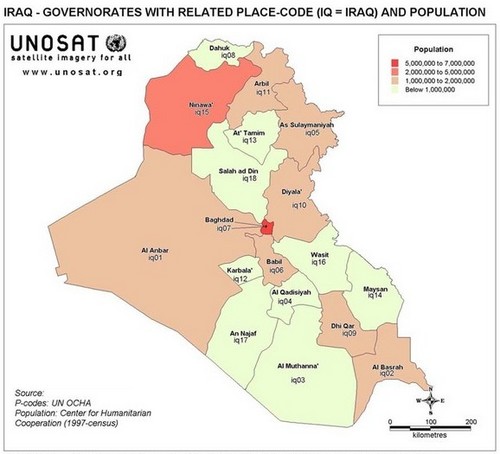
 The bottom-up approach to political consensus building the worked in Anbar province is now showing signs of success in Diyala.
Most of the major tribes in a strategic province northeast of Baghdad have signed agreements to support U.S. and Iraqi forces, a sign the alliance-building initiative that started in Anbar province is spreading. In Diyala province, tribal leaders representing 20 of the province’s 25 major tribes have signed agreements brokered by the local government, said Army Col. David Sutherland, a brigade commander there. The shift has led to more tips from citizens and a reduction in violence, the U.S. military says. Weekly attacks in Diyala province have declined from an average of 125 three months ago to 70 last week.
The news comes as Lt. Gen. Raymond Odierno, the No. 2 U.S. commander in Iraq, said Thursday that car bombings and suicide attacks in Baghdad are at the lowest level in a year. Odierno cited few specific numbers to back up his report.
In the past, the U.S. military has touted progress, only to see conditions shift. For example, the bombing of a major Shiite mosque last year set off sectarian warfare and increased the power of Shiite militias.
Initiatives such as those in Anbar and Diyala provinces reflect a U.S. policy shift toward promoting local security agreements, partly because the Shiite-dominated government has failed to create a consensus. U.S. officials are pushing for local agreements in parts of Baghdad, too.
As a general rule, I view the signing of pieces of paper with immense skepticism. The parties tend to honor such agreements only so long as they see it as beneficial. If, however, this is really translating into “more tips from citizens and a reduction in violence,” though, it’s a good sign.
Whether this is 1) a statistical anomaly, 2) sustainable, and 3) scalable to other provinces remains to be seen. That a second major province is following suit, though, is encouraging.
Image source: Essays & Effluvia









