
Over the weekend, I pointed to a vaccine standoff with the Oklahoma National Guard, with its top officer declaring he would refuse to enforce the mandate issued by the Secretary of Defense. The Secretary of the Army has now fired a warning shot.
The Hill (“US Army Secretary: National Guard members who refuse vaccine will not ‘continue service’“):
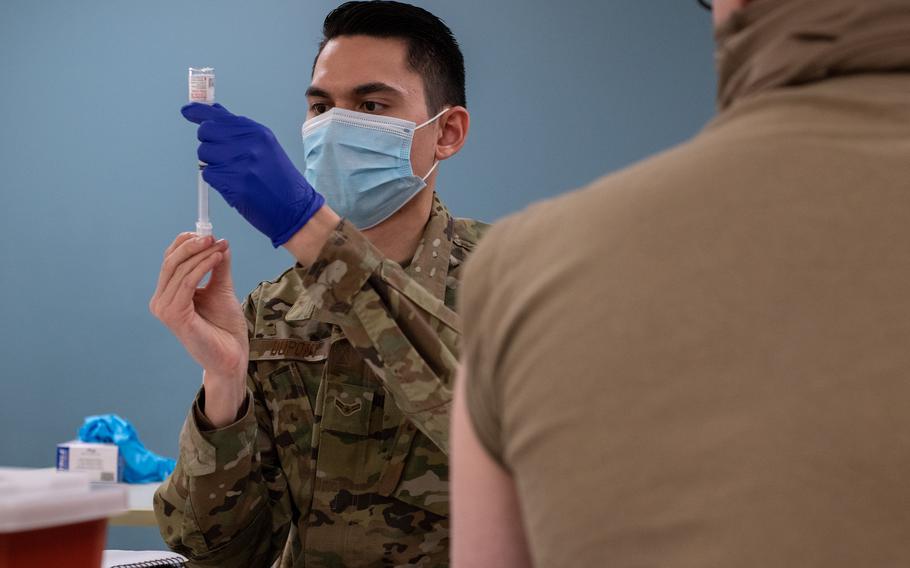
U.S. Army Secretary Christine Wormuth this week warned members of the National Guard that they may be barred from “continued service” if they refuse to get vaccinated against COVID-19.
“I have determined that all soldiers who refuse the mandatory vaccination order will be flagged,” Wormuth wrote in a memo, according to The New York Times. This action would prevent soldiers from receiving promotions, awards and bonuses.
If members persist in declining vaccination without an approved exemption, she added, they will not be allowed to “continue service.”
[…]
On Wednesday, a Defense Department official reiterated the administration’s stance on the vaccine mandate for U.S troops. The official said Austin “can establish a medical readiness requirement that applies to members of the National Guard,” adding that failure to meet this readiness requirement “could jeopardize their status in the National Guard.”
More background from the above-mentioned NYT report (“The U.S. Army secretary to National Guard members who resist the vaccines: Prepare for discipline.“):
In Oklahoma, 89 percent of airmen in the Guard have been vaccinated, while only 40 percent of Army guardsmen have had shots; the deadline for members of the Army National Guard is coming next month. All branches of the military have been permitted to come up with their own vaccine mandate deadlines for active duty and guard troops, as well as their own punishment systems for refusing shots.
The Pentagon has been wary that other states may follow Oklahoma’s lead.
Texas Guard officials, for instance, said in an email that the Pentagon appeared to be imposing vaccine mandates on military and National Guard members without adequate protections in place for individuals with religious objections and hinted it, too, might permit members to skip the shots.
The governor of Alaska, Mike Dunleavy, has also issued a memo noting that “President Biden and his Administration have taken actions, or announced plans to act, that threaten the sovereign authority of the State of Alaska,” which included “imposing vaccine mandates on military and National Guard members without adequate protections in place for individuals with religious objections.”
In essence, Texas and Alaska appear to be engaged in a passive version of the Oklahoma written policy. “We are awaiting additional guidance from the Departments of the U.S. Army and Air Force that addresses National Guard requirements,” said Candis Olmstead, a spokeswoman for the Alaska Guard, in an email.
As noted in my previous post, the Guard is in a hybrid status, serving as both a state militia and a part of the Reserve Component of the US military. In the latter capacity, it not only reports to the head of the National Guard Bureau, which was strangely elevated to the level of a military service a decade ago, the Army Guard reports to the Secretary of the Army and the Air Guard to the Secretary of the Air Force. This creates some oddness in this situation.
For reasons not entirely clear to me, when the Secretary of Defense ordered all of his employees, uniformed and civilian, to get vaccinated, he delegated enforcement to the service chiefs, each of whom were allowed to set their own deadlines. Some have just passed and others won’t pass for months.
The Air Force (and Space Force) had a November 1 deadline and is already working to discharge those who didn’t meet it. DoD civilians like myself have until Monday to be “fully vaccinated.” (I reached the milestone in mid-April, long before there was a mandate.) The Navy (and Marine Corps) deadline is November 28. DoD contractors have until December 8. The Army has a December 15 deadline for active duty folks but a June 30, 2022 deadline for Army Reserve and Army Guard personnel.
Presumably, then, Guard personnel still have over seven months to get into compliance unless they’re activated into Title 10 status. Wormuth is, then, simply issuing a firm reminder that, regardless of the wishes of state governors and adjutants general, those wishing to continue drawing paychecks from Uncle Sam (not to mention, accrue retirement points, get promoted, etc.) will need to follow the lawful orders of the Secretary of Defense. But not for a while!
It’s also worth noting, considering some of the reactions to this standoff in the original post, that, while this current kerfuffle seems entirely a function of Republican grandstanding on the mandate, the tensions between the Guard’s dual role are longstanding. The most notable modern-era case to make it to the Supreme Court arose when longtime Minnesota Governor Rudy Perpich, a member of the Democratic-Farmer-Labor Party, challenged the right of the federal government to activate his forces for a 1987 federal training mission in Central America. Naturally, the Supreme Court ruled in favor of the Feds. But, even today, state governors fight hard to protect their authority when the central government tries to enforce policies they dislike.