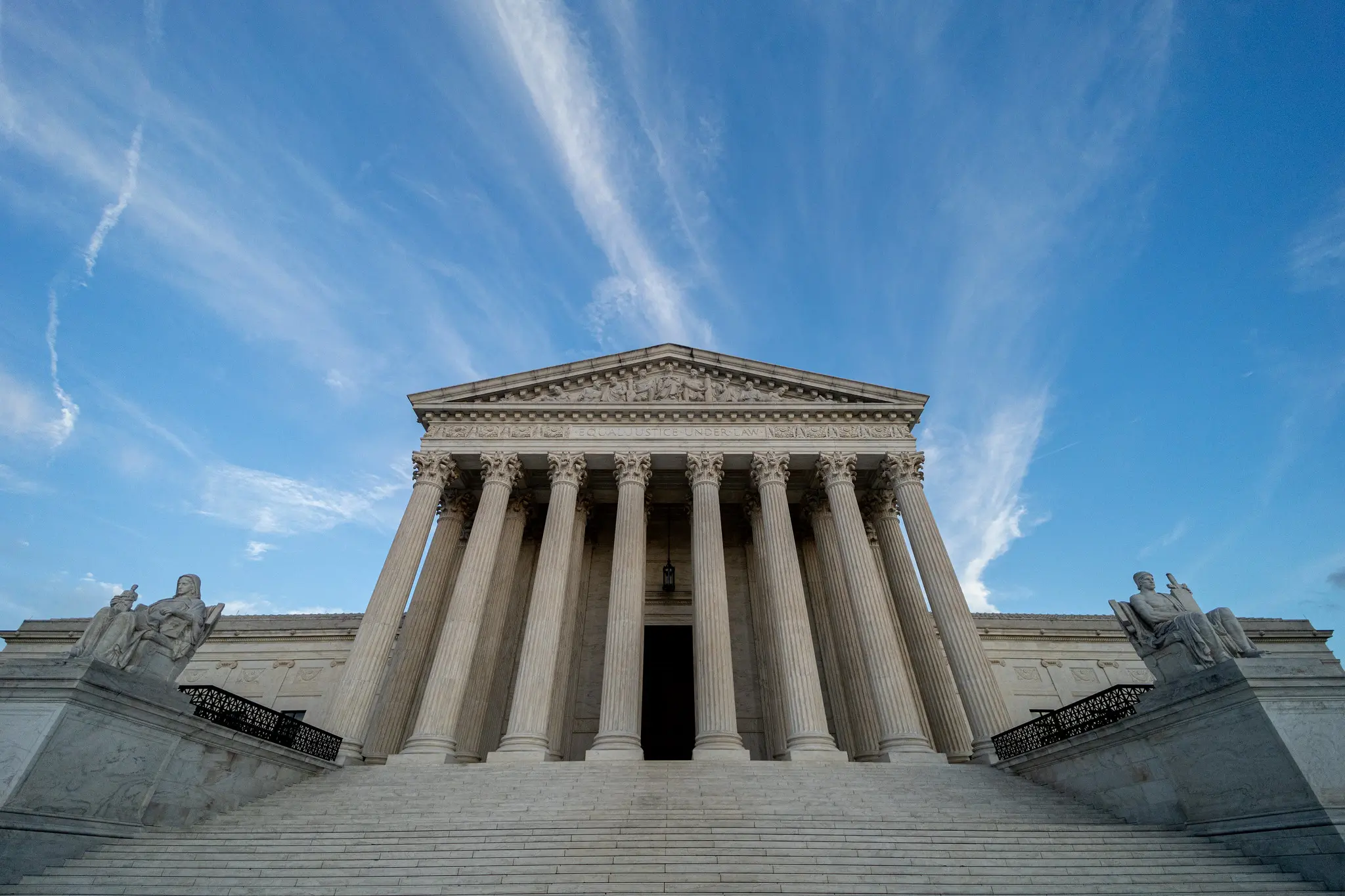
Contrary to earlier reports, and after the Supreme Court had left the bench at the end of today’s opinion announcements, the Supreme Court announced early this afternoon that Justice Anthony Kennedy, who has been on the Court since 1988, will be retiring effective July 31st:
WASHINGTON — Justice Anthony M. Kennedy announced on Wednesday that he would retire, setting the stage for a furious fight over the future direction of the Supreme Court.
Justice Kennedy, 81, has long been the decisive vote in many closely divided cases. His retirement gives President Trump the opportunity to fundamentally change the course of the Supreme Court.
A Trump appointee would very likely create a solid five-member conservative majority that could imperil abortion rights and expand gun rights.
Justice Kennedy’s voting record was moderately conservative. He wrote the majority opinion in Citizens United, which allowed unlimited campaign spending by corporations and unions, and he joined the majority in Bush v. Gore, which handed the 2000 presidential election to George W. Bush. He also voted with the court’s conservatives in cases on the Second Amendment and voting rights.
But Justice Kennedy was the court’s leading champion of gay rights, and he joined the court’s liberals in cases on abortion, affirmative action and the death penalty.
More from The Washington Post:
Justice Anthony M. Kennedy announced Wednesday that he is retiring from the Supreme Court, a move that gives President Trump the chance to replace the court’s pivotal justice and dramatically shift the institution to the right, setting up a bitter partisan showdown on Kennedy’s successor.
“It has been the greatest honor and privilege to serve our nation in the federal judiciary for 43 years, 30 of those years on the Supreme Court,” Kennedy, who is stepping down July 31, said in a statement.
Kennedy informed the president of his decision in a letter.
“My dear Mr. President,” Kennedy wrote. “For a member of the legal profession it is the highest of honor to serve on this court. Please permit me by this letter to express my profound gratitude for having had the privilege to seek in each case how best to know, interpret and defend the Constitution and the laws that must always conform to its mandates and promises.”
His decision likely will make Chief Justice John G. Roberts Jr. the central justice on the nine-member court. Roberts, 63, has shown himself to be well to the right of Kennedy.
Washington could be in for an epic battle over Kennedy’s replacement. While Senate Democrats lack the numbers to deny the seat to whoever Trump chooses, they will ratchet up the stakes of the choice.
It will be the first time since Justice Clarence Thomas replaced Thurgood Marshall more than 25 years ago that a new justice could radically change the direction of the court. Since then, new members added to the court have replaced justices of the same general ideology.
Kennedy is a courtly presence on the court, with a gentlemanly demeanor and a jurisprudence based on the respect the Constitution provides for individual liberty and dignity.
He was a compromise choice for Reagan, who had first nominated the more controversial conservative Judge Robert Bork for the position. The Senate voted him down.
Kennedy has been a disappointment to the right, which has been unable to forgive his vote to uphold the basic underpinnings of Roe v. Wade, which guaranteed a woman’s right to choose an abortion. And Kennedy has written each of the court’s major gay rights decision, including Obergefell v. Hodges, which said the Constitution requires that gay couples be allowed to marry.
Liberals came to value Kennedy because he was the best they could hope for. But Kennedy most often votes with the court’s conservatives: He is further to the right on law-and-order issues than Justice Antonin Scalia was, he is comfortable with the court’s protective view of business, and he shared the losing view that the entire Affordable Care Act was unconstitutional.
His belief that campaign finance regulation often violates free speech was exemplified in his authorship of the opinion in Citizens United, which has opened the door for an explosion of big money in elections.
Whoever Trump nominated to fill Kennedy’s seat will likely share those views but not his liberal opinions on social issues.
Here are Kennedy’s letter to the President and the press release from the Supreme Court:
Letter from Justice Kennedy announcing the news: pic.twitter.com/3JzlqI8amZ
— Jake Tapper (@jaketapper) June 27, 2018
BREAKING: Supreme Court Justice Anthony Kennedy to retire effective July 31 after 30 years of service to the Court. pic.twitter.com/LhiuvM8dWN
— ABC News (@ABC) June 27, 2018
It’s somewhat of a surprise that Kennedy chose not to announce this opinion from the bench, but that is somewhat in line with the way he has conducted himself on the bench for the past thirty years. As I noted this morning, this announcement caps two years worth of speculation that Kennedy, who will turn 82 in July, may be looking to step aside now that there is a Republican President and a Republican Senate. Last April, for example, Senate Judiciary Committee Chairman Chuck Grassley dropped hints of a potential retirement at the end of last year’s term. Grassley didn’t mention Kennedy by name, but it was clear who he was referring to. The speculation around Kennedy picked up again during the final days of the term last June. As I noted on both occasions, though, one major signal that Kennedy would not retire could be found in the fact that he had hired a full slate of law clerks for the upcoming October 2017 Term as had all of the other Justices on the Court. While this isn’t necessarily a dead giveaway that a Justice isn’t retiring, it is a strong sign that they’re planning on being around for the new term. In the end, there was no retirement by Kennedy or anyone else. Several days after the end of last June’s June term, though, it was reported that Kennedy was advising law clerks he was interviewing for the term that begins in October 2018 that he could decide to retire at the end of October 2017 Term, which means that if they were hired they would end up being reassigned to other Justices, or potentially to whoever might be appointed and confirmed to replace him. More recently, Nevada Senator Dean Heller speculated about a Kennedy retirement in a speech to supports but this seemed more like an effort by the Senate’s most vulnerable Republican to energize his base Additionally, Grassley hinted at a possible retirement again last month but, as with Heller’s remarks it seems clear that this was meant more for consumption by the base than a revelation of any actual inside information.
As I’ve said in the past, there is no way to understate the significance of this announcement both to the Court itself and to the political process in what is already a red-hot midterm election cycle. For much of his thirty-year career on the court, and most especially in the years since Justice Sandra Day O’Connor retired, Kennedy has been the swing vote on some of the Supreme Court’s most significant cases. Regardless of who the President is and what party controls the Senate, replacing him is going to have a significant impact on the direction of the Supreme Court and American legal thought for the better part of the next generation. To pick just one example, Kennedy has been a decisive vote in some of the Court’s most significant rulings dealing with LGBT right going back more than 20 years. He wrote the majority opinion in Roemer v. Evans, a 6-3 decision from 1996 in which the Court struck down a Colorado law that purported to bar local jurisdictions from extending civil rights protections to gays and lesbians. He also spoke for the majority in Lawrence v. Texas in 2003, which overturned a 1986 ruling and held that laws making consensual sexual relations a crime were unconstitutional. More recently, he was the fifth vote and the author of the majority opinion in United States v. Windsor, the case that struck down the most restrictive part of the Defense of Marriage Act and lit the spark of litigation that brought us to yesterday’s decision. And, finally, of course, he wrote the majority opinion in Obergefell v. Hodges, which just three years ago struck down the remaining laws barring same-sex marriage. Replacing him, even if it’s with a conventional conservative like Neil Gorsuch, is going to have a huge impact on how the Court handles a whole host of issues going forward.
Politically speaking, this is going to make the months between now and the midterms quite interesting to say the very least. First, of course, we’ll have to wait for the President to announce a nominee, a process that could take weeks or could take a short period of time given the fact that the Senate will need to act quickly to get a nominee confirmed before the new term starts in October. Once that happens, the Republican leadership in the Senate will likely want to move quickly to get the nominee vetted and get the hearings before the Senate Judiciary Committee scheduled so that the full Senate can vote on the nomination as soon as possible. Democrats, on the other hand, will likely try to slow the process down as much as they can and, citing the Merrick Garland precedent, argue that there should not be a Supreme Court appointment before the midterm elections. Practically speaking, though, there’s little that they are going to be able to do bring that about. When Neil Gorsuch was confirmed to the Supreme Court last year, it happened because Mitch McConnell and the Senate Republicans invoked the so-called ‘nuclear option’ and ended the filibuster for Supreme Court nominations. This, of course, followed in the footsteps of Harry Reid and Senate Democrats who had ended the filibuster for lower-level Federal Judges and Executive Branch appointments in November 2013. That means that Senate Republicans only need a bare majority to confirm a nominee and, barring an unlikely defection by one of the members of the Senate Republican Caucus, whoever the President nominates will be confirmed in the end.
Nonetheless, this is going to be the most politically contentious Supreme Court nominations since the Bork and Thomas nominations. Most of it will just be fireworks, though, because there’s very little the Democrats can do to stop this coming nomination.
Update: James Joyner comments on the Merrick Garland precedent and the Kennedy retirement. No doubt Democrats will point out the hypocrisy of the Republicans moving forward on a nomination four months before the midterms and that may resonate well politically for them. Additionally, their political base will demand that they try to do something to slow the confirmation process down but they reality is that there is next to nothing that they can do.