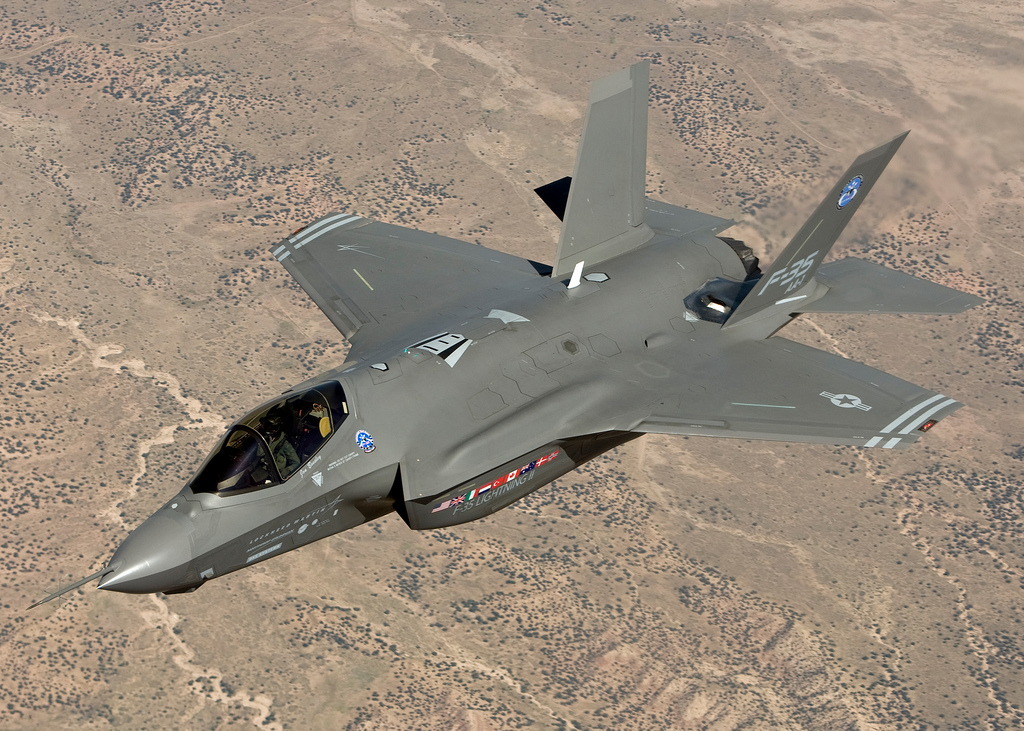

During his testimony before the House Armed Services Committee today. Secretary Of Defense Robert Gates renewed his call to Congress to eliminate the second engine for the F-35 Joint Strike Fighter:
Defense Secretary Robert Gates on Wednesday called on lawmakers to end a second F-35 engine program whose completion would “waste” $3 billion.
(…)
The secretary also used his opening remarks to deliver another blow to a program to design a second engine for the F-35 fighter. Pentagon officials — and two administrations — have for years tried ending the alternate engine, being built by Rolls-Royce and General Electric. Officials say it is too costly and not needed because the primary power plant, being developed by Pratt & Whitney, is sound.
Gates on Wednesday called the second engine “unnecessary and extravagant.” The secretary said it costs “$28 million a month” and completing it would “waste $3 billion.” The nation’s fiscal situation makes that unaffordable, DoD brass say.
It was the second time in as many public appearances that Gates has called on lawmakers to end the project.
As he spoke about the second engine, several new Republican members of the panel listened intently.
When Gates delivered the “$3 billion” remark, several new members appeared to jot down that figure.
All eyes are on new members when it comes to the fate of that project and a list of other defense spending issues.
House Budget Committee Chairman Rep. Paul Ryan (R-Wisc.) on Wednesday said he wants the second engine canceled, providing a powerful voice to opponents of the project.
The full House on Wednesday is expected to vote on an amendment to a 2011 continuing resolution that would strip funding now in that measure for the alternate power plant.
This controversy has been going on for years, and General Electric/Rolls Royce have garnered significant support on Capitol Hill due to the fact that they’ve managed to arrange for the engine to be manufactured in various parts of the country that, just coincidentally of course, happen to be located in Congressional Districts represented by people like John Boehner, Eric Cantor, and several long-time members of the Armed Services Committee of both parties. Technical issues aside, though, the Pratt & Whitney engine won the bidding process and the Pentagon has said repeatedly that it has no use for a second engine for the plane from a completely different manufacturer. The fact that the program has managed to survive this long is a testament to the power of pork-barrel politics, and the ability of a high powered defense contractor to win support on in Congress simply be currying favor with a few powerful members. Clearly, the system is broken.
Fortunately, Gates’s strategy of appealing to House Freshman elected on fiscal responsibility platforms succeeded in defeating funding for the wasteful program:
The House rejected funding for a second engine for the armed forces’ new jet fighter on Wednesday, dealing a potentially lethal blow to a multi-billion dollar military program that employs hundreds of people in Massachusetts.
By a 233 to 199 vote, the House approved a budget amendment stripping funds for the F-35’s backup engine. The vote does not mean that the measure is dead; after the House votes on hundreds of other amendments, the temporary spending measure for this year goes to the Senate. That body rejected the funding last year.
Still, the vote threw into sharp relief the power of the new GOP freshman in the House, many of whom were elected with Tea Party support on promises to end earmarks and cut spending. Many also saw the vote as a test of their willingness to reduce military spending.
Some of those freshman have aligned with opponents of the extra engine, which include President Obama and the Pentagon, in decrying the engine as a waste of taxpayer money. On Wednesday morning, Defense Secretary Gates reiterated his opposition to the House Armed Services Committee, calling it an “unnecessary and extravagant expense.”
So finally, after several years of fighting, the “alternative engine” boondoggle appears to be dead. It’s only $3 Billion, but it’s a start, and I think the House Freshman who joined to defeat it deserve credit for doing the right thing.