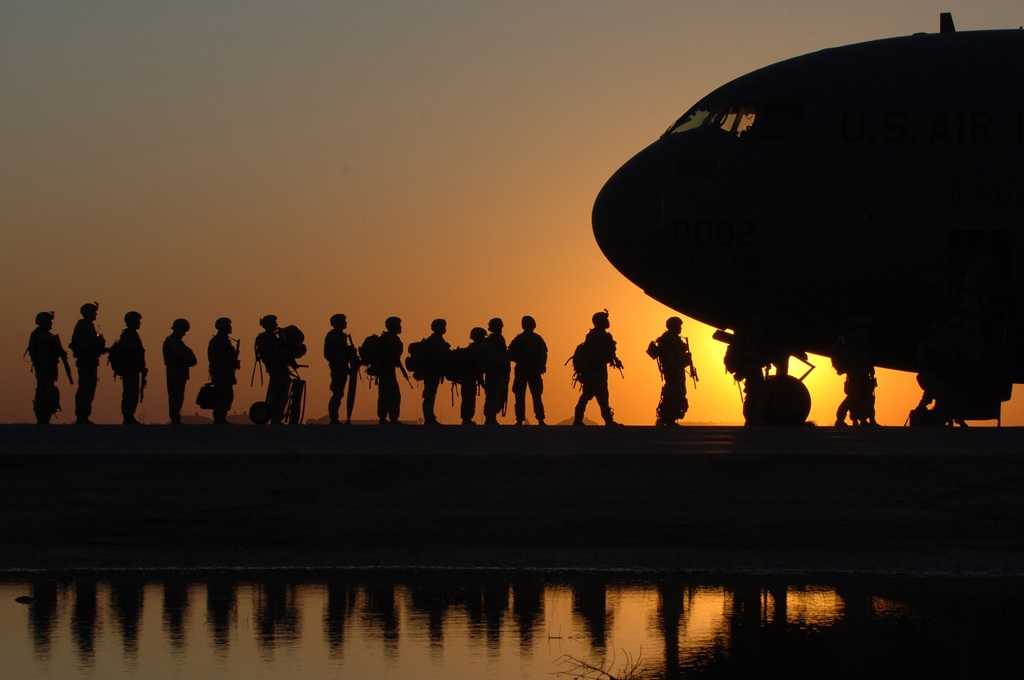
 If you’ve volunteered for service in the U.S. Armed Forces but don’t actually want to go to war, don’t count on hiding in Canada.
The Canadian government’s effort to remove [U.S. Army deserter James Corey] Glass contrasts with the warm reception given to deserters and draft avoiders from the United States during the war in Vietnam. And although the war in Iraq has very little support among Canadians, the situation of Mr. Glass and others who abandoned their military positions provokes a wide range of responses. For American soldiers seeking an escape, Canada is no longer a guaranteed haven.
[…]
During the Vietnam War, the Liberal prime minister, Pierre Elliott Trudeau, welcomed American deserters and draft dodgers, declaring that Canada “should be a refuge from militarism.” Americans who arrived were generally able to obtain legal immigrant status simply by applying at the border, or even after they entered Canada.
[…]
Changes to immigration laws have made it far more difficult for deserters to remain in Canada. Deserters wanting at least temporary legal status must be declared refugees. But refugees in Canada must show that they have, as the government puts it, a “well-founded fear of being persecuted” for religious, racial or political reasons. Alternately, refugees may demonstrate that for them to be returned to their home country would put their lives at risk, or would subject them to torture or “cruel and unusual treatment or punishment.”
The piece notes that the scale is much different, with an estimated 20,000 Americans fleeing to Canada to escape service in Vietnam compared to “no more than 200” during the present conflict. Another big difference, albeit a related one, is that the former were mostly civilians escaping forced military service during the era of conscription. Every single person subject to fighting in Iraq, by contrast, volunteered for military duty. That’s a huge difference.
Story: Small Wars Journal. Photo: photopia/HiMY SYeD via Kerfuffles and Flourishes