
Ralph Peters is encouraged by recent events in Iraq and angry at Senator Kerry and the press for continuing to portray a picture of quagmire.
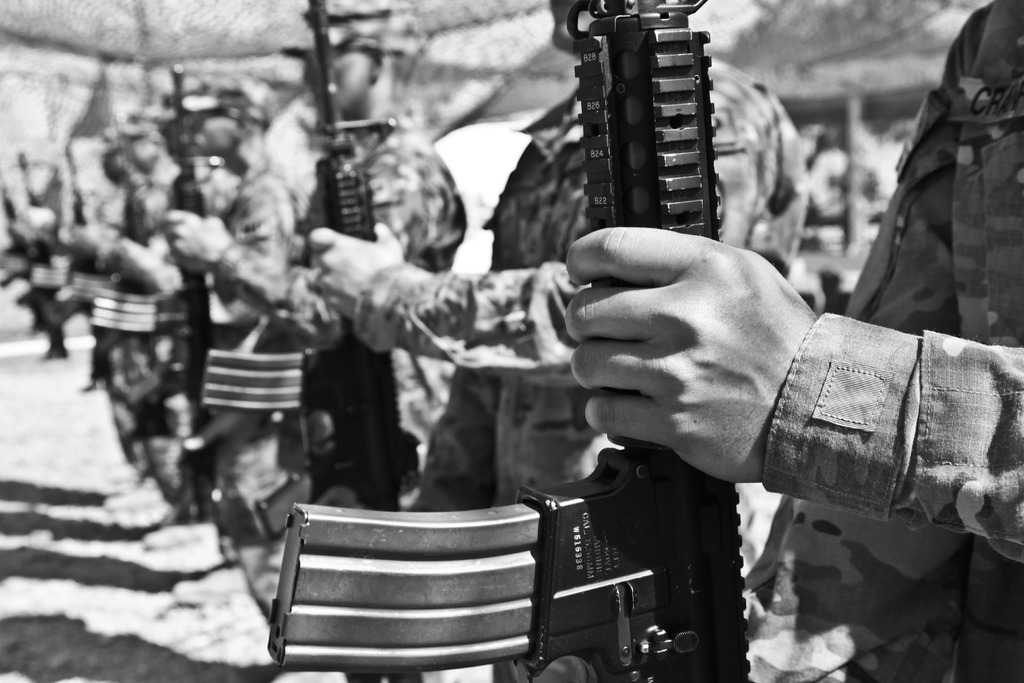
In a remarkable display of skill, elements of the U.S. Army’s 1st Infantry Division and newly trained Iraqi national forces drove the terrorists from the city of Samarra last week. Killing over 100 of freedom’s enemies and capturing many more, our troops lost a single soldier. The two-day sweep through Samarra incorporated lessons learned on the ground over the past several months — especially the need to win swiftly in urban settings. Our soldiers performed flawlessly under difficult conditions. Iraqi commandos, backed by our Special Forces, liberated two key mosques before a hostile media could intervene on terror’s behalf. The city’s population is glad that their oppressors are gone.
Has Sen. Kerry acknowledged the performance of our troops? Has he thanked them? Of course not. The senator and his posse of defeatists resent American victories in the final weeks before our presidential election. We’re supposed to lose, you understand.
There’s an enormous and troubling disconnect between the situation on the ground in Iraq and the portrait of disaster hawked by Kerry & Co. — abetted by the media. The victims of this disinformation campaign are our soldiers, the American people and the law-abiding citizens of Iraq. Indeed, the Dems have declared defeat so loudly and insistently that they’ve convinced much of the world that freedom’s cause is lost in the Middle East.But let me tell you who isn’t convinced: Our soldiers. Last week, I was privileged to speak to — and listen to — hundreds of U.S. Army officers and enlisted soldiers at the Land Combat Exposition in Heidelberg, Germany — the headquarters of our ground troops in Europe. Even I was surprised by the complete absence of griping. I did not hear a single criticism of our engagement in Iraq. Now, soldiers complain. It’s a hallowed tradition. Yet, not one of the troops with whom I spoke suggested we were losing in Iraq. Those soldiers, from generals down to the junior enlisted ranks, are the ones who pay the bills that come due in blood. And they were proud to have served in Iraq and Afghanistan. Many were getting ready to go back. They believed in what their country asked them to do.
My guess is that the press is slow to catch on to successes in Iraq because they are covering the insurgency as they would crime in the inner cities of Chicago: Surely, if there are several car bombings a week and people being kidnapped and beheaded on a regular basis, the situation is out of control. But that’s the wrong baseline. “Normal” in Iraq and the United States are two different things entirely. “If it bleeds, it leads” makes sense in covering domestic news–even though it distorts reality–because people are interested in the unusual and exciting. City council meetings, functioning utilities, and planes that land safely are boring because they’re “normal.” Conversely, in a society that has been ruled by one brutal dictator after another since the beginning of history, those sort of things are the unusual. In such a place, kids–including girls–going to school, governments trying to meet the needs of the citizenry, and ordinary people speaking out against their political leaders–and even their Western “occupiers”–without fear of reprisal is news indeed.
The explanation for the Democrats focusing on the negative is somewhat less benign, although less sinister than Peters argues. The party in opposition has to tout the negatives of the status quo if they wish to defeat the incumbents and gain power. In domestic politics, that means talking down the economy and nitpicking what is objectively a pretty good health care and education system. Doing this is demoralizing and, in the case of the economy, can actually worsen the situation. No one is criticized as being unpatriotic when they do this, however. Unfortunately, in the post-Cold War world, we have decided that politics no longer stops at the water’s edge. Treating an ongoing overseas war as part and parcel of a political contest is potentially quite dispiriting for the troops in the field and can undermine the mission, since public support is crucial for success. At the same time, a loyal opposition has a duty to point out flaws in our policies in order to correct them. That’s a tough balancing act.









