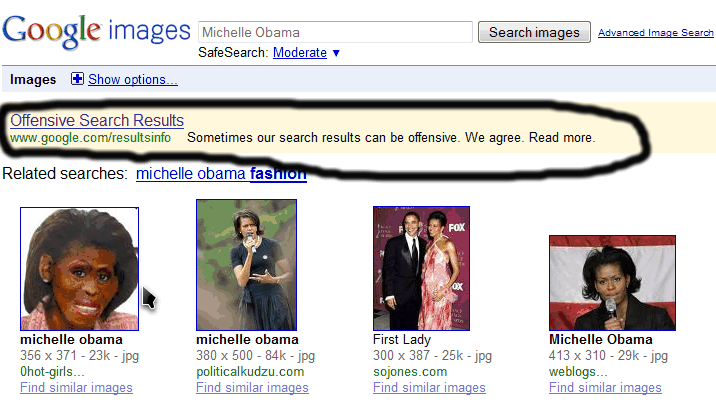
Google looked like a monkey after its algorithms had an unfortunate result for searches for photos of the First Lady.

For most of the past week, when someone typed “Michelle Obama” in the popular search engine Google, one of the first images that came up was a picture of the American first lady altered to resemble a monkey.
On Wednesday morning, the racially offensive image appeared to have been removed from any Google Image searches for “Michelle Obama.”
Google officials could not immediately be reached for comment.
Google faced a firestorm of criticism over the episode. First, it banned the Web site that posted the photo, saying it could spread a malware virus. Then, when the image appeared on another Web site, Google let the photo stand. When a Google image search brought up the photo, an apologetic Google ad occasionally appeared above it.
The ad redirected users to a statement from Google which read, “Sometimes Google search results from the Internet can include disturbing content, even from innocuous queries. We assure you that the views expressed by such sites are not in any way endorsed by Google.”
Guardian’s Mark Sweeney has a more detailed explanation:
The image, which has been appearing at the top of search results when the words “Michelle Obama” are put into Google Images, was posted on a blog called Hot Girls, which is hosted by the Google-owned blog service, Blogger.
Hot Girls’ owner has today removed the image, which appears to have originally been put up with a blog post on 21 October, and displayed an apology in Chinese with a very loose English translation.
Google had refused to remove the offensive image from its picture search listings, despite complaints that it is racist, instead opting to run an ad next to it explaining its policy on how search engine results work.
A spokesman for Google said that the Hot Girls blog and image may still temporarily appear when some users make Google Images searches but that it was coming out of the search engine’s indexing system.
The company has been unusually responsive in this case, and understandably so. But the fact of the matter is that its Image Search, while simply amazing in many respects (I use it all the time for photos to illustrate posts at OTB), is subject to the same manipulation as its text search results. Indeed, it’s hard to search for anything at all — but especially people’s names — and not find plenty of dubious results.
Photo credit: Island Crisis