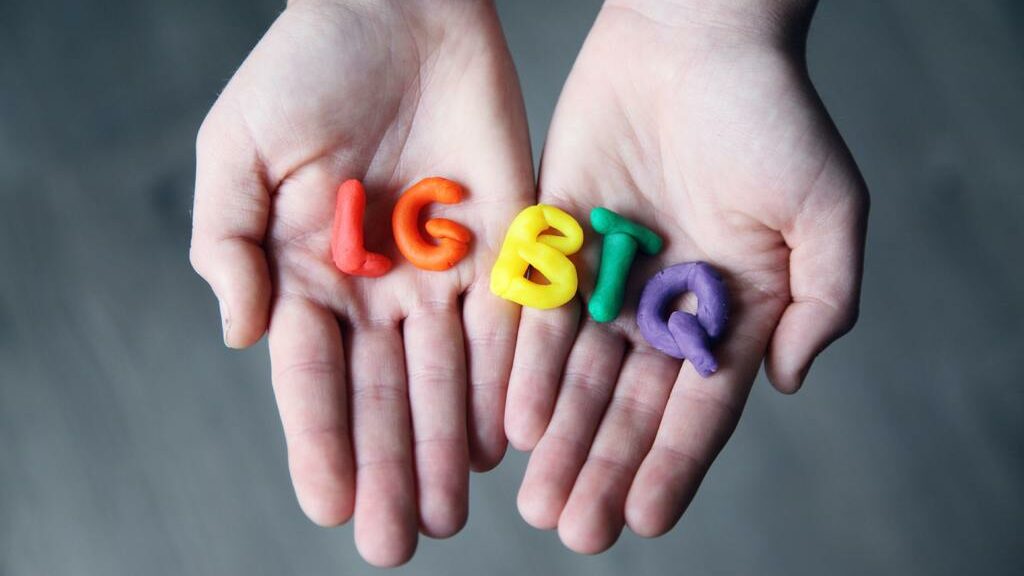
Late last week, the House of Representatives, on a largely party-line vote, passed the Equality Act, which would extend civil rights protections to LGBT employees at both the government and private sector levels:
WASHINGTON — The House passed sweeping legislation on Friday that would prohibit discrimination on the basis of sexual orientation and gender identity.
The bill, passed 236-173, comes as departments across the Trump administration have dismantled policies friendly to gay, bisexual and transgender individuals, like barring transgender recruits from serving in the military or formally rejecting complaints filed by transgender students who are barred from restrooms that match their gender identity.
“The question before us is not whether the L.G.B.T.Q. community faces outrageous and immoral discrimination, for the record shows that it clearly does,” said Representative Jerrold Nadler of New York, the chairman of the Judiciary Committee. “The question is whether we, as Congress, are willing to take action to do something about it. The answer goes straight to the heart of who we want to be as a country — and today, that answer must be a resounding ‘yes.’”
The legislation, which amends the Civil Rights Act of 1964, prohibits discrimination of lesbian, gay, bisexual and transgender people in both the public and private sectors, offering civil rights protections in businesses, hospitals and welfare services. It explicitly states that individuals cannot be denied access to a locker room or dressing room on the same basis.
The response from the Republican-controlled Senate and White House, however, is likely to be a resounding no.
Citing concern for “the safety of women and girls in intimate spaces” and “conscience protections” in place for medical professionals who decline to perform procedures they find morally objectionable, the administration opposes the measure, according to a draft statement of administration policy obtained by The New York Times. While affirming the administration’s “belief in the dignity of every person,” the draft also cited concerns that the bill could “force schools to teach and affirm sex education that includes self-identified gender identity.”
House Republicans mirrored those fears on Friday. Representative Doug Collins of Georgia, the ranking Republican on the Judiciary Committee, took to the floor to argue that the legislation would harm children and set back the civil rights gains won by women.
“I implore my colleagues to listen to the stories of every stakeholder here, including the transgender girls and boys this bill is meant to help — because we may be hurting them by allowing doctors to prescribe hormones and perform major surgeries on adolescents without parental consent or involvement,” Mr. Collins said.
Since taking office, President Trump’s administration has enacted a sweeping deconstruction of policies and rules intended to protect gay and transgender individuals. In 2017, the Justice Department sided with a cake shop owner who refused to make a wedding cake for a same-sex couple, filing legal briefs arguing that a landmark 1964 civil rights law did not ban discrimination on the basis of sexual orientation. Jeff Sessions, then the attorney general, also rescinded guidance for schools that was intended to protect transgender students in bathrooms and locker rooms.
Similar efforts have been undertaken by other cabinet members. The Department of Health and Human Services spearheaded an effort to establish a legal definition of sex as a biological, immutable condition determined by genitalia at birth, The Times reported last year.
As Dominic Holden at Buzzfeed notes, the right is predictably freaking out over the bill:
The House of Representatives on Friday passed the Equality Act in a historic milestone for the nation’s most comprehensive bill to protect LGBT rights.
The 236-173 vote led by Democrats with sends the measure to the Senate while leading Republicans to predict it will cause catastrophic gender-bending and gut religious exercise. Eight House Republicans voted for the bill.
Hardline conservative commentators claimed the bill will “unleash federal persecution of Christians,” lead to the nation’s downfall, and make the lord “vomit you out.”
Known as H.R. 5, the Equality Act would expand the Civil Rights Act of 1964 along with a handful of other laws that collectively ban discrimination in housing, finances, employment, schools, and public places on the basis of gender identity and sexual orientation.
“No one should lose their job because of who they are or who they love,” House Speaker Nancy Pelosi said in a floor speech, echoing the Democrats’ theme that the law creates overdue parity for LGBT Americans.If approved by the Republican-controlled Senate and signed into law, which appears unlikely, the measure would elevate LGBT rights to the same status as other classes protected from discrimination, such as race and national origin.
While the GOP spent decades fighting LGBT rights, House Republicans instead focused their arguments against the Equality Act in a kind of concern-trolling, warning that the bill will have unintended consequences — particularly for women and people of faith — rather than explicitly saying that that LGBT Americans shouldn’t be protected from discrimination.
“That’s my problem — not the intent,” said Republican Rep. Doug Collins of Georgia. “It’s about how you go about it.”
The bill would leave little room to discriminate, even in cases of moral objections. Several Republicans were alarmed the bill is exempt from Religious Freedom Restoration Act, a 1993 law that says religious exercise cannot be burdened unless the government has a compelling reason.
“It would allow the government to force its rigid and unyielding fist inside the church,” said Republican Rep. Ross Spano of Florida.
He contended it would encroach on the rights of religious business owners to discriminate against LGBT workers or customers based on their moral objections, saying, “It would deliver a crushing blow to the base of the tree of religious liberty.”
Because the Equality Act bans discrimination based on a person’s gender identity, Republicans said it creates an arbitrary distinction that lets men pretend to be women, threatening women in restrooms.
Opponents claim the bill would give transgender women — who they call men — an unfair advantage in women’s sports and allow children to undergo medically assisted gender transitions without any oversight of parents.
“A vote for this bill is a vote against women,” said Rep. Vicky Hartzler.
The attack repurposes feminist themes from the left and LGBT communities — which have long fought rigid sex stereotypes and gender norms — to portray the bill as a weapon. The criticism also inverts the bill’s most basic frame: Rather than transgender people being the victims of discrimination (transgender people suffer indisputably high rates of bias), transgender people are portrayed as an all-male brigade that subjugates women.
As noted, only eight Republicans voted for the bill:
Eight Republicans in the House sided against their party and with Democrats in a Friday vote on legislation banning anti-LGBT discrimination.
The eight Republicans who backed the Equality Act, which opponents cast as anti-religious freedom, were Reps. Susan Brooks (Ind.), Mario Diaz-Balart (Fla.), Brian Fitzpatrick (Pa.) Will Hurd (Texas), John Katko(N.Y.), Tom Reed (N.Y.), Elise Stefanik (N.Y.) and Greg Walden (Ore.)
Hurd, Fitzpatrick and Katko all represent competitive districts, according to the Cook Political Report.
Diaz-Balart said while the Equality Act — spearheaded by Rep. David Cicilline (D-R.I.) — includes language he doesn’t agree with, he could not vote against legislation that works to further civil rights.
Katko, the chairman of the moderate Tuesday Group, praised the bill for working to bar discrimination based on sexual orientation and gender identity.
“Currently, states have different standards, presenting challenges as employers work to comply with a patchwork of conflicting laws. In New York, this bill is already law,” he told The Hill in a statement.
Stefanik said she strongly supports providing the LGBTQ community with the same protections as other Americans.
“This bill, which is supported by over 200 businesses and the Chamber of Commerce, would ensure those protections remain in place, including employment, housing, credit access, education, public spaces and services, federally funded programs, and jury service,” she said. .
The act is similar to other legislation that has been proposed in the past, including that Employment Non-Discrimination Act (ENDA), which sought to extend the same civil rights protections granted in the Civil Rights Act of 1964 and other legislation to the LGBT community. Those bills were proposed but died in the House due to the fact that the Republican majority felt no inclination to bring the bill to the floor for a vote. In essence, the bill amends the Civil Rights Act to add sexual orientation and gender identity to the category of classes protected by those laws from discrimination in both the private and public sector. This would include not just employment and other issues but would also have series implications for the ongoing battles over the ability of transgender Americans to use the bathroom or locker room that corresponds to their gender identity, especially in public buildings. If passed, for example, it would essentially put an end to the legal battle regarding such issues as they relate to public schools, which has become something of a cause celebre for conservatives who seem to think that people, specifically men and apparently schoolboys, will claim to be transgender so they can get in the same restroom as young girls. It’s an utterly silly argument, of course, but it appears to be the entire basis for the conservative obsession with the gender identity issue.
The passage of this legislation comes just about a month after the Supreme Court agreed to hear a group of cases dealing with the question of whether or not the civil rights laws as they exist now cover discrimination against LGBT Americans. This is an issue that has been resulted in different outcomes in Federal Courts across the country. Most recently, the Second Circuit Court of Appeals ruled that those protections did apply to discrimination based on sexual orientation, a ruling that overruled a prior ruling by a three-judge panel of the same court. Last year, a three-judge panel on the 11th Circuit Court of Appeals held that Title VII did not apply to discrimination based on sexual orientation. To a large degree, the court in that particular case based its ruling on the fact that there was no evidence in the record that banning discrimination based on sexual orientation was within the contemplation of Congress when the Civil Rights Act was passed in 1964. One month after that ruling, though, the Seventh Circuit Court of Appeals ruled in an en banc opinion that discrimination based on sexual orientation was “a form of sex discrimination” and therefore covered by the protections of Title VII. In December, the Supreme Court declined to hear an appeal in the 11th Circuit case. To date, none of the other cases have made their way to the nation’s highest court., The case accepted by the Supreme Court will be heard at some point during the term scheduled to begin in October, meaning that we likely won’t get a decision until some time in 2020. At least in theory, though, the Equality Act, if passed, would short circuit that process.