
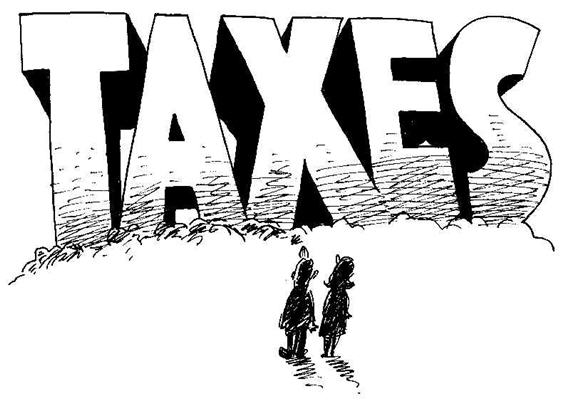

Faced with mounting debt, the lame duck Illinois legislature rushed through a massive tax hike in the wee hours this morning:
With only hours left before new state lawmakers were to take over, Illinois’s State Legislature narrowly approved early on Wednesday an increase of about 66 percent in the state’s income tax rate.
The vast size of the increase, the rarity of such increases here — the last one came two decades ago — and the hour of the vote (in the wee hours of Wednesday) all reflected the urgency and depth of this state’s fiscal crisis.
Even grudging supporters of the tax increase, which won no Republican support in a state capital controlled by Democrats, voiced a desperate sense of regret over the circumstances in which Illinois finds itself. State Representative Elaine Nekritz, a Democrat who voted for the increase, described her decision as an alternative “between bad and worse.” Another Democrat cautioned his colleagues: “We don’t have a better choice today.”
While a “66 percent hike” sounds unconscionable, it’s also a bit misleading:
Under the legislation, the income tax rate would, at least temporarily, rise to 5 percent from its current rate of 3 percent. Lawmakers had talked about an even steeper increase, but set that aside as the hours went by and the debate grew increasingly emotional. The rate for corporate taxes would rise to 7 percent from its current rate of 4.8 percent. As part of the deal, the state’s spending growth would be limited from one year to the next over the next four years.
If the headlines were calling it a “2 percent hike,” it would seem less dire. But that’s still a big bite, especially on top of all the other taxes people are paying. Much less during such bad economic times. And the means used to enact the increase — having it voted on by lawmakers on their way out the door and thus immune to the wrath of the voters — is unconscionable.
Then again, it’s unlikely that the incoming band will overturn this. They really need the money:
Illinois faces a budget deficit of as much as $15 billion, owes some $8 billion in unpaid bills to social service agencies, doctors, dentists and others, and is receiving mounting signs of worry from bond investors.
Still, it was the closest of close calls.
A triumphant Gov. Pat Quinn congratulated fellow Democrats early today after the Illinois Senate and House sent him a major income tax increase without a single Republican vote in favor.
Quinn smiled and shook hands on the floor of the Senate around 1:30 a.m. after the Senate voted 30-29 for the bill, which would raise the personal income tax-rate by 67 percent and the business income tax rate by 46 percent.
The House passed the bill hours earlier Tuesday night — likewise without a vote to spare and with nary a Republican in support.
Quinn had to buy off his own supporters to do it:
The plan nearly faltered in the Senate when black lawmakers balked at the House’s decision to remove a property-tax relief component from the plan and failure to approve a cigarette tax hike for schools. But Quinn met privately with members of the Senate black caucus, who said he pledged to pump $250 million from the income tax increase into schools for each of the next four years.
I look forward to the reaction of my colleague, Dave Schuler, who’s lived in Chicago for decades.









