Steven Taylor isn’t very impressed with the announcement that Iraq’s parliament has finally come to an interim agreement on some minor changes in the national flag.
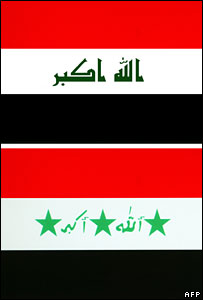
The three stars that represented Saddam Hussein’s Baath Party will be removed, to address the concerns of Iraqi Kurds. They have refused to fly the flag since the fall of Saddam Hussein, saying it is too closely associated with a regime that repressed and killed their people. The flag was also changed in 2004, when a line of script, allegedly in Saddam Hussein’s own handwriting, was changed to Kufic script.
But the latest change – passed by 110 votes to 50 – is only temporary, as a design for a new flag will be sought after one year.
Agreement over the flag is another sign that the Iraqi parliament is moving forward on difficult issues, says the BBC’s Jonny Dymond in Baghdad.
[…]
“The new flag has no signs of Saddam’s regime and is a sign that change has been achieved in the country,” said Humam Hamoudi, a prominent Shia politician and member of the powerful Supreme Islamic Iraqi Council party.
He figures, not unreasonably, that this is a rather meager — indeed, “laughable” — achievement after five years of war and months of Surge. Then again, designing a national flag that three warring factions can unite behind is no easy task; our own Coalition Provisional Authority certainly failed.
George Carlin’s quip that “symbols are for the symbol-minded” is clever but the attachment people have to them is powerful. Indeed, in a society with much less internal strife than Iraq, we’re hardly immune from such squabbles. We’re still fighting about the Confederate battle flag 143 years after the Civil War and 44 years after the passage of the Civil Rights Act of 1964. For that matter, we’ve still got people trying to amend the Constitution to make burning the American flag illegal, despite it being an incredibly rare occurrence.