Back when all this started back on October 1st, I wrote the following.
It all starts with this: I do not believe that there is any real chance for the Democrats to get what they want on healthcare. This is not a moment in which, this time, finally, the hostage-taking minority party is going to get what it wants.
[…]
Maybe I am forgetting something, and I would be happy to be corrected, but I cannot think of a time that the party that caused the shutdown was able to come anywhere near what they demanded, or even get what might be considered a major concession. There are, if I recall correctly, some occasional fig-leafs of concession, but nothing more.
[…]
But please, for the sake of clarity, understand: the Dems will not be able to leverage the restoration of these cuts. If they do, it will be remarkable, and I will be happy to be wrong. At best, they may get a promise to hold a vote on something on the subject in the future (you know, in a Congress they don’t control, so we know how that will go).
And that is precisely where we are after the longest shutdown in American history.
I keep thinking of the bit in Hamilton in which Jefferson and Madison taunt Hamilton: “You don’t have the votes. You don’t have the votes! You’re gonna need congressional approval, and you don’t have the votes!”
I am not being flippant with the reference; rather, the lyrics distill the basic situation rather succinctly. The goal of shutting down the government to force the ACA subsidies to be restored was a non-starter from the beginning because the Democrats are in the minority in both chambers. They don’t have the votes, and no majority party is going to capitulate to a massive (in their minds) policy change on the basis of a shutdown.
I am currently a bit vexed by some political journalists/commentators and folks with PhDs in political science on Blue Sky who seem to think otherwise.
I will note from the beginning that I preferred that the Democrats, if they were going to go the route they went, should have made the shutdown about Trump’s authoritarian actions. Moreover, if they really wanted a clear goal, they should have insisted from the beginning that the GOP would have to end the filibuster to reopen the government (a demand Trump made, but to my knowledge, not a single Democratic Senator made, although Fetterman endorsed the notion).
Again, as I said back when this all started.
Really, I would rather the Dems go all-in and say they won’t cooperate, period, because of an easily recited list of grievances against the Trump administration and force the Reps to change the rules in the Senate so that the party owns all of this completely.
Indeed, I think one of the problems with our politics in general is that the public has a hard time knowing where to assign blame. A shutdown helps confuse the question of responsibility even further.
Pretending like this is about healthcare, as important as that is, isn’t going to work and makes all of this likely pointless, in my estimation.
But that’s not the pathway they chose, so the endpoint was always, always, always going to be about a token vote on the ACA subsidies.
I think any other expectation runs counter to reality.
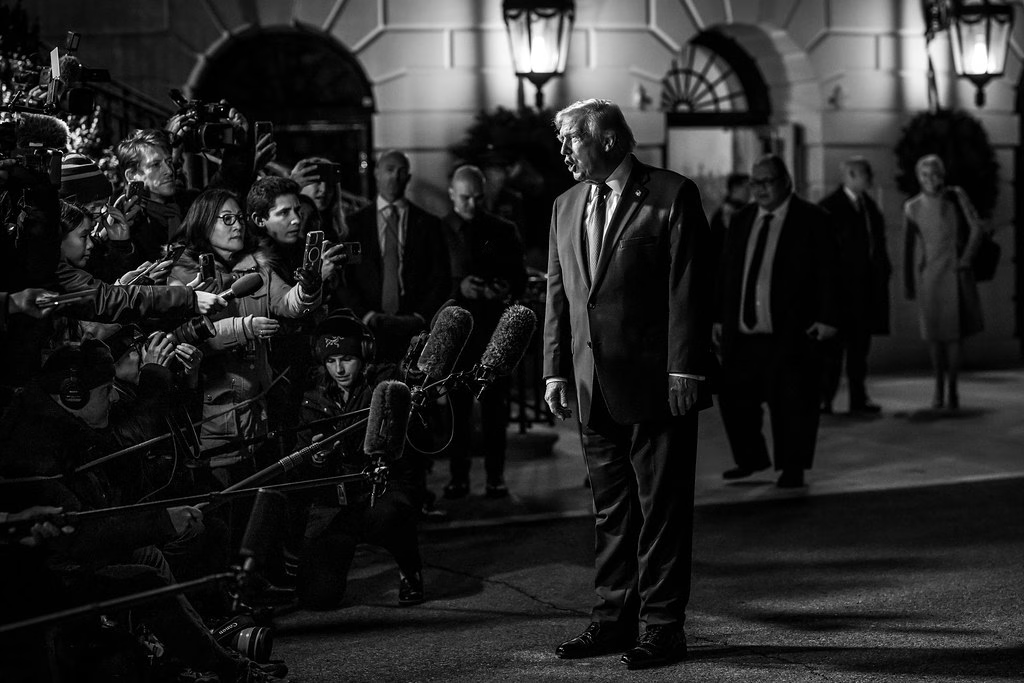
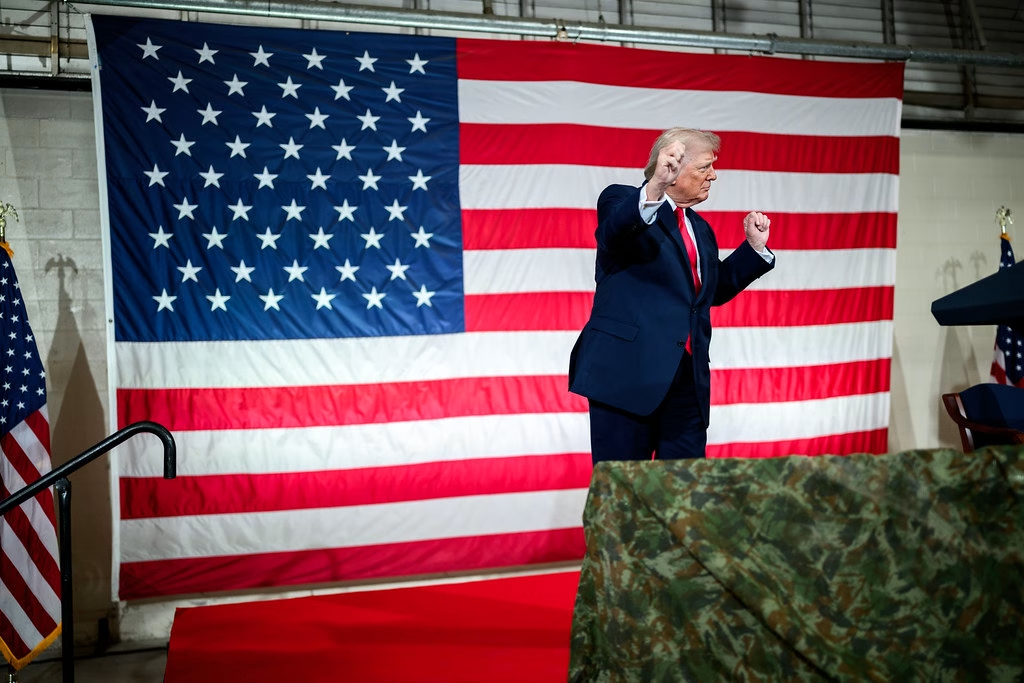
I will say that I think the GOP took more of a public relations hit than I expected. Mike Johnson’s willingness to just sit the whole thing out and keep the House out of session was not great optics. Trump’s ballroom mania, bathroom renovation, and Great Gatsby soiree underscored how little he cared about people suffering. Moreover, his willingness to block SNAP funds was pretty telling.
I expect that the shutdown may have helped Virginia Democrats win a super-majority in the state assembly.
But, at the end of the day, it was not worth all the suffering and frustration.
Government shutdowns don’t work to force majorities to do what they don’t want to do. Minority parties have no real power in these situations, and shutdowns do not generate the leverage needed to create even temporary power.
It would be nice if parties would learn this lesson.
Even better, it would be nice if we would join pretty much the rest of the world in having spending continue at the previously voted on levels in these circumstances. All of this spectacle has been yet another example of American exceptionalism at its worst.
Oh, and we get to argue about all this again in January!