
Via Jill Lepore in The New Yorker: What Happened When the U.S. Failed to Prosecute an Insurrectionist Ex-President.
Lepore describes the treason trial against Jefferson Davis:
And not too many months after that the federal government’s case against him fell apart. There’s no real consensus about why. The explanation that Davis’s lawyer Charles O’Conor liked best had to do with Section 3 of the Fourteenth Amendment, known as the disqualification clause, which bars from federal office anyone who has ever taken an oath to uphold the Constitution of the United States and later “engaged in insurrection or rebellion against the same, or given aid or comfort to the enemies thereof.” O’Conor argued that Section 3’s ban on holding office was a form of punishment and that to try Davis for treason would therefore amount to double jeopardy.
[…]
There was one last gasp. With Chandler’s term as district attorney expiring in June, Evarts recruited the Boston lawyer Richard Henry Dana to join the prosecution. Dana worked hard to prepare for trial. […] But Dana reluctantly concluded that the trial should not proceed. What seemed more urgent was to disqualify Davis from ever again holding public office; sending him back to prison, or, God knows, hanging him, could have been almost as bad for the country as acquitting him. Dana drafted a letter of resignation on both lawyers’ behalf, and sent it to Evarts, who pocketed it, unsure what to do.
By the time Chase and Underwood finally held court together in Richmond, in December, 1868, the Fourteenth Amendment had been ratified, and Chase had discreetly suggested to the defense a new line of reasoning: that Davis could no longer be prosecuted for treason because, having been disqualified for office upon the amendment’s ratification (“It needs no legislation on the part of Congress to give it effect,” the defense said), he had already been punished. O’Conor gleefully offered up this argument, suggested to him by the Chief Justice himself. Dana, who knew the argument to be nonsense, countered that the Constitution is not a criminal code and that being disqualified from office is not a penalty. Chase agreed with O’Conor; Underwood agreed with Dana. The case would have gone to the Supreme Court. But, on Christmas Day, Johnson pardoned “every person who directly or indirectly participated in the late insurrection or rebellion,” and, not long after that, the prosecution entered a nolle prosequi. The end.
There is a lot that is striking about this, but perhaps the most salient point for the conversations that we have been having here at OTB about section 3 of the 14th Amendment, is that at the time of ratification, it was seen as self-executing. Moreover, this suggests that not only is a conviction not necessary, it is noteworthy that section 3 was interpreted as precluding the need for a trial at all.
Apart from the specifics of the 14th Amendment, the piece is interesting (and more than a bit chilling) in the parallels between then and now. First, the fact of the matter is that divisions within the political/governing made/make dispassionate applications of the laws difficult (if not impossible). Second, fear of popular response to just outcomes made such outcomes impossible in the post-Civil War era, and seem to be an obstacle in the now.*
Another key theme is how slowing the wheels of justice contributed to injustice in the 1860s and may being doing the same now.
As a general statement, I would note that the inability of the United States government to prosecute top-level Confederates (let along other failings of Reconstruction) is at least in part why the legacy of that war continues to plague our society and our politics in the now.** As a generic matter, it is truly astounding that the president of a breakaway country was not tried and convicted of treason (let alone that the CSA’s Vice President was sent back to the US Senate, even if he wasn’t seated)*** is an appalling injustice and speaks to the incomplete outcome of the war itself.
Or, perhaps all this just underscores that there are rarely clean answers to these kinds of messy situations. Which is both an obvious, and yet not especially comforting, place to conclude.
*For example: the jury in the Davis trial had Black members and it was feared that a White man sentenced to death by a jury with Black members would cause widespread negative responses from significant segments of the public.
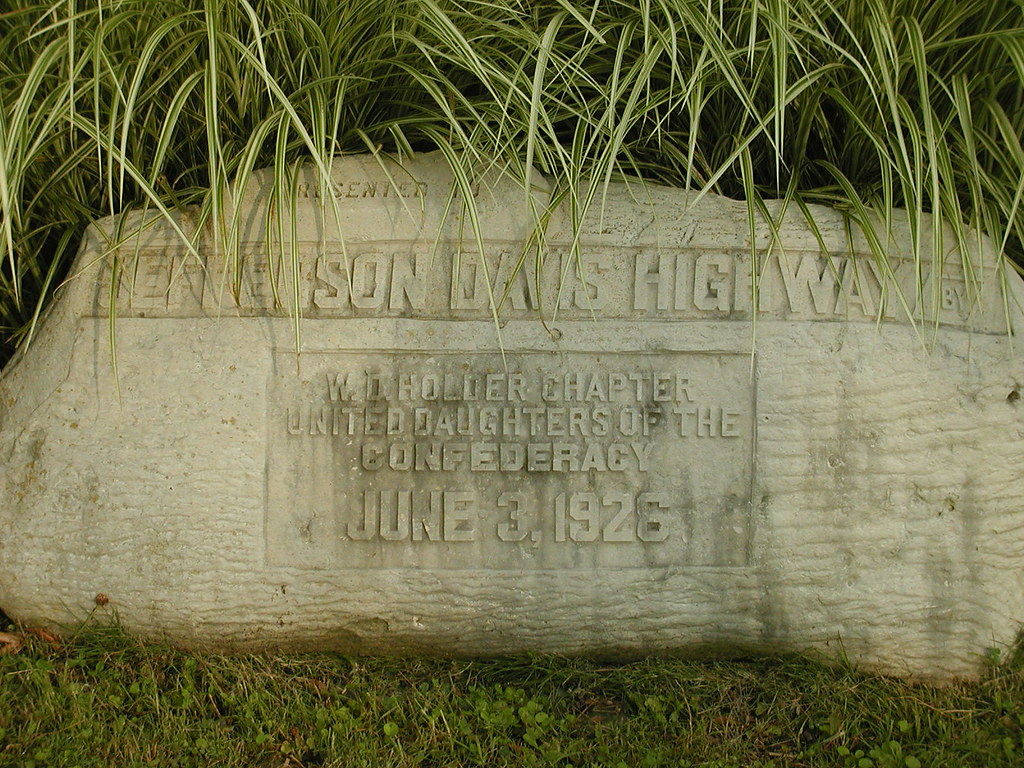
**Indeed, just yesterday I drove past what was “Jefferson Davis High School” which was only renamed last year. I am constantly reminded of Faulkner, “The past is never dead. It’s not even past.”
***Side note that I could not fit properly into the flow of the post:
In January, 1866, Alexander Stephens, the former Vice-President of the Confederacy, was elected to the Senate. Two former Confederate senators and four former Confederate congressmen had also been sent to the Thirty-ninth Congress, which had convened the previous month for its second session. The clerk refused to call their names at roll, and they were never sworn in. But their presence made clear the need for measures keeping “from positions of public trust of, at least, a portion of those whose crimes have proved them to be enemies to the Union, and unworthy of public confidence,” as a congressional committee wrote.
I find this interesting insofar as it underscored the need for something like section 3, and in some kind of self-executing fashion.