
AP (“Sen. Mitch McConnell won’t seek reelection in 2026, ending long tenure as Republican power broker“):
Republican Sen. Mitch McConnell announced Thursday that he won’t seek reelection next year, ending a decadeslong tenure as a power broker who championed conservative causes but ultimately ceded ground to the fierce GOP populism of President Donald Trump.
McConnell, the longest-serving Senate party leader in U.S. history, chose his 83rd birthday to share his decision not to run for another term in Kentucky and to retire when his current term ends. He informed The Associated Press of his decision before he addressed colleagues in a speech on the Senate floor.
“Seven times, my fellow Kentuckians have sent me to the Senate,” McConnell said, as aides lined the back chamber and senators listened from seats. “Every day in between I’ve been humbled by the trust they’ve placed in me to do their business right here. Representing our commonwealth has been the honor of a lifetime. I will not seek this honor an eighth time. My current term in the Senate will be my last.”
NYT (“McConnell Announces He Won’t Seek Re-election“):
Senator Mitch McConnell, the Kentucky Republican and longest-serving Senate leader who played a pivotal role in obstructing major Democratic agenda items and stacking the federal courts with conservatives, said on Thursday that he would not seek another term in 2026.
In a speech on the Senate floor that fell on his 83rd birthday, Mr. McConnell made official what had been widely expected since he announced last year that he would step down as the Republican leader. Representing Kentucky was “the honor of a lifetime,” he said, but “I will not seek this honor an eighth time. My current term in the Senate will be my last.”
When he stepped down as leader, Mr. McConnell had said he was committed to finishing out his seventh term in Congress. He had not announced his political plans, but it had become clear that he was nearing the end of his career. Mr. McConnell has dealt with a series of health issues over the past year, including back-to-back falls recently that left him temporarily using a wheelchair to navigate the Capitol.
Mr. McConnell established himself as a master tactician in the Senate during 18 years as minority and majority leader, making shrewd use of the chamber’s rules to thwart his opponents and empower his allies, including President Trump. He blocked President Barack Obama from filling a Supreme Court seat toward the end of his tenure and then led a Republican effort to install deeply conservative jurists on the bench under the first Trump administration, culminating in the confirmation of three Supreme Court justices.
But he has a deeply fraught relationship with Mr. Trump, despite having played a key role in enacting the president’s agenda and allowing him to return to power. In recent weeks, he has found himself increasingly isolated within his own party, particularly on the issues of national security and safeguarding democracy.
In his speech on Thursday, Mr. McConnell warned that “a dangerous world threatens to outpace the work of rebuilding it.”
“I assure our colleagues that I will depart with great hope for the endurance of the Senate as an institution,” he said. “There are many reasons for pessimism, but the strength of the Senate is not one of them.”
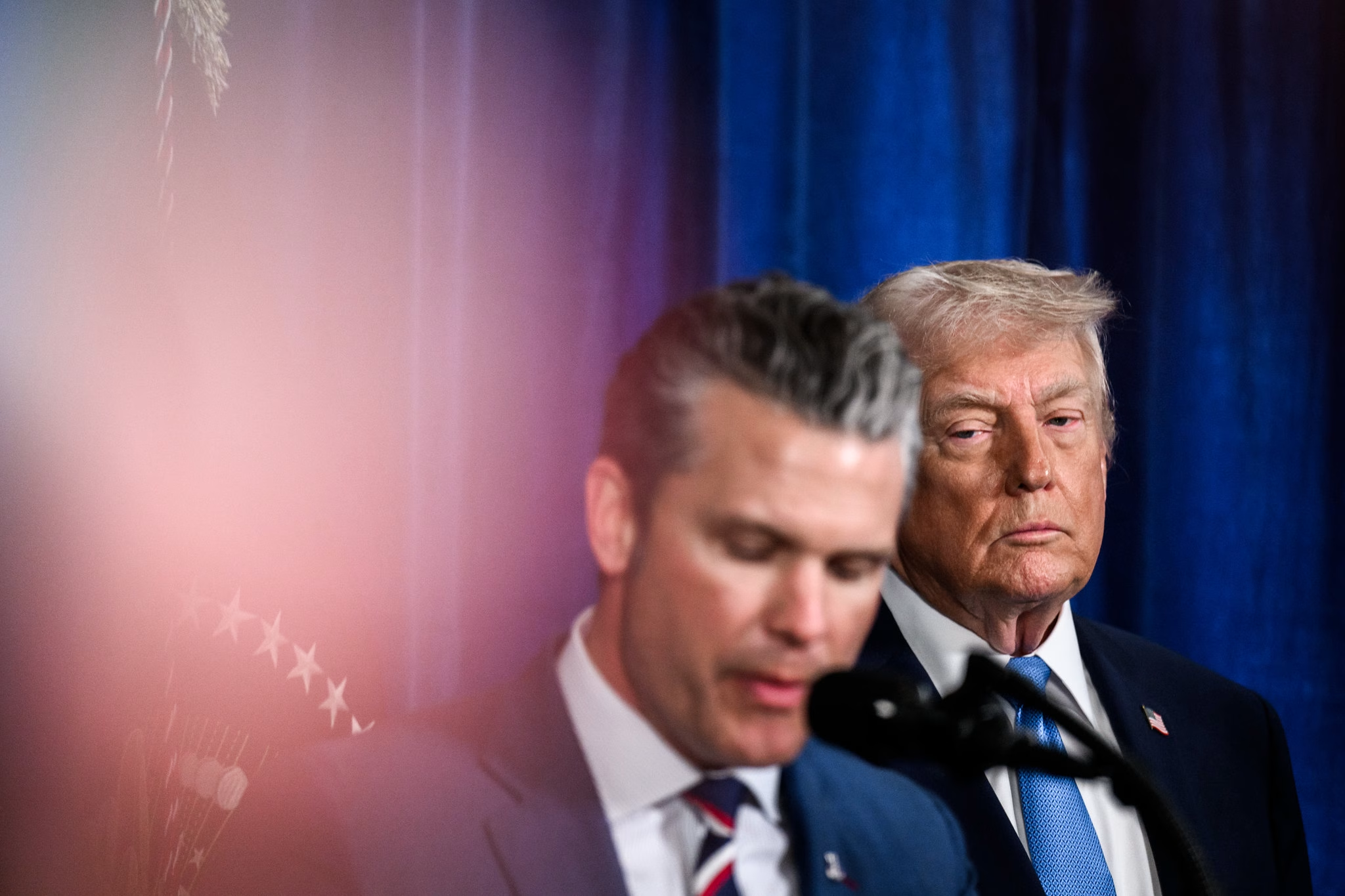
These days, Mr. McConnell has found himself on an island in the Republican conference that he once led. In recent weeks, he has voted against three of Mr. Trump’s cabinet nominees — Pete Hegseth as defense secretary, Tulsi Gabbard as director of national intelligence and Robert F. Kennedy Jr. as health secretary — cementing an unlikely role as the main G.O.P. holdout to the president’s agenda at the beginning of his second term.
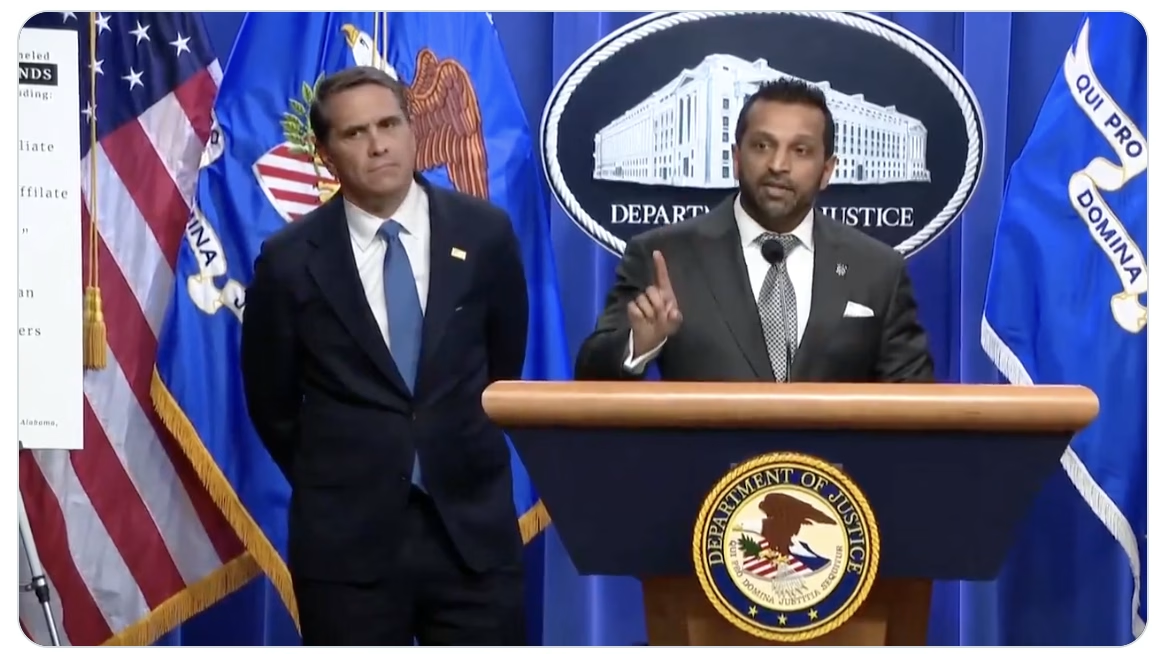
Some of his colleagues had said they expected him to vote against the confirmation of Kash Patel as F.B.I. director as well on Thursday, but Mr. McConnell surprised them by voting “yes.” That saved Republicans the trouble of summoning Vice President JD Vance to break a tie after two other G.O.P. senators opposed Mr. Patel.
“The bureau’s reputation in recent years has been plagued by high-profile scandals that risk politicizing its critical work,” Mr. McConnell said in a statement afterward that did not address concerns other Republicans had raised about installing a Trump loyalist as the head of the nation’s most powerful law enforcement agency. “Director Patel has committed to restoring Americans’ trust in the F.B.I., and I hope and expect he will move quickly to reset the bureau with greater transparency, accountability and cooperation with the Congress.”
Mr. McConnell did not mention Mr. Trump when he took to the Senate floor earlier in the day to announce his retirement plans, but he hinted that he intended to continue playing the more liberated role he has chosen for himself during his final months in Congress.
“The Senate is still equipped for work of great consequence,” he said. “And to the disappointment of my critics, I’m still here on the job.”
Some new Republican senators simply shrugged at the longtime party leader’s decision to retire and at the stance he has taken in opposition to Mr. Trump’s most scandal-tainted nominees, writing off Mr. McConnell as irrelevant.
“The Republican majority is unified in backing President Trump,” said Senator Jim Banks, a first-term Republican from Indiana. He said Senator John Thune, Republican of South Dakota and Mr. McConnell’s successor as majority leader, is “keeping us unified.”
“McConnell is the anomaly,” he continued. “It’s a nonfactor.”
Senator Ted Cruz, Republican of Texas, also played down the significance. “It’s not complicated: There’s no love lost between Mitch and President Trump, and no one is hiding that,” he said.
Some will say McConnell led poorly. Others will say he barely led at all.
Vaya con dios.