
Yesterday marked the beginning of the N.F.L. preseason, and it was marked by a new round of protests during the National Anthem:
The N.F.L.’s 2018 began in earnest on Thursday with the first full slate of preseason games, and the question that has dogged the league all summer — will players continue social justice protests during the playing of the national anthem — was answered loud and clear.
Malcolm Jenkins of the Philadelphia Eagles, one of the most outspoken players in recent years, was joined by his teammate, De’Vante Bausby, in raising a fist while the anthem was played. As had been customary in the past, Chris Long, a veteran defensive end, stood next to Jenkins with a hand on the defensive back’s shoulder.
In the only reported instance of players kneeling, Kenny Stills and Albert Wilson of the Miami Dolphins took a knee during the anthem before their team’s game against the Tampa Bay Buccaneers, while their teammate, Robert Quinn, raised his fist.
Stills and Wilson received praise on social media from Colin Kaepernick, the inactive player whose protests as a member of the San Francisco 49ers started this movement.
Stills told reporters after the game that he and Wilson had not coordinated a demonstration in advance of the game.
“It just happened that way,” Stills said. “When I’m on a knee, most of the time I’m praying, and thank God for having Albert next to me. Being a part of this protest hasn’t been easy. I thought I was going to be by myself out there. Today I had an angel with me with Albert being out there. I’m grateful he sees what’s happening, and he wants to do something about it as well.”
Elsewhere, four members of the Jacksonville Jaguars (Telvin Smith, Jalen Ramsey, Leonard Fournette and T.J. Yeldon) waited in the tunnel until after the anthem had concluded before their team’s game against the New Orleans Saints, and three members of the Seattle Seahawks (Quinton Jefferson, Branden Jackson and Duane Brown) did the same before their team’s game against the Indianapolis Colts.
In a notable shift, however, the 49ers, who had been one of the more active political teams in previous years, did not appear to have any players kneeling during the anthem before their game against the Dallas Cowboys. Marquise Goodwin, a wide receiver, had his right arm raised for the duration of the song.
For Jenkins, who had stopped demonstrating last season after he and a coalition of players secured increased funding for social issues from the league, the preseason game represented a return to his old form. In addition to raising his fist, Jenkins and some of his teammates on the defending champion Eagles took the field for warm-ups wearing T-shirts highlighting various statistics about racial disparities in prisons.
That Jenkins went back to demonstrating was not surprising after his strong reaction to recent changes in the league policy regarding behavior during the anthem.
“Quite frankly, guys in our league don’t like being told what to do, what they can and can’t do,” Jenkins told Philly.com. “We don’t have this type of policies for the other causes we support, whether it be our ‘Salute to Service,’ or breast cancer awareness, or anything else. It’s just when you start talking about black folks, quite frankly. It’s disheartening, but we’ll continue to be creative.”
Here are the tweets from Kaepernick and Jenkins mentioned above:
https://twitter.com/Kaepernick7/status/1027726100636553216
Before we enjoy this game lets take some time to ponder that more than 60% of the prison population are people of color. The NFL is made up of 70% African Americans. What you witness on the field does not represent the reality of everyday
America. We are the anomalies… pic.twitter.com/gCeNKuTl1d— Malcolm Jenkins (@MalcolmJenkins) August 9, 2018
It was Kaepernick, of course, who began the kneeling protests two seasons ago when he began kneeling during the National Anthem at pre-season games. At the time, Kaepernick explained that the kneeling was his way of bringing attention to issues such as racism, police brutality, and the treatment of African-Americans by police. These issues came to the forefront of American politics thanks to events such as the death of Michael Brown in the summer of 2015 and the death a year earlier of Eric Garner at the hands of police in New York City. In both cases, prosecutors declined to prosecute for reasons that many outsider observers rejected. Other incidents, such as the death of a child at the hands of police in Cleveland, Ohio, an incident in South Carolina where an officer was caught on video shooting a suspect who appeared to be complaint in the back and planting evidence on him after the fact, and the death of Freddie Gray at the hands of Baltimore police added to the feeling that police were being treated far too leniently. In any case, for much of the 2016 season, Kaepernick was joined by a handful of others players, and at least initially the protests got some attention in no small degree because of their novelty. After a few weeks, though, the issue largely disappeared from the headlines and the season went on normally with very little controversy except perhaps some complaints from conservatives on social media.
When the 2017 season started a year ago, though, things changed considerably, although it was not because of events on the field. At the start of the season, there were some sporadic case of players kneeling during the National Anthem, but as with the majority of the 2016 season, it was not a very big news item and not really a controversy that was given much attention outside of the “Outrage Of The Day” conservative news media. That all changed when the President of the United States decided to get involved and to politicize the issue in a way that was clearly aimed at his revving up his base.
It began during a campaign speech in Alabama in late September when Trump went after the players who were kneeling during the Anthem, calling them “sons of bitches” and calling on the league and/or the teams to fire or otherwise discipline players who don’t stand for the Anthem. While Trump’s tirade was received well by his supporters and by conservatives in general, it was not well received in the league or among the players. Responding to the President, the league, the NFL Players Association, and basically, all the team owners voiced support for the protesting players. Additionally, the weeks immediately after the President’s statement saw the kneeling protests expand as players of all races either knelt during the Anthem or engaged in some other form of showing solidarity with those players who chose to do so. It was during this period that Vice-President Pence walked out of an Indianapolis Colts game when some players knelt during the Anthem, in what was obviously a staged photo opportunity by the White House to further stir the pot. Several weeks later, the league announced that it would not discipline players who continued to kneel during the Anthem, and polling in both September and October showed that most Americans opposed the position taken by the President.
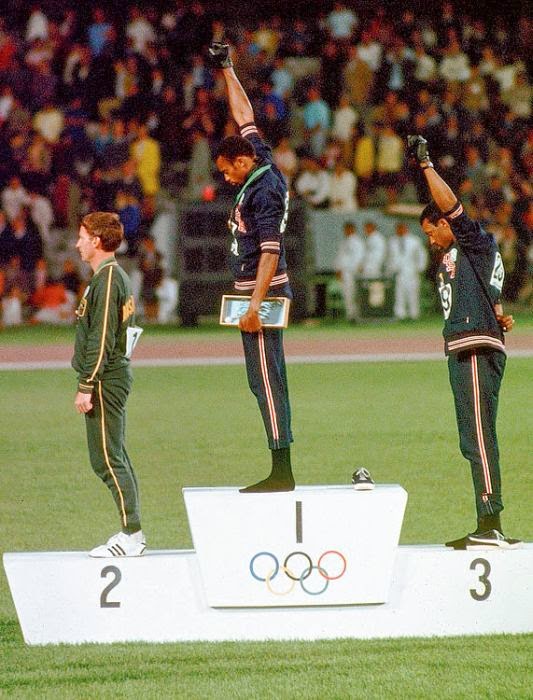
In May, the N.F.L. announced a new policy aimed at reducing the controversy, and possibly even ending it altogether. Under this new policy, players would not be required to be on the field during the playing of the National Anthem. If they were, though, they would be required to stand, and failure to do so would result in fines being imposed on the player and, potentially, the entire team depending on the level of participation. At the same time, though, the league stated that players could choose to remain off-field during the Anthem, either in the locker room or in the tunnel underneath the stadium out of view of the fans on the field. President Trump responded by saying that the new policy was not sufficient, that players who declined to stand should be fired, and that anyone who declined to stand for them Anthem should leave the country. The new policy also did not sit well with the N.F.L. Players Association, albeit for different reasons, and that organization filed an official grievance alleging that the policy had been announced in violation of the provisions of the Collective Bargaining Agreement agreed to between the league and the union. Because of this grievance, as well as complaints by players and teams about the new policy, the league decided last month to put the new policy on hold. This meant that players would be required to be on the field for the Anthem but would face no penalty or punishment for protesting, whether it be via kneeling or any other form of protest such as the raised fist that Malcolm Jenkins displayed, a protest reminiscent of a similar protest at the 1968 Summer Olympics in Mexico City.
Not surprisingly, the President chimed in this morning about last night’s sporadic protests:
The NFL players are at it again – taking a knee when they should be standing proudly for the National Anthem. Numerous players, from different teams, wanted to show their “outrage” at something that most of them are unable to define. They make a fortune doing what they love……
— Donald J. Trump (@realDonaldTrump) August 10, 2018
…..Be happy, be cool! A football game, that fans are paying soooo much money to watch and enjoy, is no place to protest. Most of that money goes to the players anyway. Find another way to protest. Stand proudly for your National Anthem or be Suspended Without Pay!
— Donald J. Trump (@realDonaldTrump) August 10, 2018
Trump’s reaction to last night’s limited protest is consistent with what he’s said in the past, of course, and it’s also consistent with the fact that he apparently believes that stirring the pot on this issue will help Republicans in the fall by helping to energize the party’s base. Whether that is true or not remains to be seen, but the fact that Trump believes it means that we’re likely to see more protests, and more Trump attacks, over the coming weeks and months.