
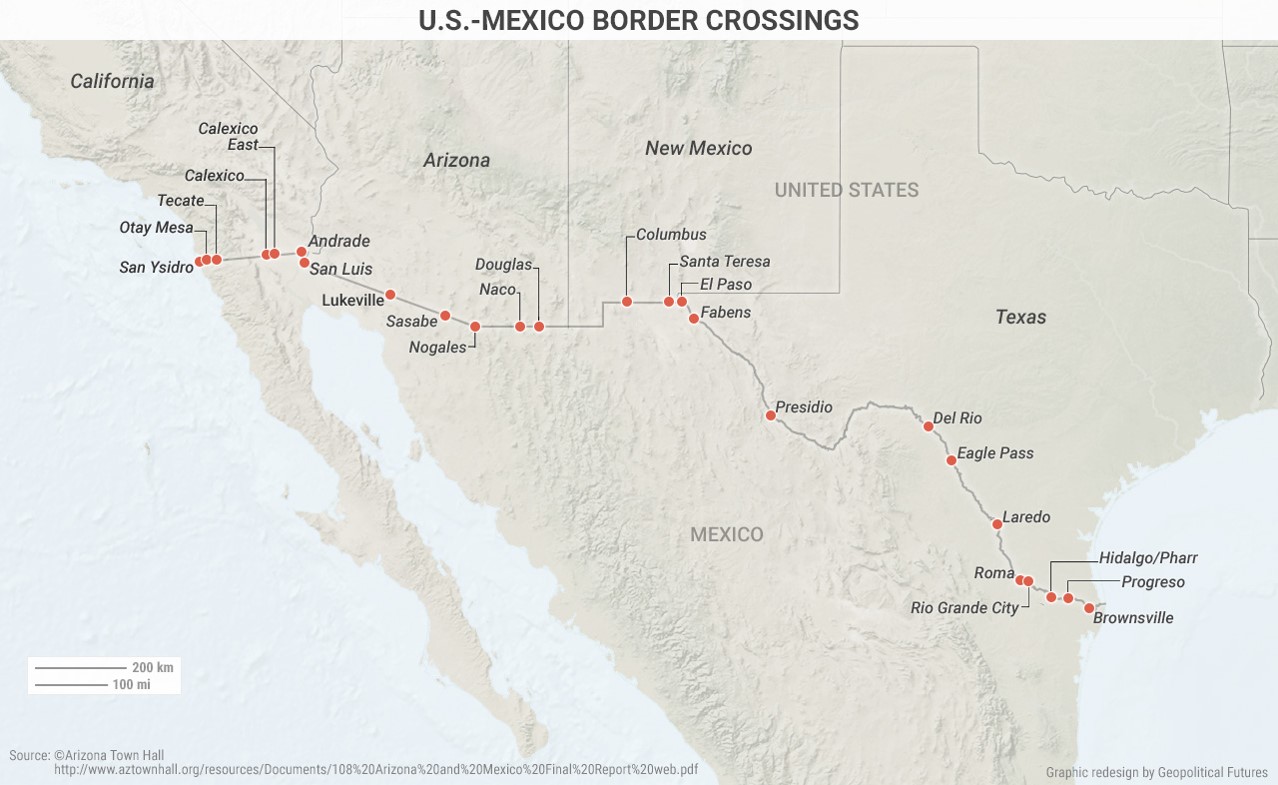

As long-time readers know, my main area of academic focus is comparative democracy with an increasing focus on the United States in a comparative context. But my journey started in Colombia in the 1990s. My dissertation was on constitutional reform and the changes to electoral rules and structures that came about as a result. But one does not live in Bogotá, Colombia in the mid-1990s and study Colombian politics without getting a massive side-helping of drug war as part of the mix.
Indeed, one does not teach Latin American politics and US-Latin American relations in the first couple of decades of the 2000s without talking a lot about drug trafficking (as well as immigration). As such, I have informed views on the border and border security, even if they are not my primary area of expertise.
Such knowledge is why simplistic assertions about “closing” or “sealing” the border always drive me a bit nuts. And, moreover, why even floating the idea that the US would just tariff Mexico and Canada into stopping drug smuggling sounds like claiming that if you paint your house orange hurricanes will spare it.
I will even note that, like many young conservatives growing up in the 1980s, I was pro-drug war at the time. But then, when I learned about not only the devastation visited upon producer countries as well as the fact that the US spent billions of dollars for limited return (the amount of money waster relative to the success rate is staggering), I must confess I changed my mind. I long ago shifted my preferences to a public health/harm reduction approach. But I also acknowledge that drugs cause substantial harm and there are no easy solutions.
One thing is clear: I don’t think you can interdict your way into stopping something like the opioid crisis. One of the grandest ironies of interdiction policies is that they frequently make drug smuggling more profitable, at least at the dealer level, because it affects supply while demand remains constant, which drives up street prices. Interdiction can also incentivize more production because more supply is needed to offset losses due to seizures. The bottom line remains that there is an obscene amount of money to be made because there is a never-ending market full of people who want to get high.
All of this is preface to talking about fentanyl, because one of the things that struck me a while back is how small a dosage is, and therefore the relative compactness of a shipment to be smuggled (as opposed to, say, marijuana back in the day or even cocaine and heroin).
Let’s turn to a Reuter’s piece from back in October: Fast, cheap, and deadly. I recommend the whole piece, as it is well written and full of useful information and graphics.
I will share two of the graphics to illustrate my point about size:
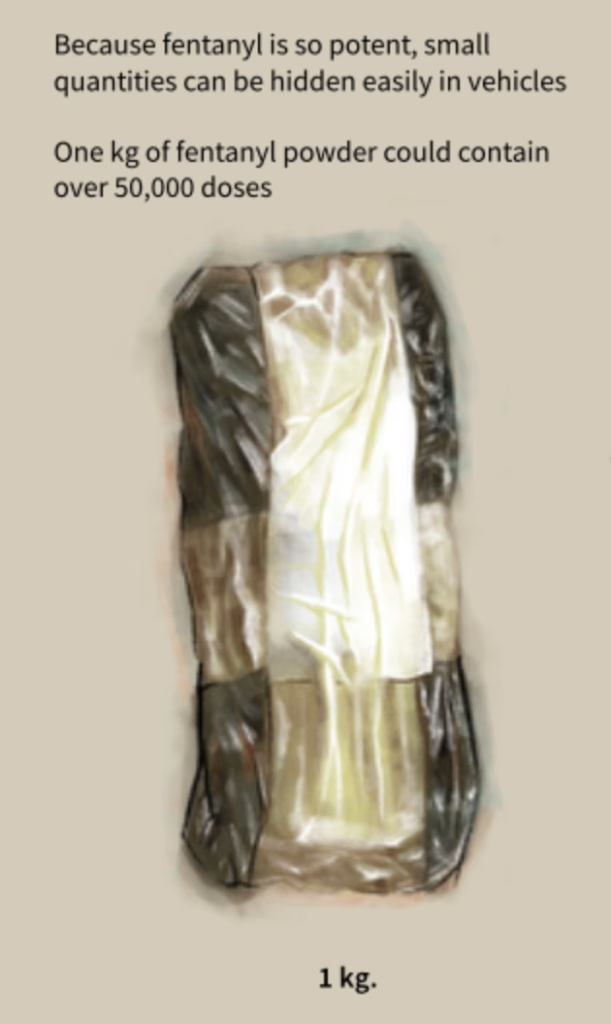
And note that 2 mg is a lethal does. Here’s what that looks like:
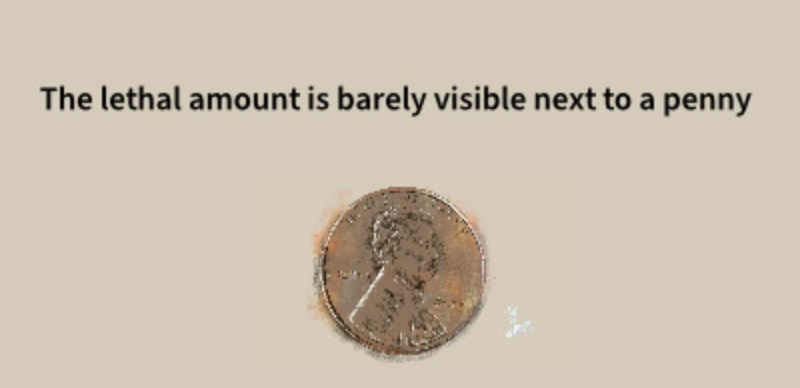
As such, getting it across the border is relatively easy and is mostly done via legal border crossings.
Cheap and potent, fentanyl allows a “shotgun” trafficking approach, said Bryce Pardo, research officer at the United Nations Office on Drugs and Crime. “Send more couriers with smaller amounts.”
Most fentanyl trafficked by the Sinaloa Cartel crosses at U.S. border ports of entry, often in secret car compartments, disguised among cargo on tractor-trailers, or secreted in the bodies of drug mules, according to an April indictment against the Chapitos, four brothers accused of expanding the Cartel’s fentanyl operations following the capture of their father Joaquin ‘El Chapo’ Guzman.
“The Cartel relies on the impossibility of inspecting every item that crosses the U.S.-Mexico border,” the indictment said.
Dozens of recent criminal cases illustrate this strategy. In April, a sniffer dog at the El Paso port of entry alerted authorities to two bundles of blue fentanyl pills concealed within rear quarter panels of a Ford Escape, according to a criminal complaint.
A U.S. citizen walking through Arizona’s Nogales port of entry in June was carrying 740 grams, in small bags taped to her coffee mug, tucked into her bra and inserted in her vaginal cavity, court documents said. A fifth of fentanyl seizures take place on pedestrians, the Reuters analysis shows.
A couple if thoughts. First, all of the seizures mentioned about are via legal crossings. Second, not only are these legal crossings, they are by American citizens. As such, pretending (as Trump and his cohorts do) that stopping illegal immigration is about stopping fentanyl is just wrong. While drugs and illegal border crossings are sometimes linked, they are really two different policy problems.
It should be noted the CBP reports that roughly 4 million pedestrians, over 10 million passenger vehicles, and over 600,000 trucks cross the southern border per month. These are all legal crossings that walls won’t stop and that are part of a vital, intertwined economy.
After a while reading any stories about anti-drug activities feels like deja vu. For example, most stories will talk about increased seizures of product, often citing records. The reporting usually makes it sound like this is a sign of progress. But since we know that even the best seizure regime catches only a fraction of the overall product being smuggled, record seizures mean that record amounts of product are making it through to market. I don’t know how many triumphant stories about record cocaine seizures I have read over the years.
All this chart tells me is that there is one helluva lot of fentanyl making into the US:
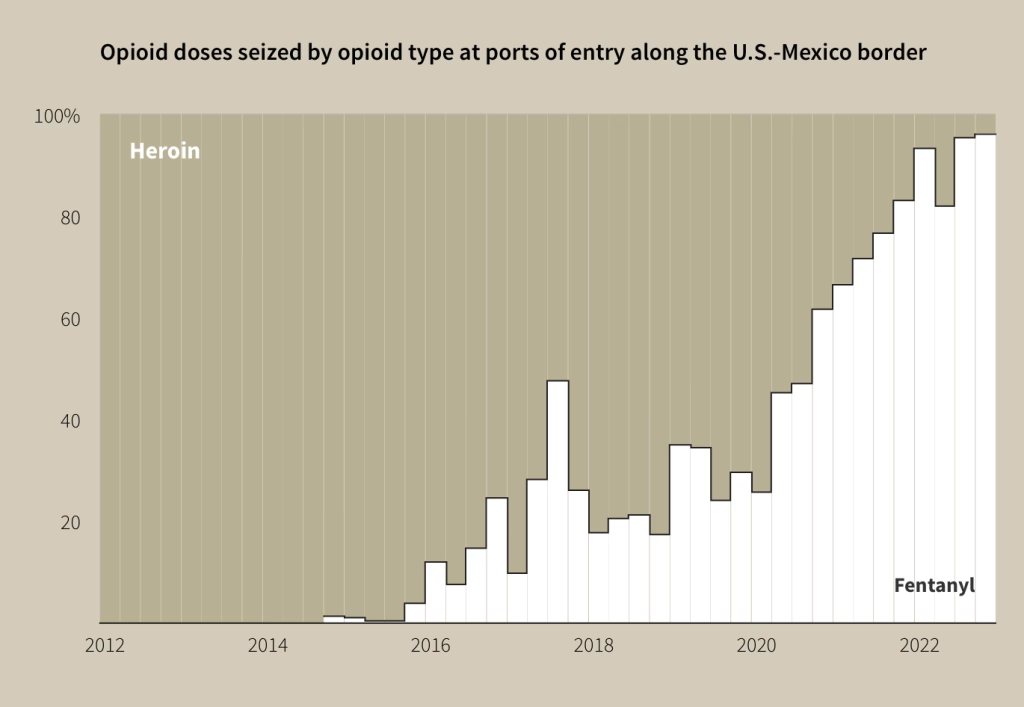
It also tells me that heroin smuggling declined not because of successful interdiction, but because a better product, so to speak, was found by the cartels.
All interdiction policies are fighting a losing battle. And the relative size of fentanyl makes it all the more complicated.
Speaking of walls, I can’t help but note that drug cartels in the past have been effective at tunneling under walls and going over them. For example, smugglers have used catapults, drones, and even t-shirt cannons to get drugs over walls and fences. And while I know some immigrants who have crossed illegally have brought drugs, if I were in a cartel, I would rather try and find an American citizen willing to try and walk across a bridge. The chances of the product making it to where I want it to go are much higher. And the odds of successfully getting the drugs past security are actually higher.
As a general matter, the current problem for anti-drug policies has been the significant increase in synthetics versus plant-based drugs.
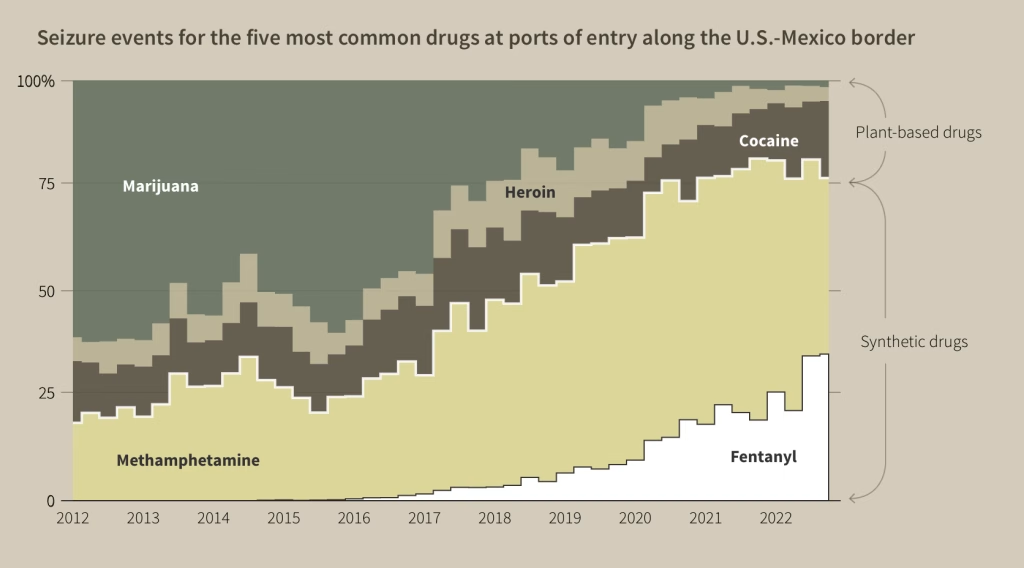
This is good news for places like Colombia and Bolivia where criminality and political violence has long been driven by fights over land. But it also means that large amounts of drugs can be produced in small spaces, making detection and control of production a major challenge. The best bet that production-side strategies have is to try and control precursor chemicals, which is easier said than done.
So, what’s the point? It is simply and more than a little depressingly: there is no winning the drug war. There are vast amounts of money to be made and people simply like their intoxicants, full stop. We would be better off placing funds into dealing with demand than trying to stop supply because Sisyphus has a better chance of finally getting that rock to stay in place than the US does in actually stopping these illicit flows.
When I say looking at the demand side, I also think that it should be done with more of a public heath/root cause approach that trying to simply punish people. If users are willing to court death for their fix, threats of jail are unlikely to be a significant deterrence.
If we never stopped the flow of cocaine and heroin, how are we going to stop a far smaller product? I would note that the way we stopped marijuana smuggling was to legalize it.
But above all else, this problem is simply not going to be addressed by cracking down on illegal immigration, building walls, or threatening our neighbors with tariffs.









