Pentagon Leaders Tell Ranks to Get Ballots and Use Them [RSS] (NYT)
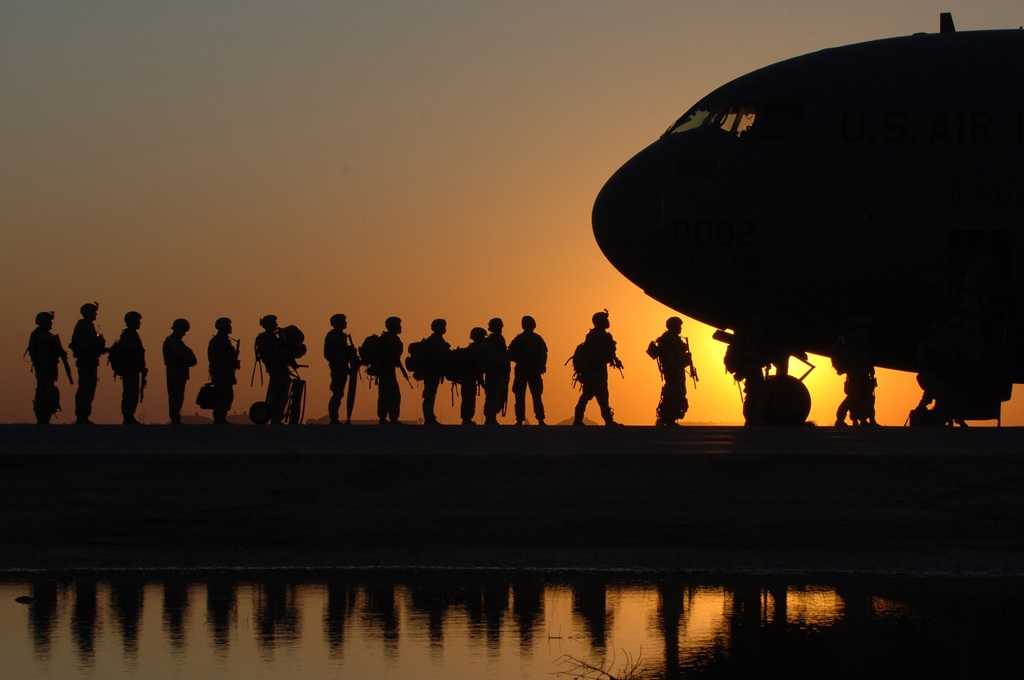
Capt. Scott D. Stewart, a 20-year veteran of the Air Force, remembers that voting on American military bases was always a low priority, with registration seen as “a free-for-all, every man for himself.” But this time, Captain Stewart, a 40-year-old Floridian, dropped his presidential ballot in the mail in late September. This time, the Pentagon wants 100 percent voter participation here and at many American bases around the world. The target may be impossible, but the advocates command attention: Defense Secretary Donald H. Rumsfeld and Gen. Richard B. Myers, the chairman of the Joint Chiefs of Staff.
Through e-mail messages, spots on military radio and television and orders down the chain of command, the message has reached bases like this one, a conglomeration of 1960’s beige and brown government buildings surrounding a military air strip 30 miles west of Tokyo. “It’s very rare that you see a four-star general getting on television, telling soldiers to register and vote,” said Captain Stewart, a base security officer assigned to help run the voter registration campaign, referring to General Myers. “It’s been a huge, huge push to get everyone registered. It was coming straight down from the secretary of defense.”
*** The policy, which was drawn up more than a year ago, comes in response to the problems in 2000 with military ballots, which in many cases arrived too late to be counted. “The Florida fiasco really educated everyone,” said Douglas L. Hardy, chairman of Republicans Abroad Japan, referring to President Bush’s narrow victory four years ago – a win helped in part by absentee ballots mailed by soldiers. This time, Mr. Hardy said, “The military is doing a fantastic job, to be honest.”
This is indeed a shift in emphasis. Decades ago, military officers prided themselves on being apolitical, ostentaciously refusing even to vote. Going back to at least the Reagan era, that began to change, as professional soldiers have become increasingly Republican. As long as there is no command influence to pressure troops to vote for one candidate or party over another, there’s no problem with this, other than as another sign that the military is becoming a political interest group like civil service employees or labor unions.
Update (1519): Kevin Aylward has interesting figures showing that military folks support Bush over Kerry by a 4-to-1 margin.