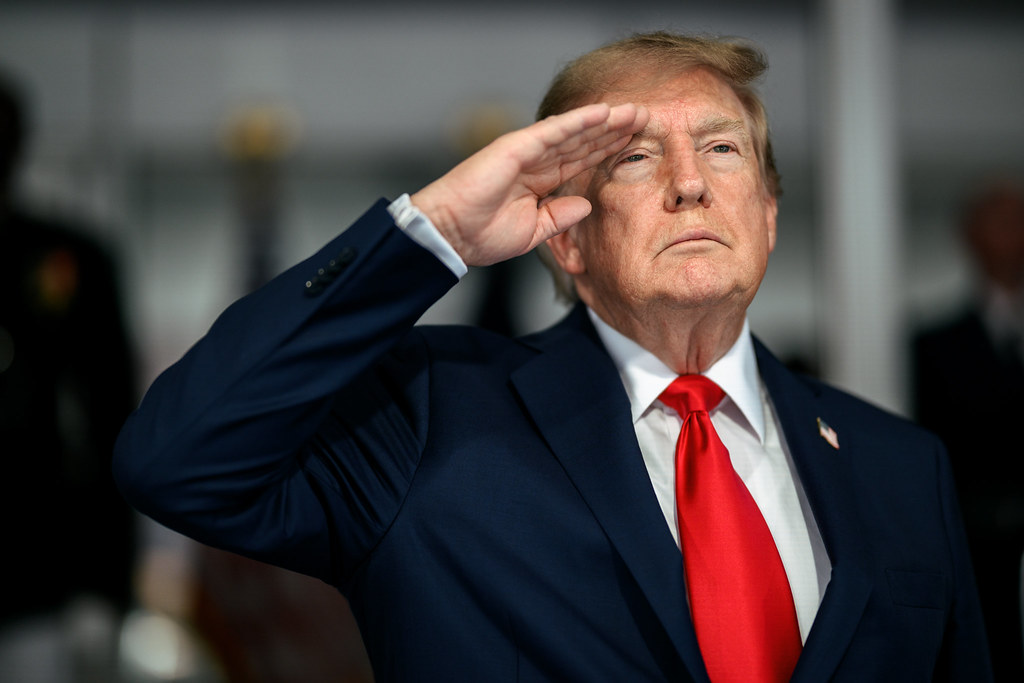
The Army is in the process of retooling its personnel system to meet the challenges of modern warfare, beginning with bringing General David Petraeus home from Iraq to oversee a selection board for one-star generals.
The Army has summoned the top U.S. commander in Iraq back to Washington to preside over a board that will pick some of the next generation of Army leaders, an unusual decision that officials say represents a vote of confidence in Gen. David H. Petraeus’s conduct of the war, as well as the Army counterinsurgency doctrine he helped rewrite.
The Army has long been criticized for rewarding conventional military thinking and experience in traditional combat operations, and current and former defense officials have pointed to Petraeus’s involvement in the promotion board process this month as a sign of the Army’s commitment to encouraging innovation and rewarding skills beyond the battlefield.
[…]
“It’s unprecedented for the commander of an active theater to be brought back to head something like a brigadier generals board,” said retired Maj. Gen. Robert Scales, former head of the Army War College. A senior defense official said Petraeus is “far too high-profile for this to be a subtle thing.”
Indeed, bringing back the guy who the administration is pinning its hopes on to salvage something like victory in the Iraq debacle in the middle of the most crucial period is simply remarkable. It would seem that Bush and Gates are interested in leaving a long-term stamp on the force and assuring that “the Army we’ve got” for the next war will be more suited to stability operations. Certainly, this crop of colonels won’t be running the Army during Bush’s remaining 14 months.
The Army is in the process of overhauling its entire officer rotation and promotion system in order to combat problems identified in recent years. Senior leaders are apparently serious about rewarding those who take tough assignments training American and foreign soldiers on an equal basis with those who serve in traditional command assignments.
In a speech at a large Army conference last month, Defense Secretary Robert M. Gates raised the need for holding onto young combat veterans and “reexamining assignments and promotion policies that in many cases are unchanged since the Cold War.” Gates also stressed that the Army must retain lessons on irregular warfare from Iraq and Afghanistan — lessons he said were learned but lost after the Vietnam War.
[…]
Another initiative, favored by many young officers, would incorporate reviews by peers and subordinates into a rating system that now depends largely on ratings by superior officers; the idea is to make the system less hierarchical and prone to producing conformity. An Army task force is looking into incorporating such reviews, known as “360-degree evaluations,” into the “officer efficiency reports” that are now completed only by superiors, said Col. Paul L. Aswell, chief of the Army’s officer personnel division. “Now the system is very risk-adverse because to advance in the officers corps, you really only need to make your senior rater happy,” said the officer who served in Iraq. “There is every disincentive to challenging that senior officer’s worldview. He has the power to stop you in your tracks.”
The current system, which was brand new when I was commissioned in 1988, never made much sense. The most important evaluation is that of your boss’ boss. As a lieutenant serving as a platoon leader, that meant the battalion commander, who interacted with us perhaps a couple times a month. That worsens as one moves up the chain, with the senior rater often someone who literally has no idea about the officer’s caliber aside from the recommendations of the immediate supervisor.
I’m not keen on the idea of 360-degree evaluations, however. Indeed, the idea of subordinates playing a substantial role in deciding whether their leaders get promoted flips the chain of command on its head. Adding in a peer rating component and giving more weight to the immediate supervisor, though, makes sense.
Ultimately, it’s going to be very difficult, indeed, to create a system that rewards mavericks and original thinkers. Almost by definition, they’re less likely to fit in with their peers and more difficult to manage than those with more conventional minds and personalities.
Perhaps the best we can do is to change the single elimination nature of the career path, where a single bad “report card” is usually a career ender or, at least, remains a black mark on the record several steps down the line. That’s less of a problem in periods, like the present, when the Army is promoting virtually everyone to major and lieutenant colonel because they’re desperate for bodies. When and if we get back into a more traditional promotion cycle, though, that would help tremendously.
UPDATE: Much more at Small Wars Journal.