
WaPo (“Supreme Court says cities can ban homeless from sleeping outside“):
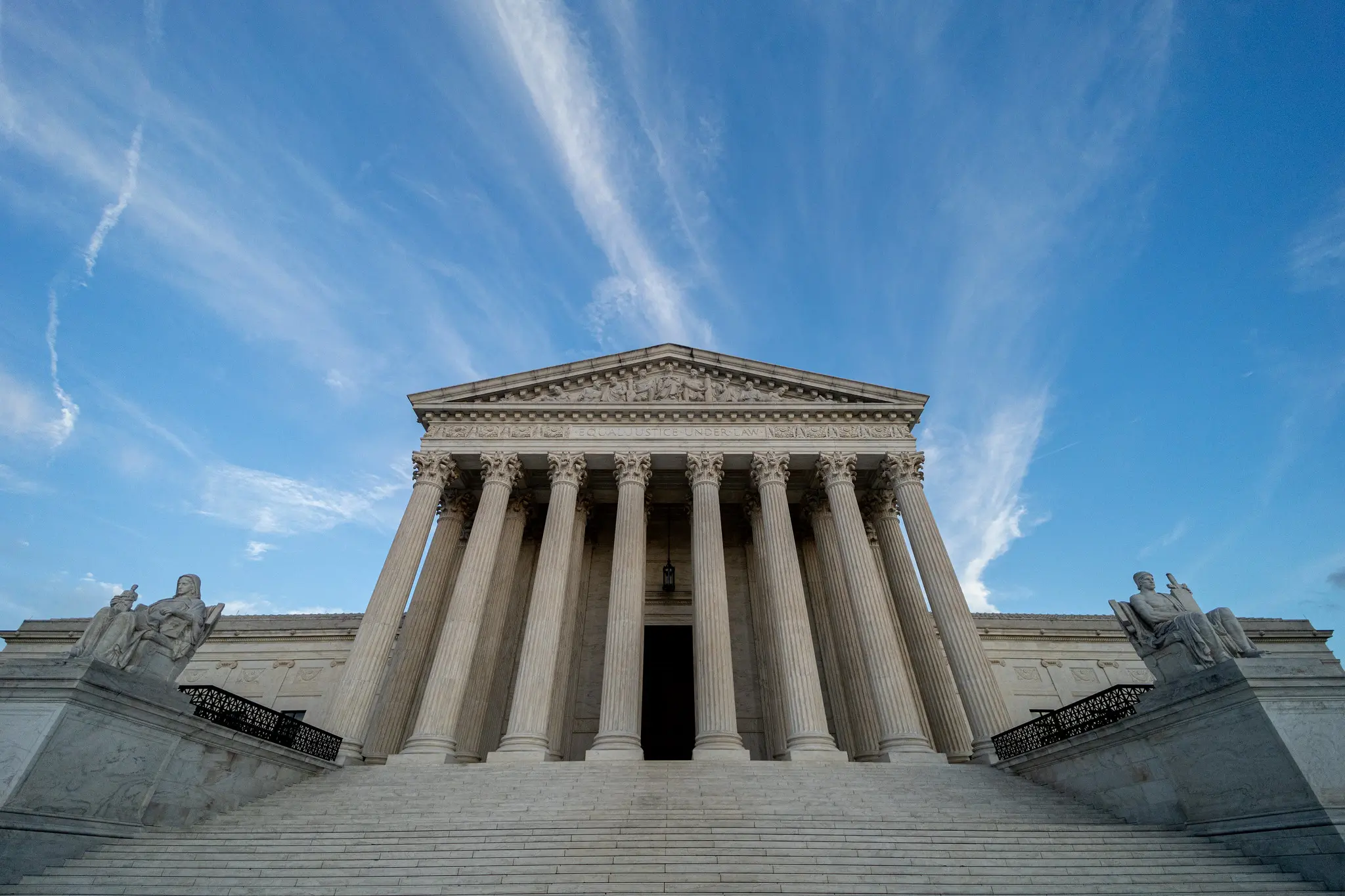
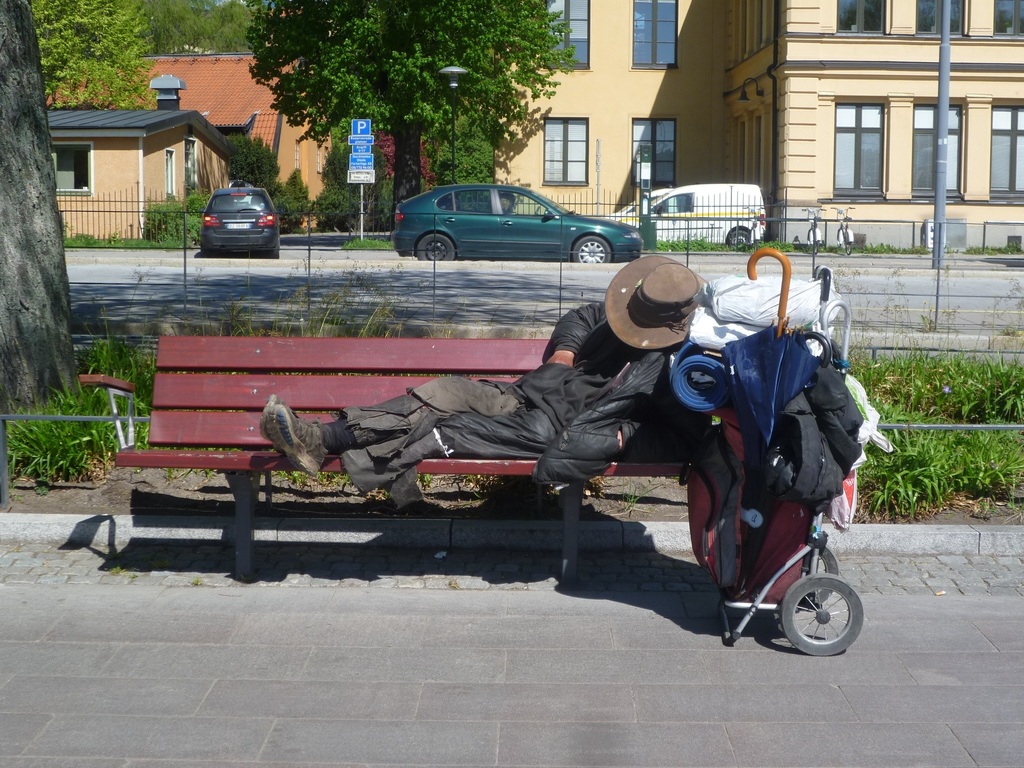
The Supreme Court on Friday ruled that cities may ban homeless residents from sleeping outside, rejecting a constitutional challenge to a set of anti-camping laws in a decision that will have a sweeping impact on how local officials address the nation’s escalating housing crisis.
In a 6-3 decision, which broke along ideological lines, the court’s conservative majority said that regulations penalizing people for sleeping in public spaces such as parks and streets do not constitute “cruel and unusual punishment” under the Eighth Amendment, even when a community lacks indoor shelter and its unhoused residents have nowhere else to go.
“Homelessness is complex,” Justice Neil M. Gorsuch wrote in the ruling.
Localities should be free to devise their own solutions, he argued, and the Eighth Amendment “does not authorize federal judges to wrest those rights and responsibilities from the American people and in their place dictate this Nation’s homelessness policy.”
The case centered on laws enacted in Grants Pass, Ore., and the court’s review comes at a time when officials across the country are struggling to deal with a growing number of unhoused individuals. The problem is especially pronounced in the American West, where soaring housing costs have driven more and more vulnerable people into homelessness.
Friday’s decision returns the case to the lower courts, which will consider other arguments against the Grants Pass laws, and city leaders say there will be no immediate changes.
Justice Sonia Sotomayor read her searing dissent from the bench, calling such laws “unconscionable and unconstitutional.”
“Sleep is a biological necessity, not a crime,” said Sotomayor, who was joined by Justices Elena Kagan and Ketanji Brown Jackson.
The Supreme Court agreed to take the case after hearing from an unlikely coalition that spanned the political spectrum, including liberals such as California Gov. Gavin Newsom (D) and officials in Republican-led states such as Montana and Alabama. The officials described governments overwhelmed by the scale and complexity of homelessness. More than 600,000 people are homeless nationwide, according to federal data, and nearly half sleep outside.
Newsom — who leads the state with the country’s largest unhoused population and frequently criticizes the high court’s conservatives — welcomed the decision, saying it provides “definitive authority to implement and enforce policies to clear unsafe encampments from our streets.”
“This decision removes the legal ambiguities that have tied the hands of local officials for years and limited their ability to deliver on common-sense measures to protect the safety and well-being of our communities.”
[…]
Lawyers for the unhoused individuals who originally brought the case contended that officials were free to restrict tents in public spaces, to clear encampments and even to fine homeless people who decline other shelter options. But, the attorneys argued, cities should not be allowed to punish people who have no alternatives.
They said Friday’s decision criminalizes the status of homelessness and will have ruinous consequences for those without shelter.
“We are disappointed that a majority of the Court has decided that our Constitution allows a city to punish its homeless residents simply for sleeping outside with a blanket to survive the cold when there is nowhere else for them to go,” said Ed Johnson, the director of litigation at the Oregon Law Center and lead counsel for the unhoused individuals.
I wrote about the broader issue in my January 2023 post, “Homeless Sweeps are Costly, Ineffective, and Immoral,” and my views haven’t evolved much since then. The fact that the likes of Gavin Newsom and Kay Ivey are on the same side illustrates the complexity of the problem. Municipalities have to be able to keep residents and visitors safe and public spaces ought to be for the public. At the same time, while I’m skeptical that it violates the 8th Amendment, effectively criminalizing homelessness is a bizarre and immoral policy.
Homelessness is a multifaceted issue that I pay attention to sporadically, so I won’t pretend to have the answers. To the extent it’s caused by mental illness and substance abuse, treatment and, in some cases, involuntary institutionalization is part of the solution. Dealing with those who are otherwise capable of supporting themselves but are simply down on their luck is harder.
But putting them in jail or levying fines that put them in further financial distress is surely not the solution. Rather clearly, those policies are designed to encourage the homeless to find another municipality in which to sleep.