
Late yesterday in a rare sign of bipartisan cooperation, the Senate passed a broad-ranging criminal justice reform bill that is long overdue:
The Senate on Tuesday overwhelmingly passed a sweeping overhaul of the criminal justice system, after a remarkable political shift from Republicans who voted in large numbers to save money by reducing prison sentences, handing a rare bipartisan victory to President Trump.
The First Step Act passed on a vote of 87 to 12, with dozens of Republicans, including longtime holdout Majority Leader Mitch McConnell (R-Ky.), joining all 49 members of the Democratic caucus to approve legislation that even some GOP supporters fear could leave them vulnerable to charges of being soft on crime.
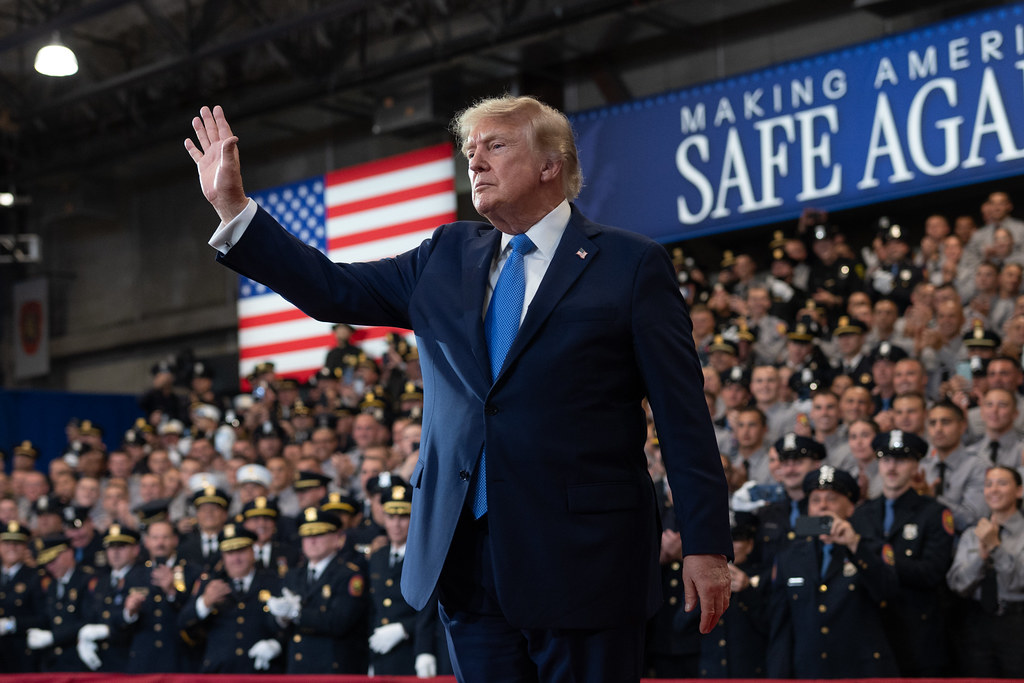
Senate Judiciary Committee Chairman Sen. Charles E. Grassley (R-Iowa) tried to allay those concerns shortly before the final vote, stressing that Trump “wants to be tough on crime, but fair on crime” — and had told him personally that he had his “pen ready to sign this bill.”
And minutes after the vote, Trump tweeted his congratulations to the Senate, stressing that his “job is to fight for ALL citizens, even those who have made mistakes.”
“This will keep our communities safer, and provide hope and a second chance, to those who earn it,” he wrote on Twitter. “In addition to everything else, billions of dollars will be saved. I look forward to signing this into law!”
The product of years of negotiations, the legislation represents a major pivot for the GOP, which decades ago embraced a law-and-order rallying cry and war on drugs campaign as crucial to winning votes. But as crime rates have dropped and states have pursued cost-effective ways to cut the prison population, Congress has favored changes to the system, with GOP lawmakers arguing for rehabilitating some offenders rather than longtime incarceration.
The bill would revise several sentencing laws, such as reducing the “three strikes” penalty for drug felonies from life behind bars to 25 years and retroactively limiting the disparity in sentencing guidelines between crack and powder cocaine offenses. The latter would affect about 2,000 current federal inmates.
It also overhauls the federal prison system to help inmates earn reduced sentences and lower recidivism rates. A different version passed the House this year, so the House would have to pass the latest draft before it can be sent to Trump for his signature. The House is expected to endorse that bill when it comes up for a likely vote later this week, and House Speaker Paul D. Ryan (R-Wis.) has expressed support for the legislation.
The bill, which does not cover state jails and prisons, would through reductions in sentencing do the equivalent of shaving a collective 53,000 years off the sentences of federal inmates over the next 10 years, according to the Congressional Budget Office — though some advocacy groups dispute this figure. There were about 181,000 federal inmates as of Dec. 13, according to the Bureau of Prisons.
The bill received a major boost last month when Trump endorsed it as “reasonable sentencing reforms while keeping dangerous and violent criminals off our streets.” His thinking was heavily influenced by his son-in-law and White House adviser Jared Kushner, who has long advocated sentencing restructuring and marshaled endorsements of the bill from a diverse coalition including law enforcement, and the American Civil Liberties Union.
(…)
Before the final vote, the bill’s supporters fended off several amendments considered “legislative poison pills” that they said were designed to kill the bipartisan compromise that was been carefully negotiated among Democratic and GOP lawmakers, as well as the Trump administration.
Those included a measure from Sens. Tom Cotton (R-Ark.) and John Neely Kennedy (R-La.) that would have barred people convicted of various offenses, including certain sex crimes, from being able to qualify for reduced sentences. The legislation has a number of exclusions, but Cotton and Kennedy wanted to add more crimes to the list, such as coercing a minor for sexual activity.
Lawmakers unanimously voted to include in the package a proposal from Sens. Ted Cruz (R-Tex.) and James Lankford (R-Okla.) to exclude more categories of crimes from being eligible for sentencing reductions, and ensure the freedom and involvement of faith-based groups in elements of prison overhaul.
CBS News reporter Nancy Cordes had a brief review of what’s in the bill this morning:
A package of wide-ranging criminal justice reforms is one step closer to becoming law. After years of negotiations, the Senate approved the First Step Act, 87 to 12. The House is expected to pass it later this week and send it to the president. @NancyCordes reports: pic.twitter.com/qPI6IhfrqI
— CBS Mornings (@CBSMornings) December 19, 2018
One of the more interesting things about this bill, of course, is that it is the end result of what has been a bipartisan effort that has brought in legislators and advocacy groups from both sides of the political aisle. Two of the most prominent voices in the Senate supporting measures such as this, foe example, have been Kentucky Senator Rand Paul and New Jersey Senator Cory Booker, who are about as far apart ideologically as you can get in the Senate. Additionally, the bill was supported by groups generally believed to be on the political left such as the American Civil Liberties Union and groups on the right such as FreedomWorks, where Vice President of Legislative Affairs Jason Pye released this statement after the Senate passed the bill last night:
“This was a historic night in the Senate. The First Step Act is a product of several years of bipartisan negotiations based on the successful reforms in red states like Georgia, Mississippi, South Carolina, and Texas. The efforts of our champions — Sens. Chuck Grassley, Mike Lee, and Rand Paul — were apparent in the votes this evening. The Senate has done its job. We urge the House to pass the First Step Act and send it to President Trump’s desk to be signed into law.”
This kind of bipartisanship is, sadly, all too rare in Washington today, so it was heartening to see it play out here in a policy area that has been neglected for far too long.
The bill isn’t perfect, of course. Several of the Amendments that did pass seem to unfairly deny people convicted of some non-violent crimes of eligibility for sentencing reduction or other benefits under the law, for example. Additionally, while the law will go a long way toward alleviating the problems of people caught up in the Federal criminal justice system it does not apply to the states, where the vast majority of non-violent felons are held and in which things such as mandatory minimum sentences, three-strikes laws, and difficulties in being accepted for parole or probation remain serious problems. Addressing those problems would require similar legislation at the state level, which one hopes will follow on the momentum that should be created by the passage of this bill. On top of all this, there are still several issues regarding Federal sentencing, the conditions in Federal prisons, and the manner in which those convicted of crimes are treated after they have finished serving their sentence. However, as the name of this bill — the First Step Act — implies, this is a good first step down a road that has been ignored for too long.
In any case, now that the bill has passed the Senate it heads to the House of Representatives where it is expected to pass with bipartisan support. That last part is perhaps the most important part of what happened yesterday. The final vote on the bill in the Senate was 87-12, and the bill was supported by every Senate Democrat and 38 of the 51 members of the Senate Republican Caucus. It is expected that the vote in the House will be similarly bipartisan. Additionally, the bill has received the endorsement of President Trump thanks largely to lobbying by his son-in-law, Jared Kushner, for whom criminal justice reform became something of a personal issue given what happened to his father. That’s rare enough in today’s day and age to be notable. In any case, this is one of those rare things you see from Congress these days, a solid win on an important issue. Hopefully, it will truly be just the first step in reforming a criminal justice badly in need of reform.