 Steve Benen has a thoughtful post arguing that the Bush administration’s current negotiations with the Iraqi government to define our political, economic and security relationship in the coming years “disregards Congress’ role in treaties.”
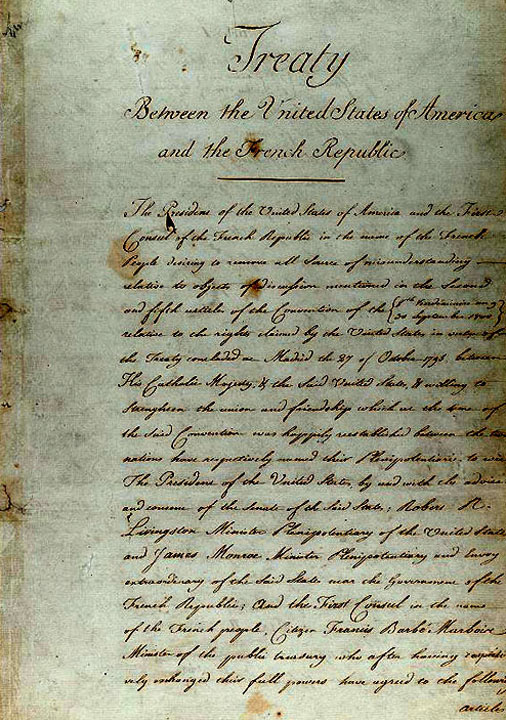
This is an understandable reaction, given the plain language of Article II, Section 2 that the president “shall have Power, by and with the Advice and Consent of the Senate, to make Treaties, provided two thirds of the Senators present concur.” But, as I noted in response to a similar argument by Hillary Clinton (Bush Tying Next President’s Hands) presidents have had the power to enter into executive agreements with other nations since George Washington’s administration. Treaties are binding on future presidents unless modified with Senate consent; executive agreements are not.
The State Department explains:
As explained in greater detail in 11 FAM 721.2, there are two procedures under domestic law through which the United States becomes a party to an international agreement. First, international agreements (regardless of their title, designation, or form) whose entry into force with respect to the United States takes place only after two thirds of the U.S. Senate has given its advice and consent under Article II, section 2, Clause 2 of the Constitution are “treaties.” Second, international agreements brought into force with respect to the United States on a constitutional basis other than with the advice and consent of the Senate are “international agreements other than treaties” and are often referred to as “executive agreements.”
Let’s look, then, at 11 FAM 721.2 to see on what “constitutional basis” a president might enter into such an agreement.
(3) Agreements Pursuant to the Constitutional Authority of the President
The President may conclude an international agreement on any subject within his constitutional authority so long as the agreement is not inconsistent with legislation enacted by the Congress in the exercise of its constitutional authority. The constitutional sources of authority for the President to conclude international agreements include:
(a) The President’s authority as Chief Executive to represent the nation in foreign affairs;
(b) The President’s authority to receive ambassadors and other public ministers;
(c) The President’s authority as “Commander-in-Chief”; and
(d) The President’s authority to “take care that the laws be faithfully executed.”
Arguably, all of these apply in the case of Iraq.
To be sure, the guidelines do specify that there will be times when it’s not clear whether a treaty or an executive agreement is most appropriate and that “Past U.S. practice as to similar agreements,” “The preference of the Congress as to a particular type of agreement,” and “The proposed duration of the agreement” should be taken into account among other factors. As a practical matter, though, this guidance is 1) not binding on the president himself, only his representatives; 2) unenforceable; and 3) largely ignored because of the near-impossibility of passing much of anything by a 2/3 vote in the Senate these days.
As usual, FindLaw does a superb job of summarizing the state of this section of the Constitution as “amended” by decades of court decisions and common practice.
The capacity of the United States to enter into agreements with other nations is not exhausted in the treaty-making power. The Constitution recognizes a distinction between ”treaties” and ”agreements” or ”compacts” but does not indicate what the difference is. The differences, which once may have been clearer, have been seriously blurred in practice within recent decades. Once a stepchild in the family in which treaties were the preferred offspring, the executive agreement has surpassed in number and perhaps in international influence the treaty formally signed, submitted for ratification to the Senate, and proclaimed upon ratification.
During the first half-century of its independence, the United States was party to sixty treaties but to only twenty-seven published executive agreements. By the beginning of World War II, there had been concluded approximately 800 treaties and 1,200 executive agreements. In the period 1940-1989, the Nation entered into 759 treaties and into 13,016 published executive agreements. Cumulatively, in 1989, the United states was a party to 890 treaties and 5,117 executive agreements. To phrase it comparatively, in the first 50 years of its history, the United States concluded twice as many treaties as executive agreements. In the 50-year period from 1839 to 1889, a few more executive agreements than treaties were entered into. From 1889 to 1939, almost twice as many executive agreements as treaties were concluded. In the period since 1939, executive agreements have comprised more than 90% of the international agreements concluded.
Much, much more at the link, but that’s the gist of the history.
My preference would be to eliminate executive agreements beyond those which simply work out the practical details of existing treaties or legislation — making them international corollaries to the executive orders presidents routinely issue to bureaucratic agencies in order to “take care that the laws be faithfully executed.” That ship has, however, long sailed.