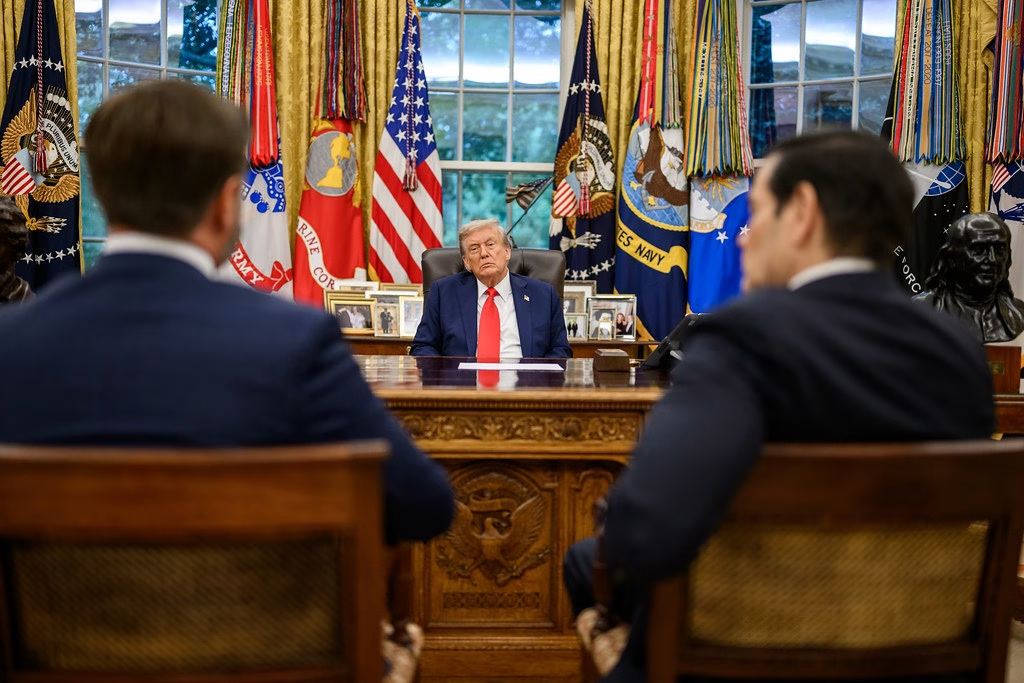

In yesterday’s post, “The Artlessness of the Deal,” I argued that, “while I don’t think Trump has a grand strategy in the way that Woodrow Wilson, Harry Truman, or Ronald Reagan did, he very much has a foreign policy instinct. It’s that of someone who has spent decades in the world of commercial real estate, which he sees as a system to be played and where rules are for suckers.” He sees the world in a very transactional manner and operates off his gut, not some ideological vision.
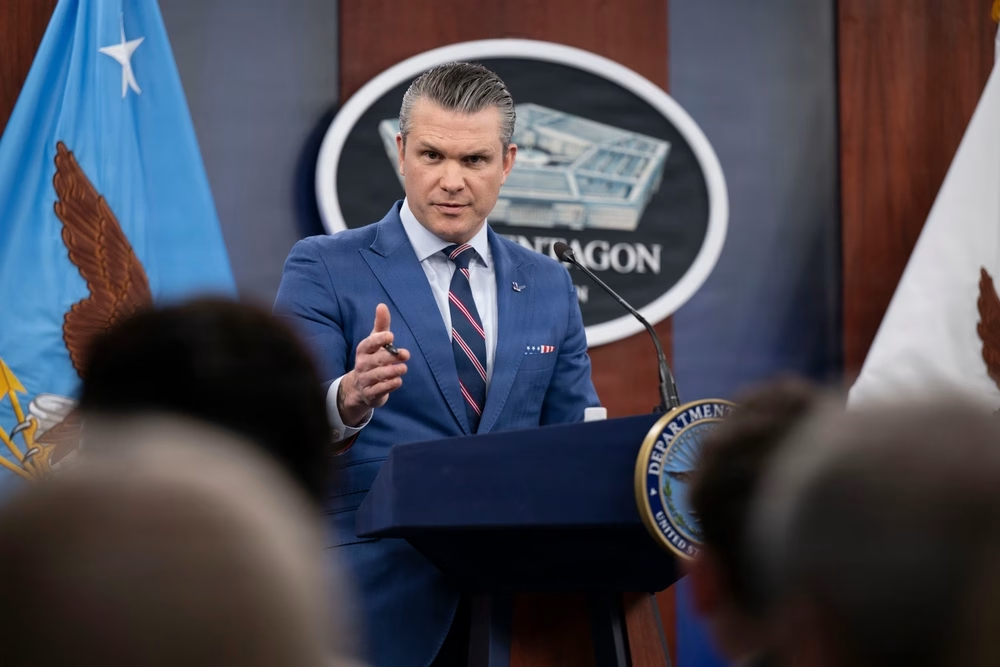
Because of that, it’s just not clear what the administration’s foreign policy goals are. Marco Rubio is a pretty conventional choice for Secretary of State but Pete Hegseth at Defense was anything but. Michael Waltz, his National Security Advisor, is a huge China hawk, who thinks we’re in a new Cold War. Elbridge Colby, the incoming Undersecretary of Defense for Policy, is in that camp as well.
And, yes, people matter. Regardless of how much attention a President personally pays to a given issue, the people he puts in place at the top of agencies will drive their policy actions. And, to the extent the agencies remain in place, they will carry on day-to-day business regardless.
Behind the blustery language, the Trump 45 foreign policy was, with a handful of exceptions, pretty normal. The 2017 National Security Strategy and National Defense Strategy were not a huge leap from where the Obama administration left off. Obama and Hillary Clinton announced a “pivot to Asia,” later rebranded as a “rebalance,” in 2011 and the Trump administration carried that to its natural conclusion, announcing that Great Power Competition with China and Russia was now the cornerstone of US foreign policy. While they were billed as equals, it was clear that China was the priority. Notably, despite Trump’s own rhetoric, there were many references to the value of allies and partners.
But that administration’s foreign policy team mainly consisted of normies. There were a lot of general officers, retired or otherwise, who had spent decades defending traditional U.S. foreign policy goals. And most others in key positions were long-time Republican foreign policy hands or, like Rex Tillerson, globally-minded businessmen.
The vision was so normal that the Biden team merely tweaked it, declaring China the “pacing threat” that would drive defense procurement and force design but listing Russia as an “acute threat” because of its aggressive actions in the neighborhood, notably the invasion of Ukraine.
It’ll be months before we see the Trump 47 NSS and NDS. I do expect that it will be heavily focused on competition with China. By all indications, there will be a lot less emphasis on Russia. And, given the humiliation of Zelensky, the dismantling of USAID, and other indicators, a lot less emphasis on soft power.
While I disagree with much of this, it makes a lot of sense from the standpoint of a transactional view of foreign policy. While I instinctively support the traditional primacy approach, the fact of the matter is that even the near-trillion dollar annual defense budget was inadequate to prepare to fight the pacing threat, contain the acute threat, and also deal with the persistent threats of Iran, North Korea, violent extremist organizations, pandemics, and the effects of climate change. (This is a longstanding critique of every post-Cold War President’s strategy documents.) While we’ve been claiming to prioritize China for fourteen years now, we really haven’t.
Realistically, we’re not going to increase our toplines. It’s really, really hard to justify spending a trillion dollars a year on defense in what appears to the average citizen as peacetime. And all indications are that Trump is going to push for a massive increase in the Navy’s shipbuilding budget. That money has to come from somewhere.
So, while very much deplore the style, the instinct that Europe is going to have to significantly increase its defense spending in order to take on the lion’s share of the Russia burden is right. But I fear the style is going to do permanent damage to a hard-built alliance, if it hasn’t already.
I’ll expand on some of these themes in subsequent posts.