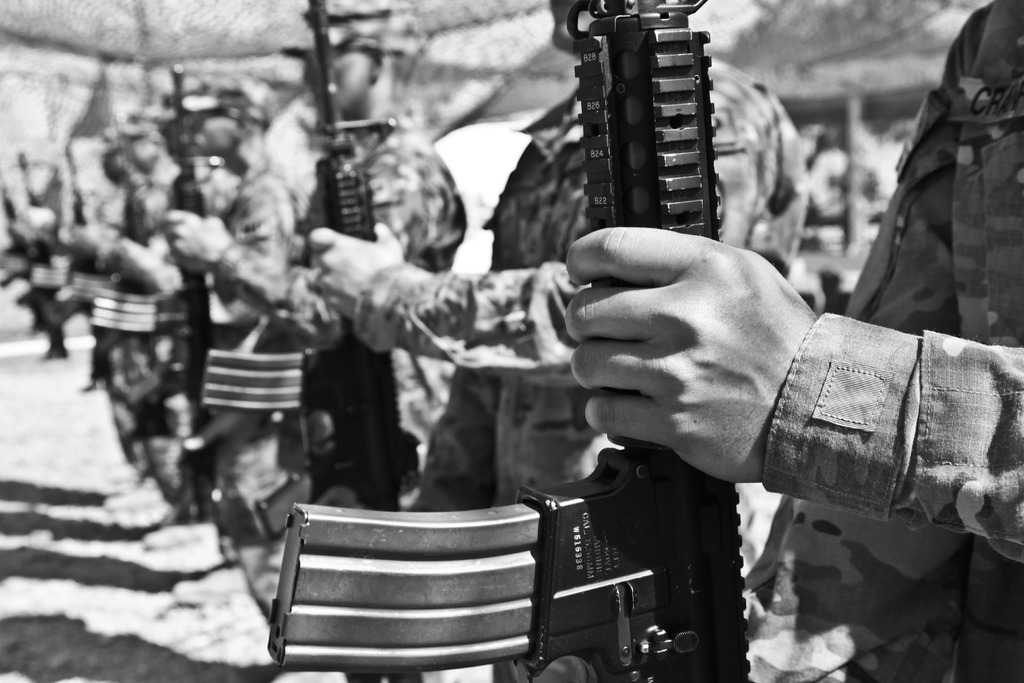

We passed another grim milestone in the Afghanistan War today with a “Green On Blue” attack that led to the 2,000th American military death since the war began all the way back in October 2001:
KABUL, Afghanistan—U.S. military deaths in the Afghan war have reached 2,000, a cold reminder of the human cost of an 11-year-old conflict that now garners little public interest at home as the U.S. prepares to withdraw most of its combat forces by the end of 2014.
The toll has climbed steadily in recent months with a spate of attacks by Afghan army and police—supposed allies—against American and North Atlantic Treaty Organization troops. That has raised troubling questions about whether countries in the U.S.-led coalition in Afghanistan will achieve their aim of helping the government in Kabul and its forces stand on their own after most foreign troops depart in little more than two years.
On Sunday, a U.S. official confirmed the latest death, saying that an international service member killed in an apparent insider attack by Afghan forces in the east of the country late Saturday was American. A civilian contractor with NATO and at least two Afghan soldiers also died in the attack, according to a coalition statement and Afghan provincial officials. The U.S. official spoke on condition of anonymity because the nationality of those killed had not been formally released. Names of the dead are usually released after their families or next-of-kin are notified, a process that can take several days. The nationality of the civilian was also not disclosed.
In addition to the 2,000 Americans killed since the Afghan war began on Oct. 7, 2001, at least 1,190 more coalition troops from other countries have also died, according to iCasualties.org, an independent organization that tracks the deaths.
According to the Afghanistan index kept by the Washington-based research center Brookings Institution, about 40% of the American deaths were caused by improvised explosive devices. The majority of those were after 2009, when President Barack Obama ordered a surge that sent in 33,000 additional troops to combat heightened Taliban activity. The surge brought the total number of American troops to 101,000, the peak for the entire war.
According to Brookings, hostile fire was the second most common cause of death, accounting for nearly 31% of Americans killed.
It’s also worth noting the other side of the ledger:
Tracking deaths of Afghan civilians is much more difficult. According to the United Nations, 13,431 civilians were killed in the Afghan conflict between 2007, when the U.N. began keeping statistics, and the end of August. Going back to the U.S.-led invasion in 2001, most estimates put the number of Afghan civilian deaths in the war at more than 20,000.
There really isn’t much to say here that hasn’t already been said. As I noted the other day, by any objective measurement of the situation on the ground, the surge put in place by the President in 2009 was a failure. Indeed,, as James Joyner noted at The National Interest earlier this month, it’s rather apparent that the war itself, as least as it has been defined in recent years, is itself a failure. There’s really no way to redeem our mission there, and the cost of even trying to do so is mounting by the day. The candidates aren’t talking about the war very much but, as I noted, that’s largely because the nation has already made up its mind about the war. Regardless of whoever wins on November 6th, we’re getting out by 2014. Why we’ve stayed there this long, and whether it was worth even trying to create a stable society in Afghanistan, is a question that will be left for history.