
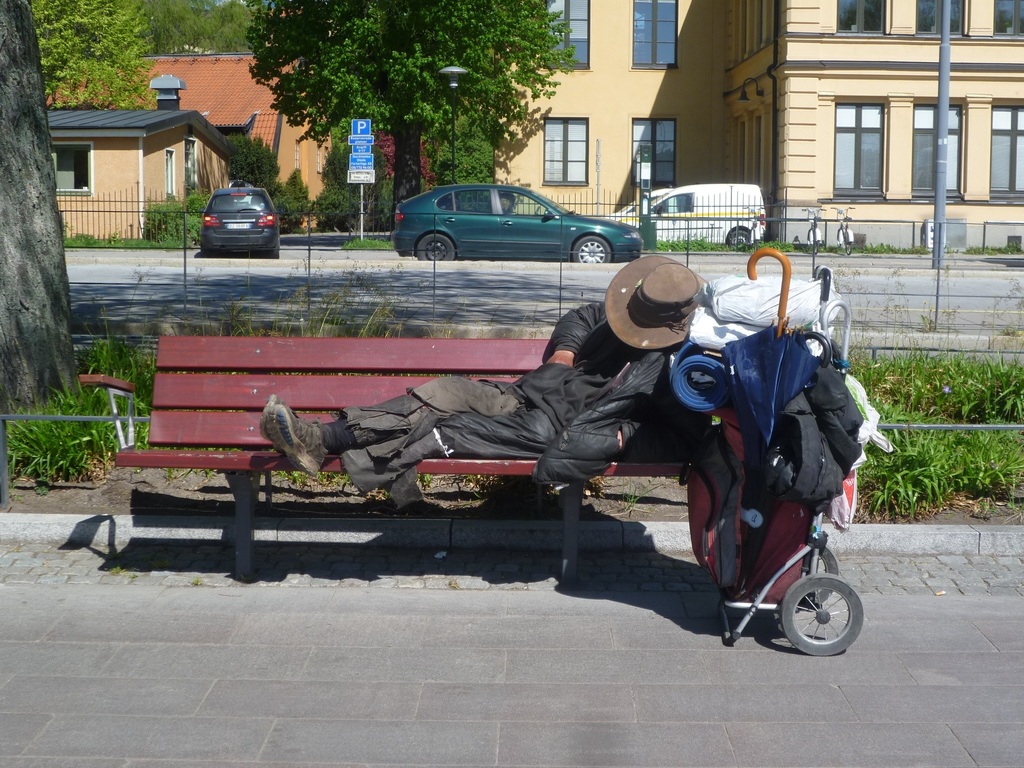

My latest for The Atlantic, “Stop Feeling Sorry for American Veterans,” has posted. An excerpt:
Judging from media accounts, I’m the rare American veteran who isn’t homeless, homicidal, or suicidal.
[…]
[It’s] important not to let anecdotal evidence mislead us into thinking that most veterans are struggling to cope with life outside the structure of the service. That couldn’t be further from the truth. Indeed, according to the Census Department, America’s veterans are more likely to have a high school diploma than non-veterans, and have a much higher median income.
That’s not surprising, when you think about it. While the public may see veterans as saps who volunteered to do a dangerous job because they lacked other options, the fact of the matter is that simply getting into the military requires meeting demanding thresholds of physical and mental health, passing a criminal background check, and having a high school diploma. After selection, many wash out during entry-level training. I’m by no means arguing that every man or woman who’s ever served in our armed forces is a candidate for MENSA. But the selection process weeds out the weakest elements, and the training and mentoring system inculcates work habits and social skills that are invaluable in coping with life.
[…]
[I]t’s worth noting, the last few generations of veterans were all volunteers; we haven’t had a draft since 1973. For that matter, the 11th anniversary of 9/11 is fast approaching; that means all of our junior enlisted personnel and most of our junior officers volunteered during wartime. We chose to serve our country, got paid pretty well to do it, and reaped plenty of other benefits, tangible and otherwise.
We owe those who suffered permanent wounds, physical or psychological, the best care we can give them. We owe the families of those who never came home our sympathies, support, and generous benefits.
Speaking for the rest of us–the vast majority of those who served–you don’t owe us anything. Indeed, as Andrew Exum, who led Army Rangers in both Iraq and Afghanistan, argues, you’re probably already doing too much. You don’t need to stop us and thank us for our service; you already paid us for it.
And you sure as hell don’t need to feel sorry for us. On the whole, we’re doing better than the rest of you.
Read the whole thing at the link.








