
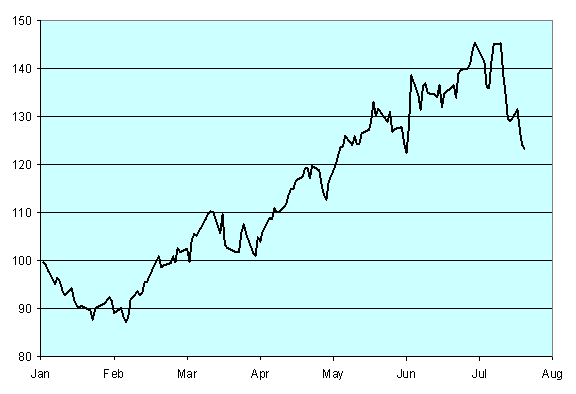
 Yesterday the price of oil on world markets closed at $123 a barrel, just where it was at the beginning of May this year. Oil economist James Hamilton has an excellent post that suggests that the fundamentals of supply and demand may well be the major factors that have caused oil prices to spike this summer.
Now, how could it be that China is burning 860,000 b/d more than it used to, but no more is being produced? Well, it could be that there are errors in the consumption or production numbers, and both will likely be revised. Or it could be that we’re drawing down global inventories. But the most natural inference is that somebody else in the world must have been persuaded to reduce their consumption of oil between 2005 and 2007 to free the barrels now being used in China. And indeed, according to preliminary EIA estimates, petroleum consumption in the U.S., Japan, and those countries in Europe for which data are now available fell by 760,000 b/d between 2005 and 2007.
Read the whole thing. Lots of pretty graphs (like the one of oil prices at right which you can click on for a larger image).
The Chinese government subsidizes the price of gasoline in China to the tune of roughly 50%. I’m not opposed either to increasing our domestic oil production or reducing our domestic oil consumption but, if we really want to bring down the price of oil in the near term, negotiating with the Chinese to have them trim their subsidies a bit should be a high priority item in the next administration. I’m betting it won’t be. What do you think?







