The NYT reports: Chief Justice Declines to Halt Trump’s White House Ballroom Construction, for Now.
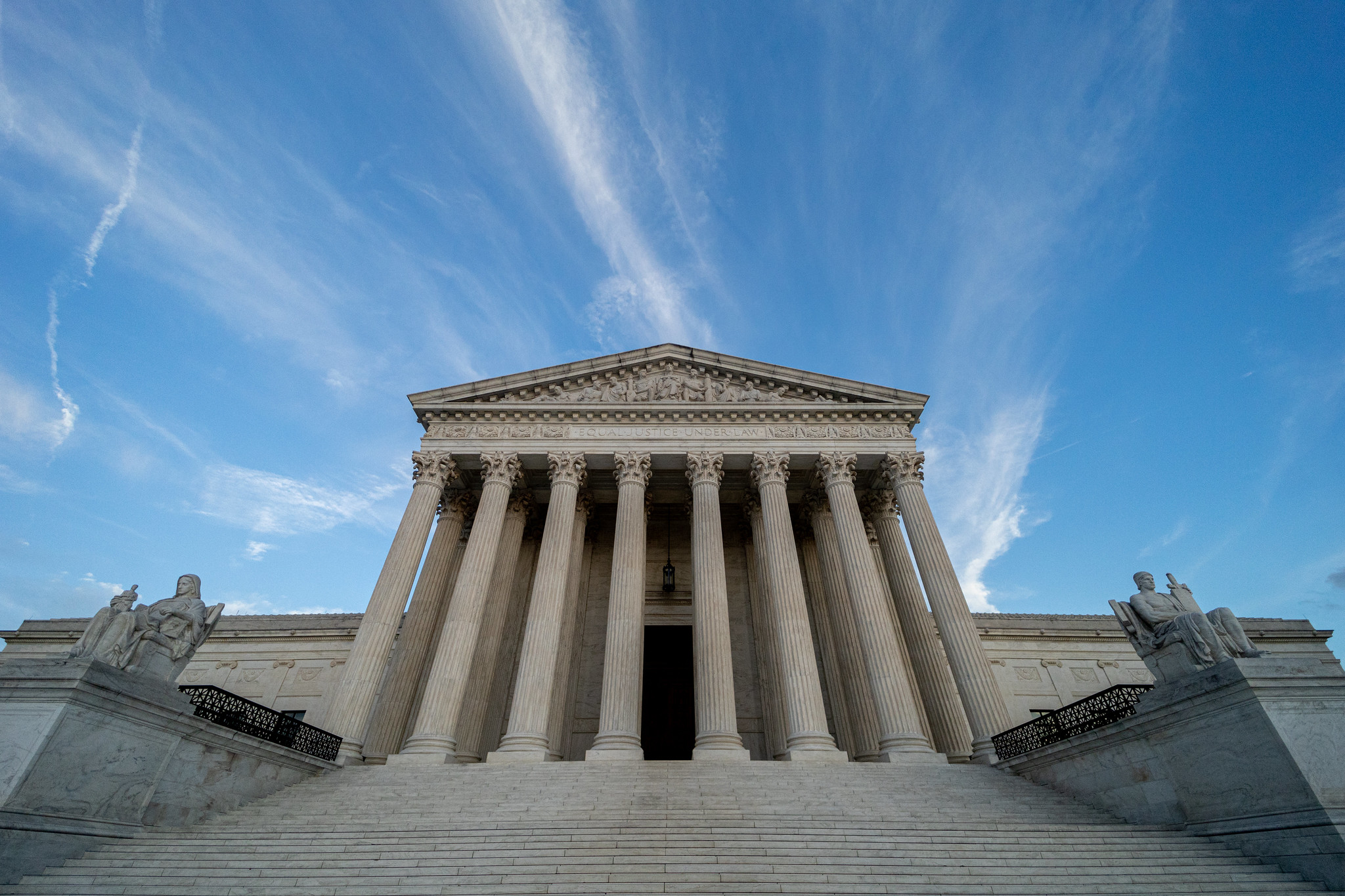
The Supreme Court on Friday temporarily allowed President Trump to continue construction of a luxury White House ballroom to replace the East Wing he demolished last fall.
In a one-sentence order, Chief Justice John G. Roberts Jr., acting on his own, issued a placeholder that gives all nine justices additional time to more fully consider whether construction of the planned 90,000-square-foot ballroom can proceed.
The chief justice’s order did not provide a timeline for when the court would act next, stating only that a lower-court ruling against the Trump administration was paused “pending further order of the undersigned or of the court.”
This is maddening because it seems pretty clear that the president needs congressional approval to do what he is doing, making this yet another case in which the Roberts Court seems open to just letting Trump do whatever he wants.
Worse, this strikes me as the Court abdicating any sense of neutral justice. It allows Trump’s action to go forward even knowing it might be possible that they will be deemed illegal at some indeterminate time in the future. It almost makes the outcome a fait accompli regardless of what the eventual ruling is because construction will continue. At some point, a real remedy is impossible, even if the Court ultimately rules against Trump.
If the Court needs more time, it seems to me like the appropriate course of action is to halt construction as the best way to prevent potential additional harm. They can then sort it out. A delay in construction can more easily be fixed than the opposite.
Like with its foot-dragging on Jack Smith’s cases and other items linked to Trump, this behavior by the Court allows for time to pass and allows outcomes wherein the law itself becomes moot. It is like letting me tear out my neighbor’s century-old trees and promising to decide whether the removal is legal or not years later, when it will be impossible to restore the trees because they are already gone.
So not only is Congress barely functional, the Court largely is willing to let Trump do whatever he wants in the short term, which is really all that matters in practical terms. If at some point they decide that future presidents can’t tear down federal buildings and misappropriate funds to build new ones, well, that’s cool and all, but will do precious little about the new ballroom that was built on the ruins of the East Wing.
If the president can do what he likes until such a time as the Justices get around to hearing a case, making up their minds, and then punting to Congress, and it takes a year or more to get to that point, is there really any practical constraint on the president?
The closest they have come to restraining him was in the birthright citizenship case, when the plain words of the Constitution and almost a century-and-a-half’s worth of precedent made it impossible to side with him, and even then only five justices were willing to affirm that the document actually says what it says.
No checks.
No balances.
And power concentrated in one man.
This is not what the constitutional order is supposed to look like.