
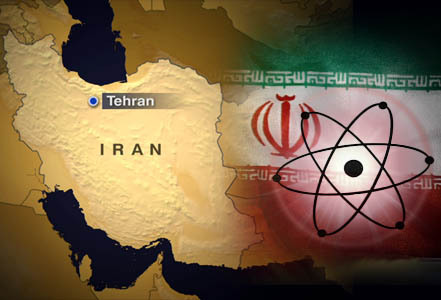
Let me start by stating I fully understand the adversarial nature of the relationship between Israel and Iran. There are enemies, and Israel has reasons to seek to protect itself from Iranian aggression. At a minimum, Iran’s support for Hezbollah and Hamas is enough to provide the basis for Israel to use military force against Iran. And, certainly, it makes all the national security sense in the world for Israel to prefer Iran not to become a nuclear power.
At a minimum, these are two regional powers vying for dominance, setting aside any other aspects of the conflict. They are both behaving as one would expect regional adversaries to behave, as each sees the other as a threat to their power and influence, including regime survival.
Given the kind of regional power conflict that is taking place between these two, not to mention between Iranian proxies and Saudi proxies in the hopes of achieving regional hegemony, it is not surprising that Iran wants a nuclear weapon.
Indeed, I have long thought (for at least two decades, if not longer) that Iran’s main interest in acquiring a nuclear weapon is not so that it can vaporize Tel Aviv, but because it primarily wants a deterrent against attacks, to include possible invasion, on its home territory. I think, too, it wants the prestige and enhancement of its regional position, and being a nuclear power would accomplish that.
I understand that Iran often speaks in apocalyptic terms. Famously (or, perhaps, infamously), Iranian President Mahmoud Ahmadinejad (2005-2013) states that Israel needs to be “wiped off the map.” I know this was long interpreted as a statement of purpose for the Iranian nuclear program from Israeli and US perspectives. However, it is not a good idea to draw strong conclusions from heated political rhetoric (see, e.g., the Truth Social feed of a certain occupant of the White House who recently called for “UNCONDITIONAL SURRENDER” because, you know, that’s how this works).
I can understand and accept, however, how Israelis would take such rhetoric. And I can accept and support the notion that it is in Israel’s interests, if not many countries’ interests, to slow Iran’s progress towards a nuke. I would prefer some structure like the JCPOA, but Trump broke that back during his first term because he is a very stable genius.
Note that I reference “slow Iran’s progress” because it strikes me that over the long haul, it will be impossible to stop a determined state from acquiring these weapons. I understand the inclination to hope that maybe the regime will change in a way that is friendlier than its current iteration, but that is mostly based on nothing more than wishes and dreams at the moment.
Regardless, I have to stress again that the most plausible reason for Iran to want a nuke is not to drop it on Israel, but to enhance its prestige and power.
First, there is no reason to assume that Iran is a less rational actor than other states. States want to survive, and the use of nuclear weapons is a good way to commit suicide. A strike on Israel by Iran would invite retaliation from Israel as well as, almost certainly, from the United States. This is a massive risk they are almost certainly not going to undertake (note the history lessons below).
Second, it makes more sense that Iran wants a nuke to make attacks on them, like the one they are currently experiencing, less likely. To take a trip down memory lane, George W. Bush famously dubbed Iran, Iraq, and North Korea as the “Axis of Evil.” It seems worth underscoring that Iraq was invaded and its government toppled, Iran has endured a number of attacks and assassinations over the decades, but North Korea has been largely left alone despite the aforementioned provocations.
Care to guess which of those three countries has nuclear weapons and which don’t?
I have zero doubt that while the current war with Israel will set the Iranian nuclear program back (although how much is just a guess), I think it will also increase, not decrease, their ardor for such a weapon. I think it will increase their interest in fomenting anti-Israel terrorism as well, but that is its own discussion.
For what it is worth, I accept the general notion that, by definition, proliferation increases the chances of a nuclear weapon being deployed on some battlefield somewhere. It is just simple logic: each addition to the nuclear club adds a new variable to the probability calculation.
But it seems worth noting that we have had a number of natural experiments to test the general theory of nuclear deterrence. And hence why I think that the odds are far, far better than an Iranian weapon will be used the same way as everyone else’s nukes have been, instead of the way Israelis fear.
There is the simple, yet indisputable, bit of evidence that despite the substantial increase in the number of nuclear weapons, as well as the number of countries with nukes, there has been no battlefield deployment since their initial usage in two attacks on Japan by the US in August of 1945.
We then had roughly four decades of a Cold War, which included many hot proxy wars mixed in, between two massive nuclear powers, the US and the USSR. No deployment of nukes.
But, maybe the US and the USSR were just so overpowered that mutually assured destruction was enough to forestall usage? Or, maybe, the US and USSR were just especially responsible nuclear stewards.
But then we have the case of India and Pakistan. India has had nukes since 1974, and Pakistan acquired them in 1998. There is substantial enmity between these two powers. It seems worth noting that major wars between the two sides stopped after India acquired nuclear weapons, and that while there have been military conflicts since Pakistan acquired its nukes, those conflicts have all been limited (but there have been a lot of them). Neither side has deployed nuclear weapons in these skirmishes.
Another example of a nuclear power that people like to say is craaazzeee is North Korea. And while Little Rocket Man has engaged in a number of provocative behaviors over his time in office, there has been no nuclear deployment.
The most recent example is Russia in Ukraine, which has, to date, been perhaps the most serious possible deployment of battlefield nuclear weapons since various Indo-Pakistani conflicts. To date, no nukes. And it is without any doubt the case that a possible nuclear standoff is why that war has not expanded to include the direct military involvement of NATO forces, including the US (and is why Russia has mostly avoided any provocations outside Ukraine’s borders.
So, again, I understand the Israeli position and I favor slowing Iran’s nuclear ambitions. But I am not convinced that this current war is a good idea,* given that controlling the outcomes of such events is not easy. Instability within Iran is actually more likely to redound against Israeli interests than it is to do so in their favor.
US involvement of the type being contemplated (i.e., direct military action in Iran by US forces) will only increase the odds of unintended consequences, in my view.
It would actually have been better to have allowed the Trump administration to try and restore some version of the JCPOA (jus call is USAPCPOA and move on), which would have helped slow Iran, and given that slowing is ultimately all that can happen (granted, rates of slowness may difer) a diplomatic solution solution would have been cheaper in Israeli military assets,** not to mention Iranian and Israeli lives and infrastructure.
*It is also kind of hard to ignore how much of this seems driven more by domestic Israeli politics than by some imminent threat. Via the AP: Netanyahu’s government survives vote to dissolve Israel’s parliament. That report was from June 12th. The bombing started early on the 13th. I think that hawkish Americans need to take this into account.
I will note that there may be some logic to be stated that the recent degradation of Hezbollah and of Hamas (as well as the overthrow of the Assad regime in Syria) meant that this was a good time to attack, given that Iranian proxies near Israel were off the table
**What happens, for example, when either Israeli offensive or defensive stockpiles get low? This isn’t a video game wherein missiles can be endlessly produced at a rate that keeps up with usage.









