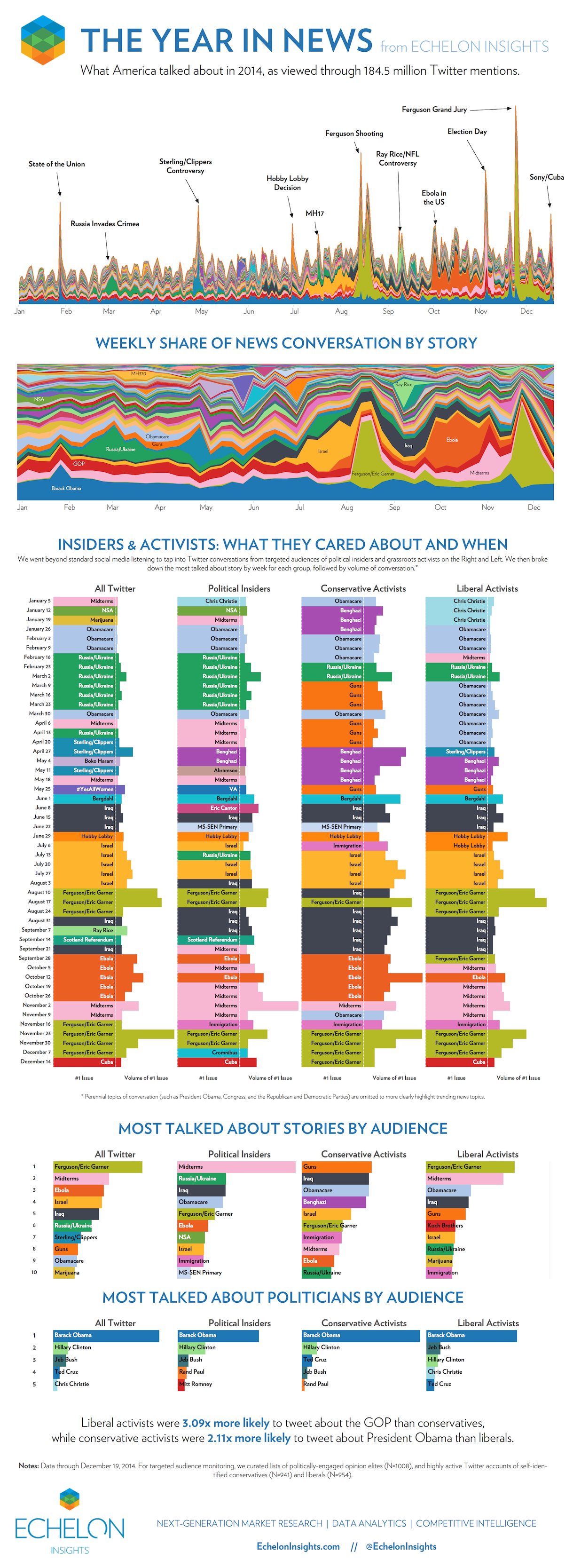
Using the Google’s Trends Tool, The Washington Post’s Philip Bump came up with this chart showing the most-searched words and phrases during each month of the past year related to political or news events, and what it tells us about how fickle the 2014 news cycle was:

Most of these are, of course, self-explanatory, but I’ll admit that I had to read further to remember what some of the news events that prompted these searches might have been. “Fort Lee,” for example, refers to Fort Lee, New Jersey, which was the focus of the lane closures on the George Washington Bridge that became known as “Bridgegate.” February’s “Brewer” search refers to Arizona Governor Jan Brewer and the controversy during the second month of the year over a bill that would have given businesses more ability to discriminate against same-sex couples based on supposed religious beliefs, an issue which we apparently didn’t even touch on here at OTB and a bill which Brewer ultimately vetoed.“Cliven” refers to Cliven Bundy and the standoff at his ranch in Nevada due to his defiance of several Federal Court Orders, which became something of a cause celebre on the far-right, and so forth. Perhaps most interesting about the chart is the fact that the disappearance of Malaysian Airlines Flight 370 in March didn’t make the top of the list for any month.
The biggest thing about this chart, though, is that it tends to show just how fickle and fast changing the news cycle was over the past year. To some degree, given how eventful the year actually was — with major stories ranging from Ukraine, to the Veterans Administration scandal, to the rise of ISIS in Iraq and Syria, Ebola, the protests in Ferguson and elsewhere over the Michael Brown shooting and, later in the year, the decision of the Grand Jury there and another in New York City to decline to indict police officers under circumstances that many found suspicious and the protests those decisions led to, and of course the midterm elections — this isn’t entirely surprising. Arguably, 2014 has been a far more crisis-filled year, both in terms of actual crises and those created by media sensationalism, At the same time, though, it’s interesting to see this measure of what the public is seeking information on over such as relatively short period of time and the extent to which it shows that our “news and information” attention span is really quite short-lived these days. With a new Congress coming into office next week, and the 2016 Presidential campaign likely to gear up early in the year, though, we’re likely t see the headlines jump all over the place this coming year as well. And then, of course, there are always the unexpected events that come to dominate the news cycle for short periods of time. That seems to be the nature of the medium these days, so we can probably expect more of the same there.