

Ordinarily, the eighteenth anniversary of a particular historic event such as the September 11th attacks in New York City, Virginia, and Pennsylvania is not an especially noteworthy one. Unlike the early years, it has become increasingly less likely that we’ll see the kind of wall-to-wall anniversary coverage that we did in the first year after the attacks, and slowly coming to the point where the anniversaries that will be marked are the numerically significant ones, particularly those ending in a zero or a five. For several reasons, though, this year’s anniversary is a noteworthy one because of what it means for the nation going forward, and what it tells us about the impact the event has had on our foreign and domestic policies in areas ranging from what wars we’re as criminal law and procedure.
It’s also the case that, after eighteen years, it’s hard to know what to say about the anniversary that I haven’t already said repeatedly before, On previous anniversaries, I’ve made note of the impact that the attacks and our response to them have had on our foreign policy, on civil liberties, and on the general culture. I’ve talked several times about where I was when I learned about the first airplane striking the World Trade Center, what I did for the rest of the day, what it felt like to drive home that afternoon on normally crowded roads that were as empty as they would normally be in the middle of the night, and what it felt like to hear an airplane above your head in the days afterward and realize that it wasn’t a commercial airliner and was instead a combat aircraft flying over the nation’s capital and the surrounding area. It’s at the point now where there isn’t much that can be added to that, and after eighteen years a post detailing everything that has changed since that crisp fall Tuesday morning in September would result in a post far too long for blogging purposes. Indeed, as I thought about what I might write this year I wasn’t sure I’d be able to come up with a fresh enough angle to make it worth the time.
One notable thing about today, of course, is that it is hard to remember what the world was like before September 11th, 2001. Hard to remember what it was like to be able to get on an airplane without having to go through seemingly ridiculous things such as taking off one’s shoes. Hard to remember what it was like to live in a world where we weren’t at war. And, for those such as myself who grew up in the New York City area, harder to remember what the skyline looked like before it was so radically altered in a matter of hours.
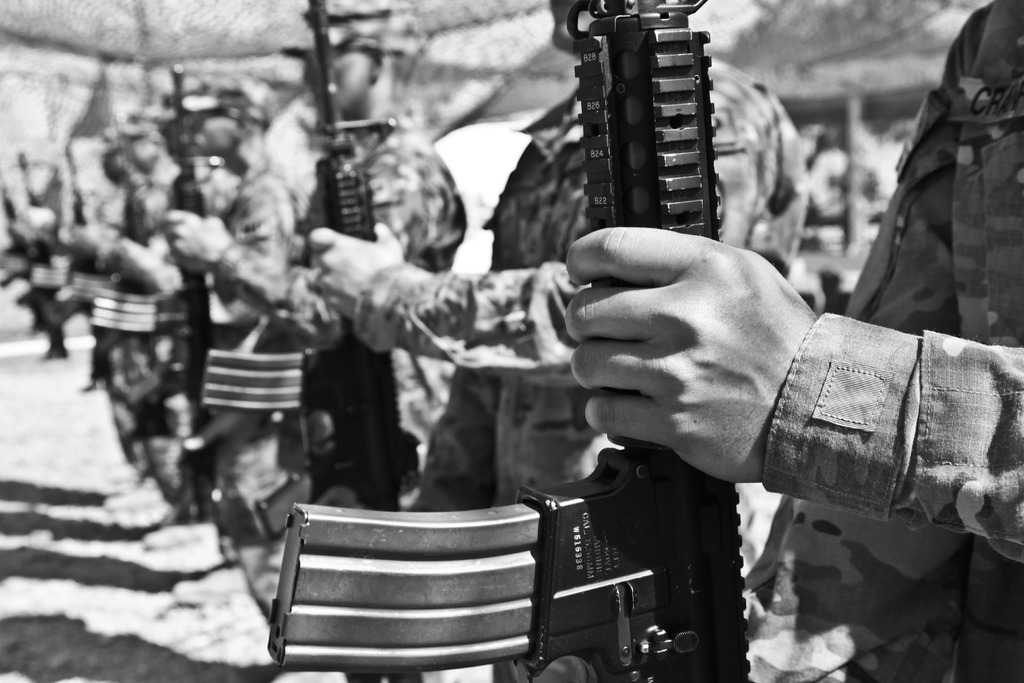
The most significant thing to note about today, of course, is that it officially means that people who were born today and every day that follows from now going forward has no living memory of either the attacks themselves or the world that existed before they occurred. For them, America has been “at war” for their entire lives not only in Afghanistan but also in other theaters around the world that have become part of the “War on Terror” that Congress authorized when it overwhelmingly passed the Authorization for Use of Military Force in October 2001. As of today, the children born on September 11th and the days that will be follow will be eligible themselves to enlist in the U.S. military and potentially be sent to one of those battlefields, whether it be Afghanistan which looks as though it will continue to be the forever war it has been for some time now or battlefields in other parts of the world that have come under the “War on Terror” rubric. If they were to ask why we are fighting these wars, I suppose we can point them to the events of this day eighteen years ago. However, if they were to ask whether we’re “winning” that war, I can’t really come up with a “yes” or “no” answer, especially since it seems clear that this is a “war” with no foreseeable end and no foreseeable victory that would lead to such an end.
As I write this, cable news networks are beginning the tradition of marking the times at which the planes struck the north and south towers of the World Trade Center, the Pentagon, and the time that United Flight 93 was brought down over rural Pennsylvania by a group of brave Americans who likely prevented an attack on Washington, D.C. itself. Later this morning, they’ll mark the times at which first the south tower and then the north collapsed, trapping thousands of people, including hundreds of members of New York’s Finest and New York’s Bravest. Next month, we’ll mark the eighteenth anniversary of the beginning of the “War On Terror.”
So as we reach an anniversary that reminds us of the fact that there is nobody in grades K through 12, and few people in college, who have a living memory of what happened on September 11, 2001, what do we have? For the most part, al Qaeda lies in ruins and has been largely replaced in terms of the international terrorist threat by ISIS and the growing problem of self-radicalized terrorists that are far harder to detect beforehand. Afghanistan remains Afghanistan. It’s been a mess in that country since at least 1979 when the Soviet invaded in what was ultimately a failed effort to prop up the puppet state it had installed there, and it will be a mess long after we leave, whenever that might happen. In the meantime, we’ve gotten ourselves involved in a seemingly endless, borderless “War On Terror” that has stretched Constitutional norms, consolidated yet more power in the hands of the Executive Branch, and damaged civil liberties of ordinary Americans in ways big and small.
Remind me again what “winning” is supposed to look like?
Previous posts on the anniversary of the September 11th attacks:
2018 — 9/11 And America’s Forever War
2017 —Remembering 9/11 Without Obsessing Over it
2016 — The Lost National ‘Unity’ Of September 11th
2012 — 9/11’s Legacy Of Fear
2011 — A Decade Of Lost Freedom, No Football On 9/11?, December 7, 1951 v. September 11, 2011, Paul Krugman: 9/11 Has Become ‘An Occasion For Shame’
2010 — Instapundit’s Initial Take On 9/11








